Oahu and Kauai Base Yards Transform as Microgrid Construction Begins
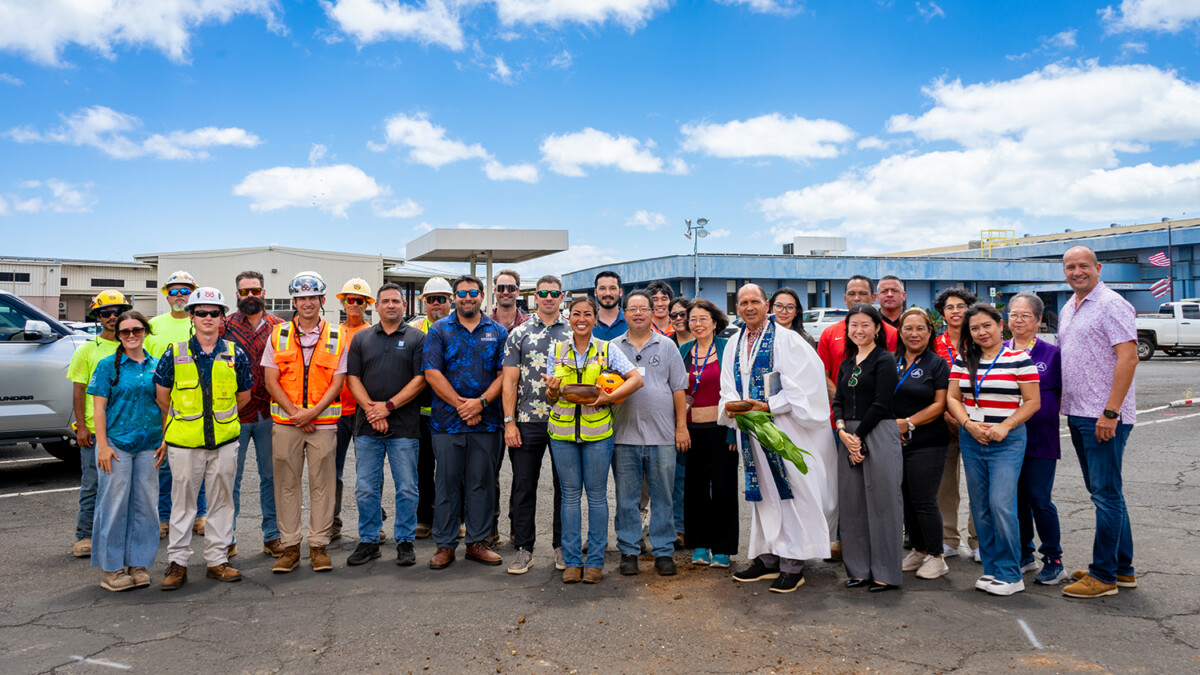
Work is officially underway on renewable energy infrastructure designed to reduce Hawaii’s dependence on fossil fuels, with ground blessings recently marking the start of the Oahu and Kauai Microgrid projects. Hensel Phelps joined Sustainability Partners and the Hawaii Department of Transportation (HDOT) to launch the initiative, which aims to strengthen energy resilience across the islands while expanding electric vehicle charging capacity.
The statewide effort targets critical transportation facilities, bringing dedicated solar power and battery storage directly to active base yards. At the Honolulu base yard on Oahu, crews are building a 1-megawatt microgrid anchored by 570 photovoltaic solar panels rated at 580 watts each, large-scale battery energy storage, and 41 electric vehicle charging stations. This setup is designed to support HDOT’s growing electric vehicle fleet and enhance operational resilience at a critical transportation facility.
A parallel project is taking shape at the Lihue base yard on Kauai. That site will also feature a 1-megawatt microgrid paired with large-scale battery storage, supported by 290 photovoltaic solar panels rated at 580 watts each and eight electric vehicle charging stations. Hensel Phelps is delivering both projects through the Sustainability Partners Program, utilizing a collaborative design-build approach alongside partners Group 70, Stantec, and Wasa Electrical Services.
Hawaii Pairs Solar Generation with Battery Storage at Active Transportation Hubs
These microgrids form part of a broader push across Hawaii to cut greenhouse gas emissions and invest in sustainable public infrastructure. By pairing local solar generation with battery storage at active transportation hubs, the state secures a steady, onsite power source for administrative operations and electric vehicle fleets.
Both installations represent a tangible shift in how state agencies manage daily energy consumption, moving away from centralized fossil fuel dependence toward localized, renewable redundancy. As construction progresses on both islands, the sites will support the state’s transition toward cleaner and more sustainable transportation operations.