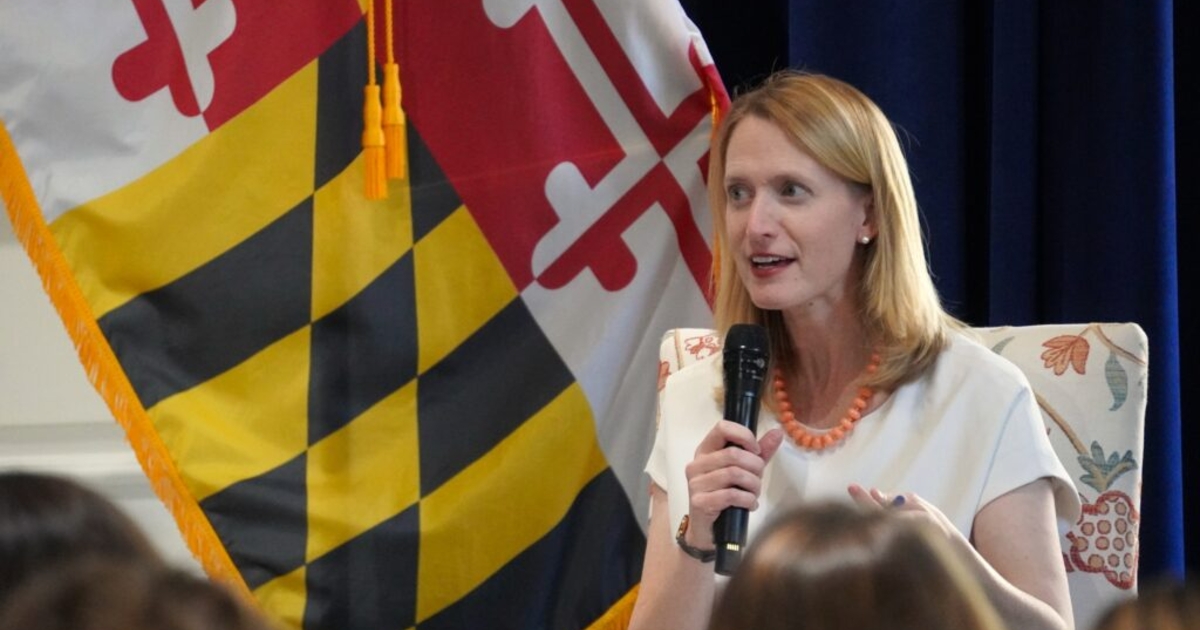
In the quiet, often overlooked race for Maryland Comptroller, the contrast between incumbent Brooke Lierman and challenger Sonya Dunn is less about political fireworks and more about the fundamental mechanics of state government. As Maryland’s chief financial officer, Lierman is seeking a second term, defending a four-year record defined by a massive, often grueling technological overhaul of the state’s tax systems. For Dunn, a first-time candidate and IT consultant, the race is an uphill climb against both the incumbent’s financial advantage and the inherent difficulty of running as a Republican in a state where Democratic dominance remains the standard, as reported by Maryland Matters.
The Technological Stakes of the Comptroller’s Office
The office of the comptroller functions as the state’s fiscal engine, and the battle over its efficiency has been the central theme of the current cycle. Lierman, the first woman to hold the office after her 2022 election, has spent her first term prioritizing the modernization of IT systems that had been in place for decades. This effort culminated in early September with the launch of the Maryland Tax Connect portal, a system designed to allow individual taxpayers to file returns, make payments, and track refunds online.
For Lierman, this is the foundational platform for a second term. She views the previous three years as a necessary clearing of the path. “Now, we have a platform to jump off of and build from in my next term, so that we can really do big things,” Lierman noted in a recent interview. Her office reports that it has completed over 100 modernization projects, including the replacement of deteriorating fiber-optic cables and the migration of 4 billion records from legacy systems.
Dunn, however, argues that the transition has been difficult. As the head of a technology and communications firm, JEMH Enterprises, she contends that she hears frequent complaints from tax professionals and individuals regarding the new portal’s limitations. While she positions herself as a moderate and fiscal conservative, her campaign is anchored in the belief that her professional background in operations management would better serve the state’s technological needs. “We can do better, Maryland,” Dunn said. “And I feel that I can bring what Maryland needs, especially from a technology standpoint in operations management, to get that on the right track.”
The Challenge of the “Scarlet R”
Beyond the spreadsheets and server migrations, the race is shaped by the political reality of Maryland. Dunn has been candid about the difficulty of her position, referring to her party affiliation as “the scarlet R” on her chest. In a state where Lierman defeated her 2022 Republican opponent, Barry Glassman, by 23 percentage points, Dunn faces a significant hurdle in name recognition and campaign funding. She acknowledges that she is running as an underdog but hopes voters will look past the party label to evaluate her specific focus on fiscal oversight and technology.

Audits and the Philosophy of Enforcement
A significant point of contention has emerged regarding the state’s approach to tax collection, fueled by a recent audit performed for the legislature. The report highlights a growing gap in unpaid taxes, noting that outstanding individual debt rose from just over $1 billion in 2022 to $1.58 billion by 2025. The audit specifically suggested that the comptroller’s office could be more aggressive in using tools like wage garnishment.
Lierman pushes back against the idea that harsher enforcement is the primary solution. She argues that the office has already modernized its auditing capabilities, noting that they have begun using data scraping to identify unreported income from sources like cryptocurrency gains and short-term rental platforms. However, she maintains a firm stance on her department’s philosophy regarding taxpayers.
“Our goal is compliance, not punishment. We should not be in the business of bankrupting people. We should be in the business of helping make sure that they can stay open so they can pay what they owe,” Lierman said.
This difference in perspective—between the audit’s focus on rigid enforcement and the incumbent’s preference for facilitating compliance—marks one of the few sharp policy divides in a race that has otherwise remained subdued. As the term progresses, Lierman has also emphasized her efforts to expand access to the Earned Income Tax Credit, a program that serves as a cornerstone of her anti-poverty agenda. Data shows the percentage of eligible Marylanders applying for the credit has risen from 84.2% in 2023 to 86% in 2026, a trend she aims to accelerate if re-elected.
As the election approaches, the choice for voters hinges on whether they prioritize the continuation of Lierman’s current modernization and social outreach programs, or whether they are swayed by Dunn’s critique of the current system’s usability and her promise of a different approach to fiscal management.