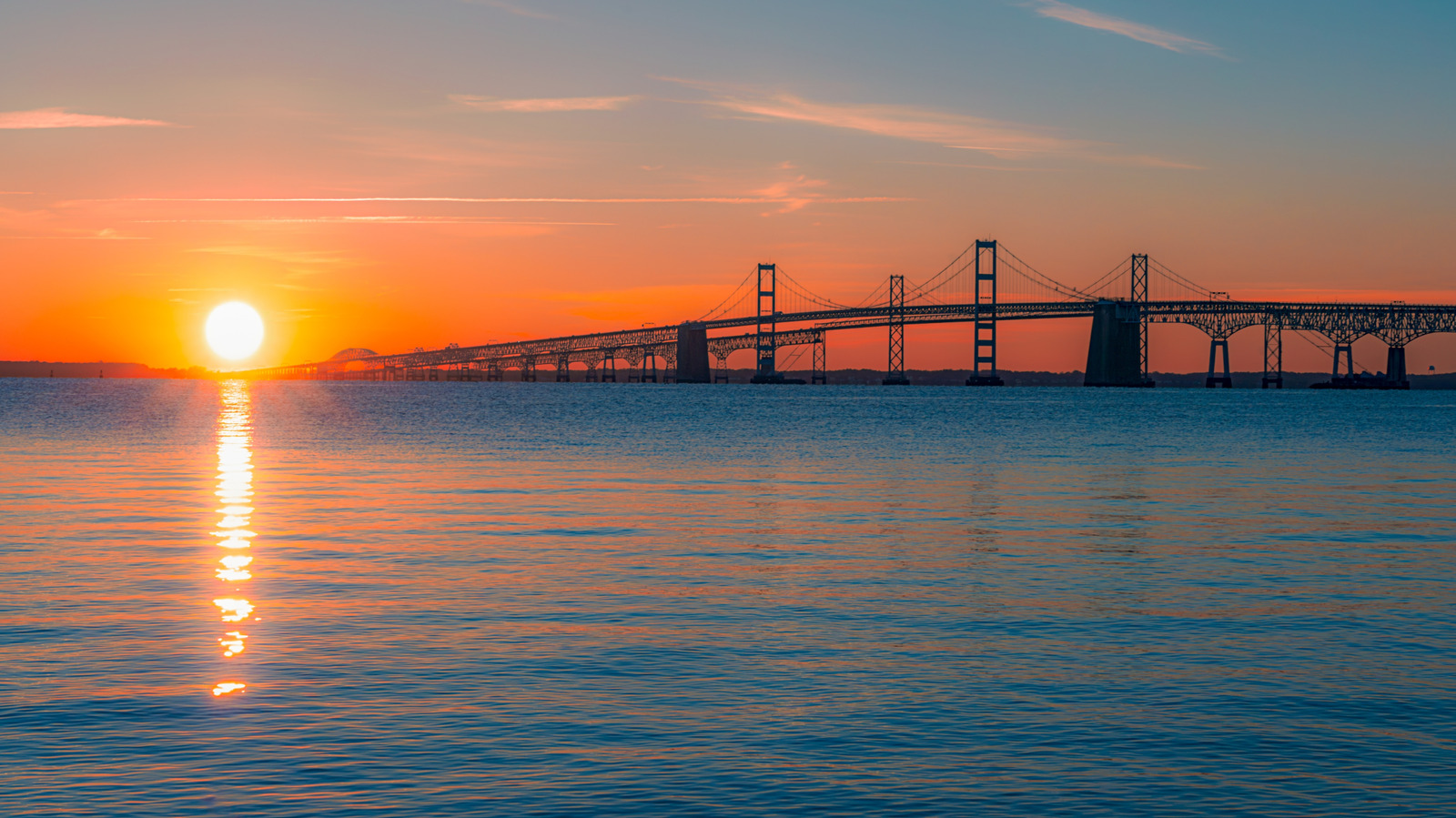
Maryland is opening its newest waterfront park on the Chesapeake Bay, offering public access to a 293-acre peninsula that has spent generations closed off to everyday visitors, Islands reported. Starting November 6, 2026, the Holly Beach Farm Natural Resources Management Area will begin taking online reservations through the Maryland Department of Natural Resources website, permitting just 20 guests per day to hike, bird, fish, and paddle its shores.
Located in Anne Arundel County roughly 10 miles from downtown Annapolis and near Sandy Point State Park, the newly designated site sits in the shadow of the Chesapeake Bay Bridge. According to WTOP, the property features a 9-acre freshwater pond, small bayfront beaches, and wooded trails winding through oak and hardwood forests.
From Private Farm to Protected Peninsula
The transformation of Holly Beach Farm represents the end of a long journey for a property originally cobbled together from several small parcels by a Louisiana businessman in the early 1900s. Long before conservationists set their sights on the land, it operated as a dairy farm and horse breeding site.
Conservation groups acquired the property in 2001, and the Chesapeake Bay Foundation later donated the land to the state in 2023, according to WTOP (Islands notes the transfer occurred in 2024). In 2021, Anne Arundel County Executive Steuart Pittman publicly backed a bid by the National Park Trust to secure the land for public use, helping pave the way for state stewardship.

That prospective public access initially met with pushback from local residents. Neighbors living along the single-lane road leading to the peninsula expressed deep concern that a traditional park model would bring heavy traffic, sprawling parking lots, and pavement that could ruin the delicate ecosystem. To address those worries, the state opted to manage the land as a natural resources management area rather than a heavily manicured state park.
There was a lot of concern that what the trust was talking about doing, or what the National Park Service might do, would be really turning it into what you think of as a national park, with a highway with a lot of cars coming in and out, and a lot of pavement — and destroy the natural area, said Anne Arundel County Executive Steuart Pittman.
Balancing Public Access With Ecological Protection
Because roughly 98% of the shoreline along the Chesapeake Bay—North America’s largest estuary—remains closed to the public, any new opening carries significant value for outdoor enthusiasts. Yet state officials are deliberately keeping human foot traffic to a trickle. By capping daily reservations at 20 individuals, the Maryland Department of Natural Resources aims to protect an environment that serves as a vital stopover for migratory waterfowl, nesting bald eagles, and herons.
The state has set aside $3 million for repairs and upgrades to ready the property for visitors. Crews are currently stabilizing eroding shorelines battered by the windswept waters of the bay and renovating an abandoned two-story waterfront farmhouse that fell into disrepair after being vacated in 2001. Engineers hope to transform the building into a rentable meeting space for local organizations, though construction teams initially found the structure heavily damaged by termites, rot, and raccoons.
Future Plans for Boaters and Ferries
While pedestrian and hiker access starts slowly via reservation, state planners envision a much broader arrival method over the long term. Agency officials have slated upgrades to replace two older, deteriorating fishing piers with a single, expanded 450-foot pier featuring a 6-foot berth. That larger dock is designed to accommodate commercial vessels, including ferries.
Maryland Secretary of Natural Resources Josh Kurtz emphasized the long-term vision for waterborne visitors. “We’re really looking forward to welcoming boaters to come over and anchor and enjoy these little bits of magic right outside of downtown Annapolis,” Kurtz said, according to WTOP. Officials eventually hope to run ferries carrying tourists from Annapolis, visitors from Sandy Point, or local schoolchildren on field trips directly to the peninsula.
Additional future infrastructure includes five hunting blinds along the water’s edge to support a controlled hunting environment. For now, however, the immediate focus remains on launching the reservation system on November 6, 2026, marking the sixth and final public land dedication by the Maryland Park Service for the year.