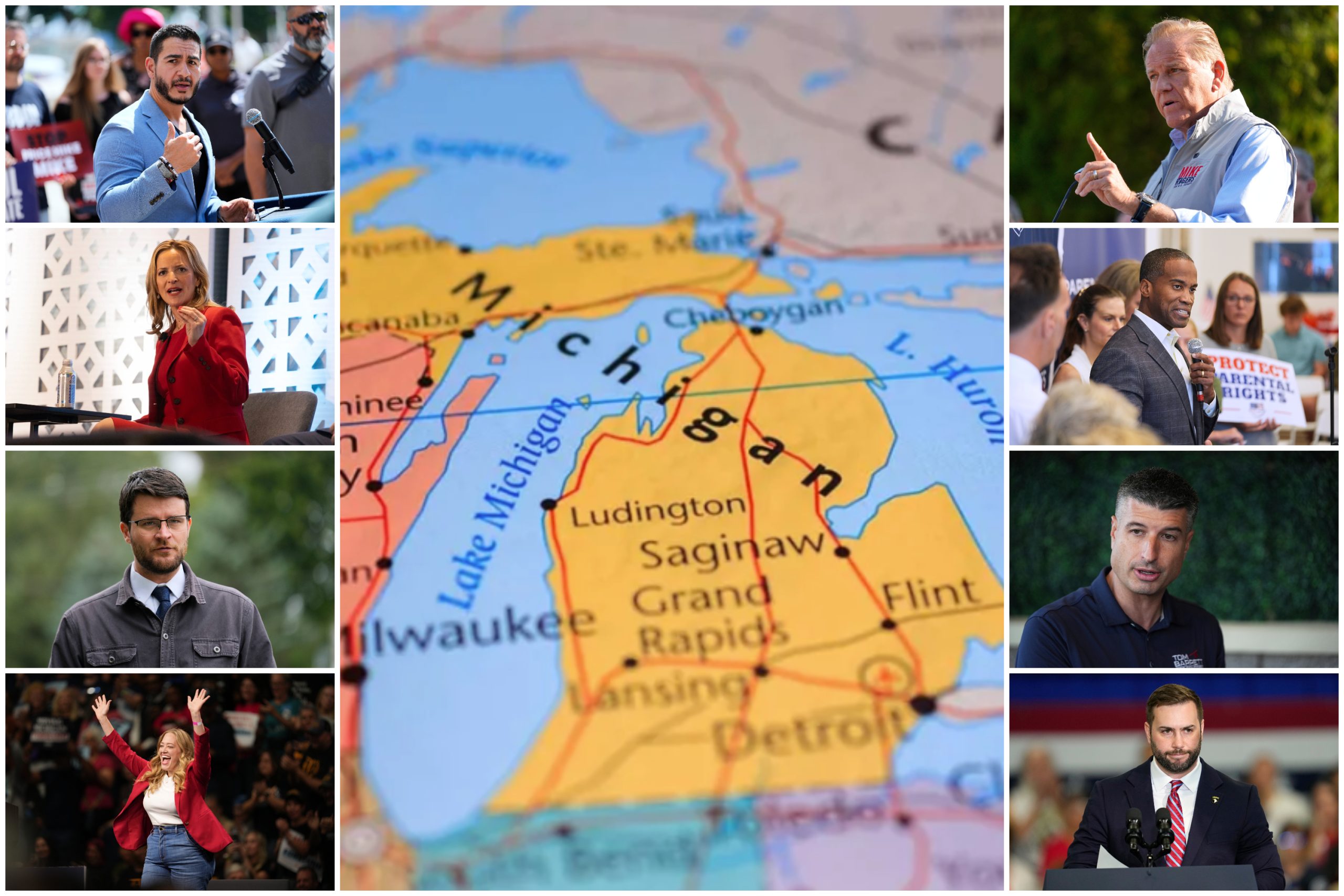
As election results begin coming in on Tuesday, campaign events, television commercials, text messages, and robocalls across Michigan are set to conclude. Voters across the state head to the polls to decide key races for the U.S. Senate, governor, Congress, and the state Legislature, with turnout expected to reveal shifting political alignments from rural Trump Country to the streets of Detroit.
The Southeast Michigan Tug-of-War
Democrats have made significant gains in Oakland County as moderates cooled on Donald Trump, but moods here could again be decisive, especially in the U.S. Senate race between Democrat Abdul El-Sayed and Republican Mike Rogers. Democratic U.S. Rep. Haley Stevens, who represents the region in the U.S. House, endorsed Rogers on Sunday.
Local observers are closely monitoring Rochester and Rochester Hills, where Republicans have kept a slim advantage in recent years despite Democratic efforts, alongside areas with substantial Jewish populations including Bloomfield Hills, West Bloomfield, Southfield, Oak Park, and Huntington Woods, as noted by Bridge Michigan.
El-Sayed’s prospects in Wayne County may hinge on whether Detroit’s Black electorate, which previously backed Stevens, ultimately casts their ballots for him. Meanwhile, in Dearborn and other areas with large Arab American populations, certain electors who favored Trump in 2024 due to dissatisfaction with the Biden administration’s Middle Eastern policies are growing disenchanted with the GOP in response to party rhetoric concerning El-Sayed’s Muslim background.
Testing the Limits of Trump Country
El-Sayed is banking on his populist economic message to attract a portion of the MAGA base and build a fresh electoral coalition, counteracting any gains Rogers makes among moderates alienated by El-Sayed’s progressive platform. Certain Democrats view this as their prime opportunity to win back rural, working-class constituents lost to the Republican Party over the past two or three decades.
U.S. Sen. Bernie Sanders campaigning in Alpena and El-Sayed’s Escanaba rally are just a couple examples of these efforts. Concurrently, Republicans and allied grassroots organizations have focused on low-propensity voters, aiming to replicate the electoral success of 2024 that carried Trump to an 80,000-vote victory in Michigan.
The likelihood El-Sayed carries ruby-red Trump Country counties like Otsego County, where Trump took 67% of the vote in 2024, or Delta County in the Upper Peninsula at 65%, is slim to none. Instead, political analysts are watching the shifts. Observers are comparing El-Sayed’s performance relative to Jocelyn Benson, his Democrat counterpart at the top of the ticket, across rural Michigan.
Young Voters Hold Key to Closing Polling Gap
Michigan is home to about 937,000 residents ages 18 to 24, many of whom are concentrated in East Lansing, Ann Arbor, and other college towns. Not all are registered to vote, and turnout among those who are has historically been fickle. Yet, young voters have at times made a big difference for candidates, much like they did for Barack Obama in 2008 and Sanders’ surprise primary win in 2016.
Older voters, who prove exceptionally dependable at the ballot box, have consistently favored Rogers in polling numbers. To neutralize that advantage, El-Sayed must generate high turnout totals in counties like Ingham and Washtenaw.
Governor Race Impacts Control of State Legislature
The upcoming contest between Benson and Republican John James will determine who succeeds term-limited Democratic Gov. Gretchen Whitmer, with the margin of victory potentially influencing control of the state Legislature, where Republicans currently hold the House and Democrats maintain a slim majority in the Senate.
All 148 seats are on the ballot. Both major parties are locked in a contest for the 13th Senate District in Oakland County—previously represented by outgoing Democratic Sen. Rosemary Bayer—marking the initial electoral test for this newly redrawn 50/50 split map resulting from litigation.
Proposal 2 seeks to prohibit political donations in Michigan from state government contractors, regulated utilities, and their corporate executives. Proposal 1 asks whether Michigan should convene a convention of delegates to potentially rewrite the whole state constitution, a measure that appears on the ballot every 16 years.