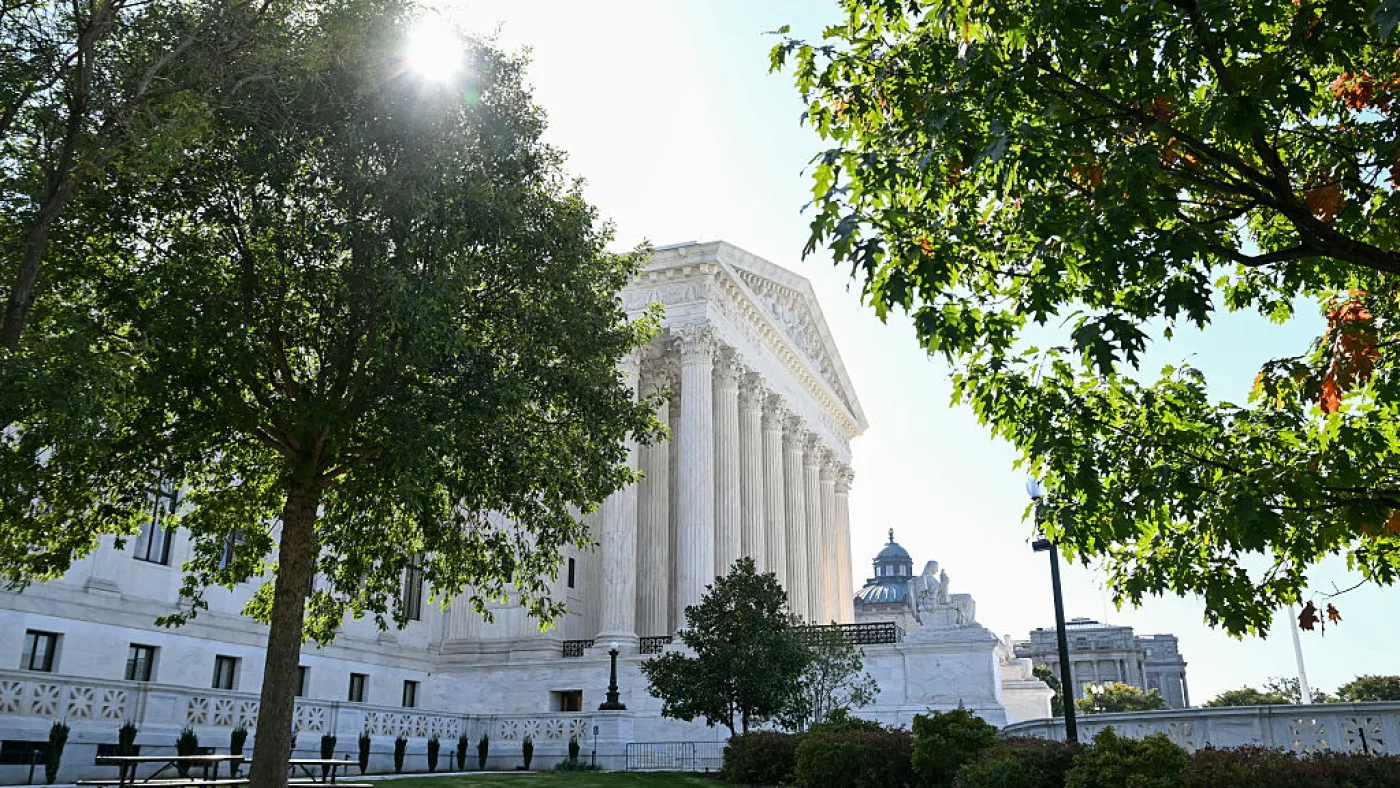
When duplicate candidates appear on a ballot with the express purpose of siphoning votes through sheer confusion, control of crucial legislative bodies hangs in the balance. In the current U.S. Senate race in Alaska featuring incumbent Republican Sen. Dan S. Sullivan and Democratic candidate Mary Peltola, the Alaska Supreme Court ruled that a retired schoolteacher named Daniel J. Sullivan Jr., running with no party affiliation, is also eligible for the ballot. Republicans immediately cried foul, accusing the duplicate candidate of acting as a Democratic plant to confuse voters. A New York Times report subsequently found that Democrats were indeed involved in getting Daniel J. Sullivan, Jr., on the ballot, laying bare a tactic known as ballot stacking.
The 1988 Secretary of State Precedent
This kind of political maneuver is hardly new to North Dakota, which has its own history of politicians attempting to cash in on low-information voters who blindly punch the ticket for whatever name sounds familiar. In the 1988 race for North Dakota Secretary of State, Republican incumbent Ben Meier announced his retirement after 34 years in office. Soon after, another Ben Meier emerged with supposed interest in the job. “Ben Meier may run for secretary of state after all,” The Forum of Fargo-Moorhead reported on August 10, 1988. “No, not that Ben Meier. The other Ben Meier.”
The second Meier was an aviator from Jamestown whose only political qualification seemed to be his driver’s license. When reporters pressed him, the aviator played coy, stating, “There’s some interest, yes. I’m not (interested) but some other people are,” and adding, “I can’t tell you nothing yet.” Republican candidate Dave Koland blew the whistle on the maneuver. “If he just put the name on the ballot without anything more, people would think it’s the current officeholder,” Koland told The Forum, calling the prospect extremely deceptive and unfair.

Fingers quickly pointed at the Democrats regarding a potential shadow operation to siphon votes. The Democratic-NPL denied it. Their candidate, Jim Kusler, held a press conference solely to deny the rumors. “There’s no connection between my candidacy, the Democratic Party and aviator Ben Meier,” The Forum quoted him as saying on August 16, 1988. Editorializing against the potential candidacy on August 12, 1988, the paper wrote, “A name coincidence is not sufficient qualification for public office and is a wrong-headed reason to even consider running.”
Politicians Exploit Name Recognition to Build Electoral Advantage
While some name coincidences spark controversy, others hand candidates an immense electoral advantage over decades. In the North Dakota state auditor’s office, a father and son held the position from 1973 to 2016. The younger Peterson went by “Bob” to inherit his father’s hard-earned name recognition. Before running for office, he used his middle name, “Randy,” and did not use a “Jr.” suffix on the ballot, as he and his father do not share a middle name.
Other politicians have gone to greater lengths to manufacture a political brand entirely out of thin air. During the 2020 election cycle, a candidate named Scott Miller ran for a judicial seat in North Dakota’s South Central District. Years earlier, while running for a judgeship in Cuyahoga County, Ohio, in 2004, he campaigned under the name “Scott Russo Miller.” He altered his driver’s license, voter registration, and credit cards to reflect the fake middle name because the county auditor and five sitting judges in that jurisdiction already shared the last name Russo, revealing a desire to trick voters into thinking he belonged to the local political establishment.
Third-Party Spoilers in North Dakota
Beyond manipulating names, political operatives frequently prop up third-party candidacies to split the vote. Look at the 2018 North Dakota Secretary of State race. The strategy was to prop up a third-party spoiler with some conservative cachet to pull votes away from Jaeger and clear a path for the Democrat. It ultimately failed, with Jaeger winning the election anyway, though only with a 47% plurality. The Democratic-NPL’s gambit did pay some dividends, getting Coachman to more than 13% of the vote.