California Billionaire Tax Faces Defeat as Opponents Outspend Proponents 250-to-1
California’s Proposition 40 is trailing in recent public opinion polls and may not pass by Tuesday, with voters sharply divided over a proposed one-time 5% levy on the state’s wealthiest residents. The ballot measure would impact roughly 200 billionaires across the state, but a massive influx of campaign spending by opponents has fundamentally changed the politics in the final weeks of the election cycle.
Back in May, a Public Policy Institute of California survey found that 54% of California voters supported the wealth tax, while 45% opposed it. Momentum has since eroded. A subsequent Public Policy Institute of California poll conducted between October 16 and October 22 showed support dropping to 46%, with 52% voting no. A later survey by the University of California Berkeley Institute of Governmental Studies, taken from October 19 to October 25, recorded an even tighter margin, finding that just 42% planned to vote yes while 50% pledged to vote no.
Billionaires Outspend Supporters to Oppose Wealth Tax
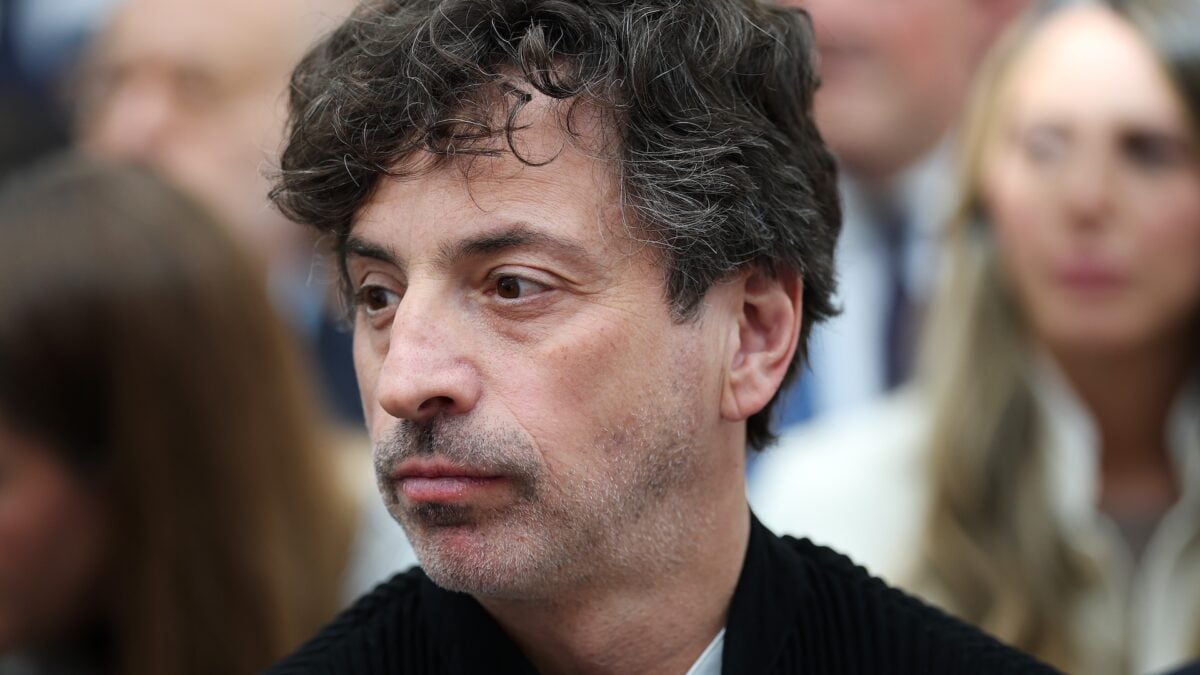
Building a Better California, a primary opposition group funded by Sergey Brin, Eric Schmidt, and several other billionaires, has outspent supporters of Proposition 40 by a 250-to-1 margin. According to the Washington Post, the opposition committee has raised $379 million and deployed roughly $148 million on an omnipresent television and digital ad blitz throughout California.
Opponents have anchored their messaging around a central warning: that the wealth tax could pave the way for future lawmakers to tax non-billionaires. Meanwhile, opponents also successfully placed two counter-measures on the ballot—Proposition 41 and Proposition 42—which function as poison pills that would negate Proposition 40 if it does pass.
Polling indicates those defensive measures are also fiercely contested. The Public Policy Institute of California tracking shows Proposition 41 tracking at 48% yes and 49% no, while Proposition 42 stands at 51% yes and 47% no.
Where the Revenue Was Headed
If enacted, approximately 90% of the revenue generated by the one-time 5% tax was slated for allocation to Medi-Cal, the name for Medicaid benefits in California, according to KQED. The remaining 10% would have supported food assistance and education-related programs.
President Donald Trump’s administration has taken a chainsaw to health care benefits and programs to feed the hungry since his return to power.
California Leaders Unite Against the Ballot Measure
Opposition to the billionaire tax spans traditional partisan lines among California’s leadership. Governor Gavin Newsom, who faces term limits and will leave office in January 2027, opposes the measure. Xavier Becerra, the Democratic gubernatorial candidate holding a polling lead over Republican candidate and former Fox News host Steve Hilton, shares that opposition.
Both Newsom and Becerra have argued that the state’s economy will suffer if the billionaires leave. However, there is no evidence that a mass exodus would actually occur.
Not all ultra-wealthy figures have mounted resistance against state taxation. Jensen Huang, whose net worth stands at $170 billion, recently offered a distinctly different perspective during an interview with CBS Sunday Morning.
“The fact that I can afford to pay $8 billion in taxes over five years is a privilege. I’m not afraid of paying taxes. I’m just afraid of being poor.” — Jensen Huang
As election day arrives, voters will decide whether to enact the tax, even as Mark Zuckerberg is threatening to move out of the state if Prop 40 passes.