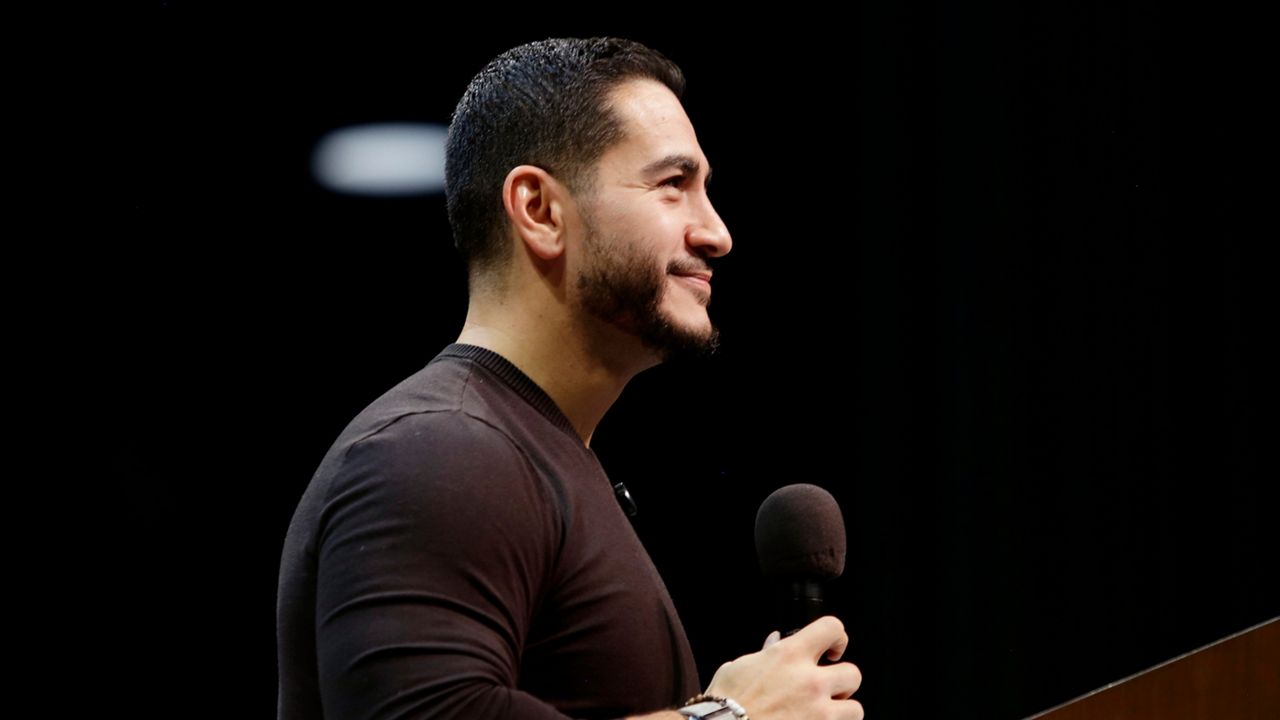
Iowa voters staring down the final week before the November 3 election saw a remarkably cordial clash on Tuesday night as Democratic State Auditor Rob Sand and Republican businessman Zach Lahn met for the final gubernatorial debate at Prairie High School in Cedar Rapids. The 90-minute matchup, hosted by The Gazette and KCRG-TV, offered a direct look at two contenders vying to succeed outgoing Kim Reynolds.
With early voting already underway across the state, the candidates traded visions on how to steer Iowa’s future.
Candidates Diverge on Psychiatric Bed Shortages
Both candidates acknowledged the acute shortage of psychiatric treatment beds across Iowa, though their prescribed remedies diverged. Sand brought the crisis into stark personal focus during the exchange, recounting a terrifying incident where he returned to his home to find a man with schizophrenia who broke into his home. After speaking with the man’s sister, Sand learned about the circumstances.
The problem is that we haven’t been paying enough attention to people who are struggling with mental health issues, and then sooner or later their mental health issues become our problem too.
Sand said. Lahn countered that the state needs to open additional mental health facilities, suggesting that some individuals currently housed in prisons would be better served in dedicated treatment settings. Lahn favored retaining privately managed Medicaid while tightening oversight to ensure timely provider payments and protections against improper claim denials.
Lahn Supports Technology for Medicaid Eligibility
On the topic of public assistance, both candidates expressed support for work or volunteer requirements. Lahn emphasized utilizing technology to verify eligibility smoothly while ensuring the reporting process remains straightforward for qualifying citizens.
Nitrate Pollution Contributes to Rising Cancer Rates
Iowa’s rising cancer rates prompted a joint discussion on environmental health and agricultural runoff. Lahn pointed to radon as a factor, but noted that high nitrate loads in drinking water remain one of the top causes of colon and other cancers. Lahn highlighted Iowa State University’s work on saturated buffers capable of removing 100% of nitrates, favoring targeted monitoring without adding mandatory financial burdens on farmers. Sand agreed that nitrate pollution exacerbates the state’s cancer crisis alongside smoking, drinking, and inactivity. He proposed eliminating waiting lists for farmers seeking conservation help and launching a large-scale wetlands restoration effort, while both candidates backed funding for the voter-approved Natural Resources and Outdoor Recreation Trust Fund, known as IWILL, which has languished unfunded since 2010.
Sand Criticizes Education Savings Account Spending
The debate over school choice drew clear dividing lines between the two campaigns. Sand criticized the state’s Education Savings Account program for providing assistance to wealthy families already planning to use private schools while Iowa faces a budget deficit. He argued that the state needs to reconsider its education spending priorities. Lahn defended the program, framing it as an opportunity fund for Iowa’s kids, though he supported independent third-party audits.
Budget Realities and Tax Cuts
Fiscal policy exposed the widest philosophical chasm of the evening. Sand warned that Iowa is currently outspending annual revenue by more than $1 billion, describing the trend as a “fiscal time bomb” that will exhaust state reserves. To close the gap, he proposed restoring ESA income limits, altering tax treatment for data centers, and regulating and taxing cannabis. Lahn defended the state’s recent income tax cuts, arguing that taxpayers deserve to keep more of their earnings while government spending undergoes efficiency reviews.