South Dakota Voters Split on Trump Job Performance as Economic Concerns Mount
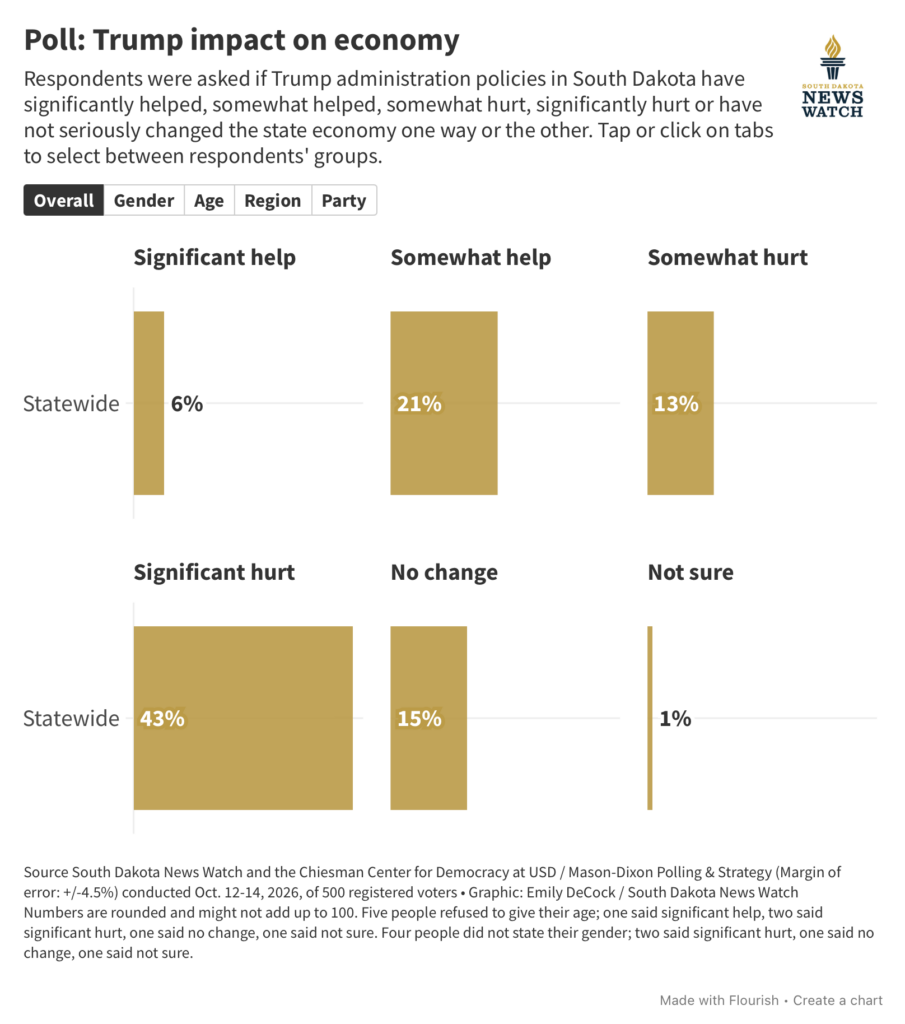
In South Dakota, likely voters who recognize that Donald Trump has hurt the state’s economy outnumber those who believe he is helping by more than two to one, according to a poll conducted for South Dakota News Watch and the Chiesman Center for Democracy by Mason-Dixon Polling and Strategy.
The survey results, highlighted by South Dakota News Watch, reveal a stark political divide in a historically deep-red state. Trump’s job approval among likely South Dakota voters is evenly split at 49 to 49 percent. Disapproval runs highest among younger voters under 35 and older voters over 64, exposing vulnerabilities across key demographic groups during Trump’s second and final term.
Political Analyst Points to Rural and Agricultural Discontent
Northern State University political scientist Dr. Jon Schaff noted that while Trump maintains solid favorability among loyal Republicans, his statewide numbers lag behind historical precedents for a heavily conservative electorate.
“In the more rural parts, even if you look at the west river numbers, Trump is kind of underwater in the state. If he’s at 50/50, that’s not great in a state as red as South Dakota, a very pro-Trump state,” Schaff said.
Schaff pointed directly to the agricultural sector as a primary catalyst for this shift in sentiment. Farmers across the state, many of whom backed Trump in past elections, have expressed deep frustration over specific federal trade and import proposals, including discussions regarding the importation of Argentinian beef.
“The farmers are very angry at Donald Trump. These farmers are Donald Trump fans. They voted for Donald Trump, and they are mad at Donald Trump,” Schaff said.
Retail Slowdown Reflects Cooling Consumer Enthusiasm
This localized economic dissatisfaction mirrors a trend across political retail. As reported by NPR, dedicated Trump merchandise stores have faced declining sales and closures as the president serves out his final term. Store owners report that consumer enthusiasm has softened without an active campaign keeping the brand at the forefront of voters’ minds.
Wes Alker, a retired auto mechanic and Trump superfan who visited a closing merchandise store for clearance items, described the shift plainly.
“He’s no longer a viable business model for entrepreneurs because he has peaked,” Alker observed.
Campaign Gear Sales Drop as South Dakota Voters Struggle
Wholesale distributors like the MAGA Mall report that sales for campaign-related apparel and gear have dropped by 30 percent compared to a presidential election year when Trump is on the ballot.
Despite mounting voter recognition that current federal policies have strained local businesses and agricultural markets, political dynamics in South Dakota remain complex. While challengers like Nikki Gronli have campaigned on the argument that Trump’s economic policies harm the state, many voters continue to wrestle with how to align their ballots with their economic reality.




