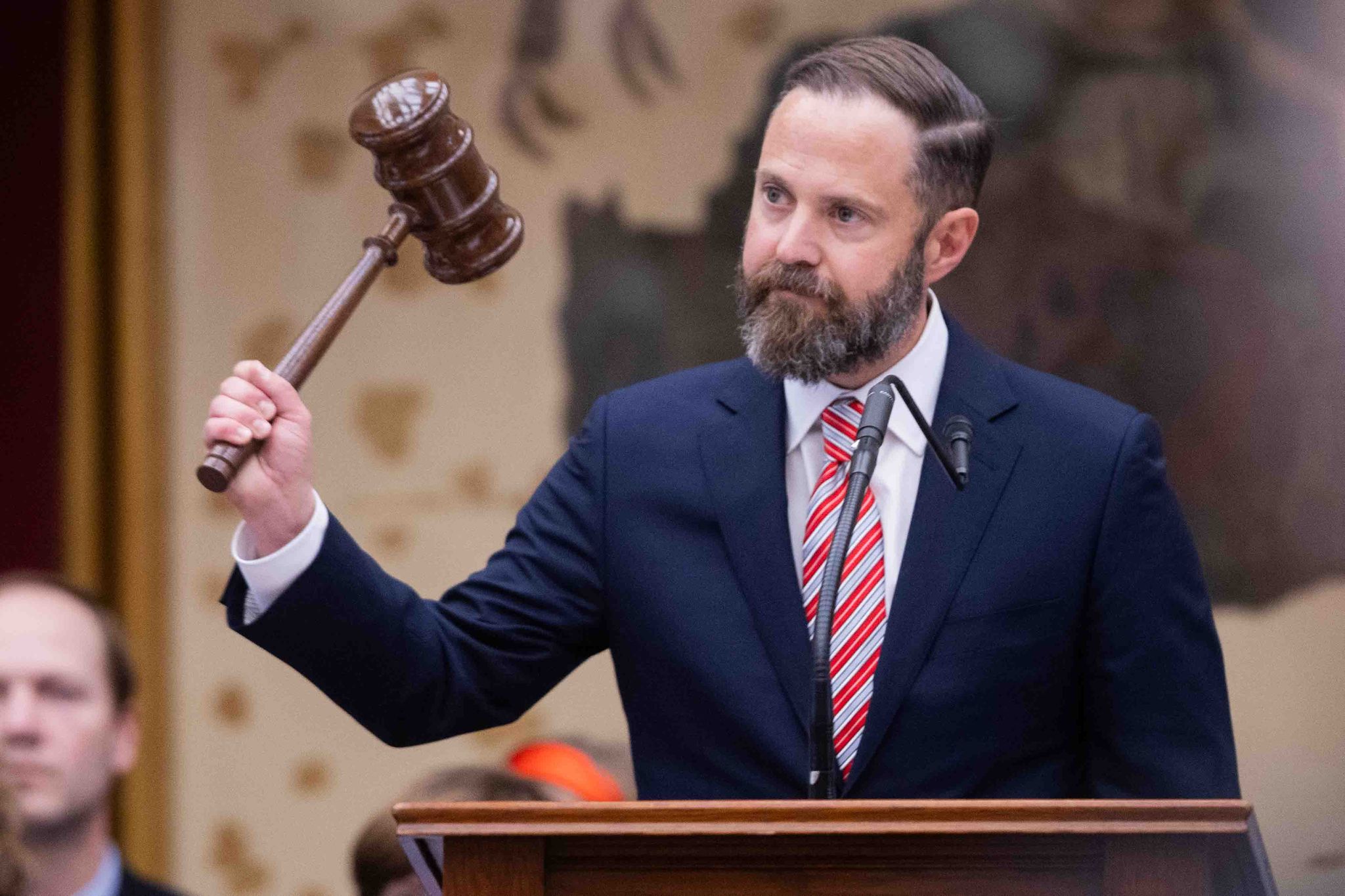
“We’re looking at our numbers, and they look good,” Houston Rep. Gene Wu, chair of the House Democratic Caucus, said as Democrats mount an energetic effort to flip the Texas House in Tuesday’s election.
For the past twenty years, Republican control of the 150-member Texas House has felt like a given. Now, Democrats need to pick up at least 14 seats to take the majority, targeting six Republican-held districts in North Texas alone, including two in Dallas County.
Defending the Majority Against a Potential Wave
Republicans have dismissed the prospect of losing their hold on the chamber as far-fetched, but party leadership is leaving nothing to chance in the final stretch. House Speaker Dustin Burrows, a Republican from Lubbock who assumed the gavel on Jan. 14, 2025, has crisscrossed the state on a bus tour and poured heavy financial support into defending GOP incumbents. Burrows has given nearly $6 million to candidates in targeted districts.
“This election cycle, we have our work cut out for us,” Burrows said in a news release announcing his tour. Even Lt. Gov. Dan Patrick sounded an alarm in April, warning that Republicans were “going to have a tough time holding the Texas House,” though Burrows maintained at the time that the chamber would stay red. Burrows declined an interview request for this report.
Most political analysts see fewer than 14 seats as competitive. Dick Murray, a senior research fellow at the University of Houston who has studied Texas politics for decades, noted that a Democratic takeover would require a massive shift. “It’s going to have to be a big wave, and that is the whole question,” Murray said. He added that in a wave election, campaign cash becomes “increasingly irrelevant” as voters rely more heavily on party labels, putting traditionally safe districts at risk.
Republicans hold a significant financial advantage in those competitive zones, with major GOP outlays outpacing the roughly $2 million contributed by two primary Democratic groups combined. Yet memories of 2018—when Democrats flipped 12 seats and left the reigning majority struggling to pass key legislative priorities—have kept the caucus on high alert.
Cypress Rep. Tom Oliverson, the Republican Caucus chair, argued that Democrats’ ambitions remain overblown, pointing to the strength of GOP candidates in tough races. “Some of our toughest races are fortunately some of our best candidates that have the best bipartisan appeal to the voters,” Oliverson said.
Dallas County Battlegrounds and Voter Frustration
Nowhere is the fight more visible than in Dallas County, where Republican Reps. Angie Chen Button of Garland and Morgan Meyer of University Park stand as the final two GOP lawmakers representing the area. Both have drawn heavy investments from Speaker Burrows, with Button receiving close to $633,000 and Meyer pulling in more than $422,000.
Button faces Zack Herbert, a Marine veteran and personal injury lawyer, while Meyer is opposed by Allison Mitchell, a small-business owner and children’s book author. Despite low approval ratings for President Donald Trump, Oliverson contended that state lawmakers are insulated from federal headwinds because the Legislature is more effective than Congress.
Democrats see it differently, betting that voter dissatisfaction with federal policies will bleed into state races. Rep. Wu argued that public frustration over the war in Iran, tariffs, and immigration enforcement has created an opening where lifelong Republicans might cross party lines. “Things just openly suck, and it’s because of Republican policies,” Wu said.
Houston state Rep. Christina Morales, who leads the campaign arm for the House Democratic caucus, argued that urban and rural voters alike are straining under current conditions, pointing to public education concerns in cities and hospital closures alongside the spread of data centers in rural areas. “What good things do Republicans have to talk about?” Morales asked.
The next Texas Legislature convenes in January, and Tuesday’s results will determine the balance of power as debates loom over school vouchers, property taxes, and education funding.