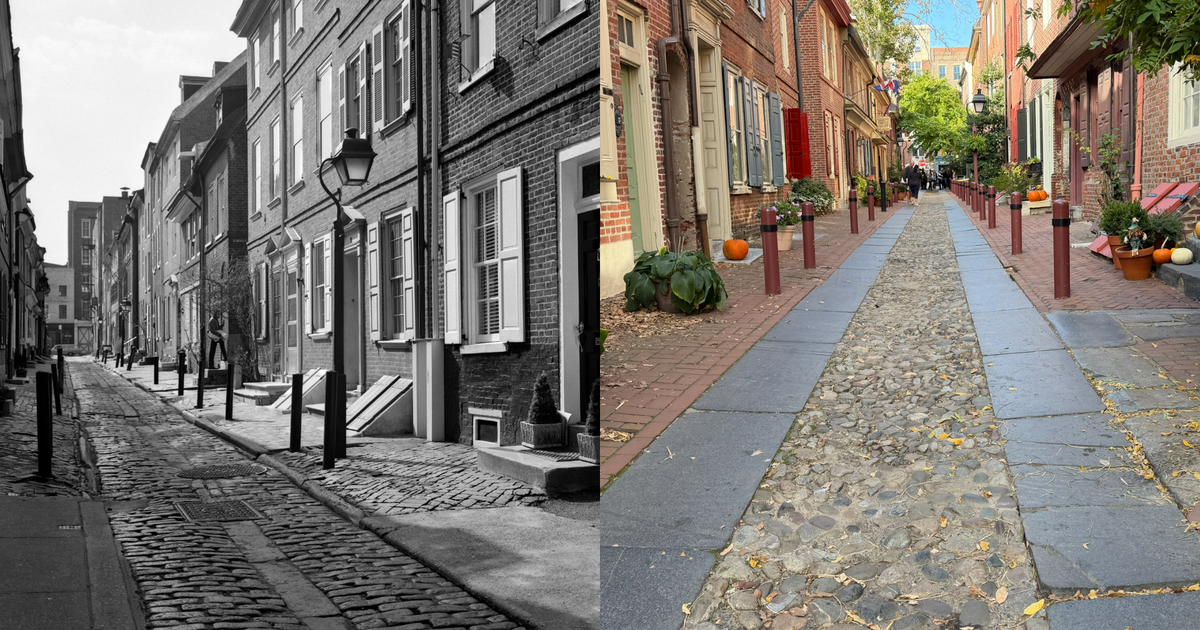
Philadelphia’s oldest corridors offer a sensory experience that defies the modern urban grid. Underfoot, the unmistakable rumble of rounded stones—anchored for centuries—serves as a physical link to the city’s colonial origins. While these historic pavements are often celebrated as quaint relics of a bygone era, they are, in fact, the remnants of a sophisticated, if rugged, municipal engineering feat that once transformed muddy colonial cart paths into the backbone of an industrial powerhouse.
From Riverbed to Roadway
The narrative of Philadelphia’s cobblestones is grounded in local necessity rather than imported luxury. Contrary to the enduring local myth that these stones arrived as ballast in the holds of European merchant vessels, historical documentation suggests a more pragmatic origin. Ships entering Philadelphia’s busy port were typically laden with valuable cargo, leaving little room for the inefficiency of carrying dead-weight stone.
Instead, the city’s early infrastructure relied on the local landscape. Beginning in the late 17th century, workers gathered naturally rounded, water-worn rocks directly from the shallows and banks of the Delaware River. These stones were essential for stabilizing the city’s wet, rutted thoroughfares. By 1769, the process had matured into a formal municipal operation, with city-appointed commissioners hiring professional pavers to level roads and install stone surfaces specifically designed to channel runoff into the city’s nascent stormwater and sewer networks.

Motorized Traffic Replaced Durable River Stone Paving
Between 1830 and 1884, the cobblestone network reached its zenith, serving as the primary paving material for a booming industrial city. These river stones were remarkably durable, capable of withstanding the relentless pounding of horse-drawn freight wagons and the heavy commercial traffic that fueled Philadelphia’s regional dominance. However, the rise of the motorized automobile in the early 20th century rendered this uneven, bumpy surface a liability.
As the city pivoted toward modernization, municipal crews began a systematic replacement of the river stones. Flat-topped granite blocks—known as Belgian block—were installed in many areas, while massive swaths of the city grid were buried under smooth, uniform asphalt. By 1915, nearly the entire original cobblestone network had been dismantled or covered, leaving only a handful of streets to serve as living history.
Preserving the Seven Survivors
Today, only seven streets across Philadelphia retain their authentic, historical colonial paving. These rare corridors are concentrated in the city’s founding neighborhoods: Old City, Society Hill, and Queen Village. Among them, Elfreth’s Alley stands as the most prominent example. Named for 18th-century blacksmith Jeremiah Elfreth, this National Historic Landmark holds the distinction of being the oldest continuously inhabited residential street in the nation, featuring 32 historic homes that span more than 300 years of habitation.
Preservation, however, is a constant challenge. Keeping these streets intact requires a delicate balance between modern utility and historic integrity. Elfreth’s Alley underwent a meticulous reconstruction in 1975. Municipal crews carefully removed the stones to install modern underground utility lines before resetting each one into its traditional position. This ongoing work is now supported by organizations like the Preservation Coalition of Greater Philadelphia, which coordinates with volunteers to monitor these pavements against the threat of routine utility excavations and roadwork.
Historic Streets Document Municipal Technology Evolution
The streets function as an outdoor classroom, documenting the evolution of municipal technology from the colonial era to the industrial age.



