
Maine’s Cultural Nonprofits Support 7,333 Jobs, New Study Finds
Maine possesses the third-highest concentration of arts and cultural nonprofits per capita in the United States, trailing only Washington, D.C., and Vermont with 103 organizations for every 100,000 residents, umaine.edu reported. A new study conducted by University of Maine economist Todd Gabe estimates that these institutions collectively support 7,333 jobs statewide when factoring in direct operations, supplier purchases, and employee household spending.
The research identifies 1,424 organizations across the state, ranging from local historical societies and rural public libraries to prominent institutions like the Portland Museum of Art, the Bowdoin International Music Festival, and the Penobscot Theatre Company in Bangor. Together, these entities generate $322 million in direct annual economic output and provide $125 million in compensation for 5,650 direct workers. Funding for the study came from a U.S. Department of Agriculture Rural Development Grant alongside the Maine Agricultural and Forest Experiment Station.
Economic Output and Business-to-Business Impact
Beyond payroll figures, the analysis evaluates the ripple effects of business-to-business transactions. Cultural nonprofits spend on utilities, building maintenance, equipment repairs, and professional services. When combining direct operations, purchases from suppliers, and employee household purchases, the sector’s total contribution reaches $660 million in economic output and $226 million in labor income across Maine.
These figures notably omit money spent by visitors at local hotels, restaurants, and retail stores while attending performances or visiting arts and cultural institutions. Mollie Cashwell, director of the Cultural Alliance of Maine, noted that the employment figures and concentration of cultural organizations reflect a sustained, community-wide commitment to keeping the arts accessible across every region.
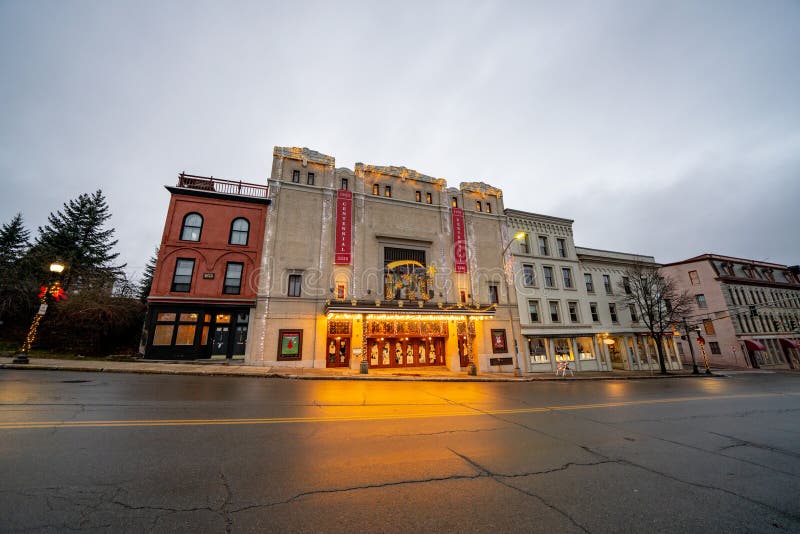
“Just seeing how the community reclaimed its downtown as a cultural destination was exciting,” Cashwell said, recalling the revitalization of downtown Bangor in the 2000s.
Cashwell pointed out that institutions like the Maine Discovery Museum and the Penobscot Theatre Company historically acted as anchors for downtown foot traffic, encouraging subsequent commercial growth. She also noted that workers in high-demand fields like healthcare have accepted jobs in the area because of the state's cultural amenities.
Maine Ranks High for per Capita Nonprofit Institutions
Maine’s dense network of nonprofits extends beyond performing arts venues. According to Gabe’s research, the state ranks third nationwide for per capita concentration of nonprofit museums, theaters, and historical preservation societies, and second for libraries per capita. This high placement stems from a combination of the state’s long history and interests of Maine residents and visitors, as well as a broader New England regional trend favoring historical sites and preservation.
Gabe has researched the creative economy since the early 2000s, analyzing topics ranging from the economic contributions of Waterfront Concerts in Bangor to the association between cultural amenities and higher home values.
Future Research Plans
Working alongside UMaine master’s student Katherine Grisham, Gabe compiled comparable non-profit data covering every U.S. state and Washington, D.C. His next research objective involves scaling the economic impact metrics down from the statewide level to examine county-by-county disparities.
“Instead of having the map show what’s happening in the 50 states, you’ll have a map that’ll show what’s happening in over 3,100 counties,” Gabe said, noting the anticipated variation between coastal regions, inland territories, and northern and southern Maine.



