
Immigration enforcement in the United States relies heavily on intelligence operations managed out of a quiet suburb in Vermont, where two federal facilities coordinate national data collection and deportation logistics, NPR reported.
Fall in Vermont brings thousands of tourists to the state’s mountains for peak leaf-peeping season. However, that seasonal migration did not motivate Abby Mnookin to drive 150 miles to the hamlet of Williston.
Instead, she joined immigrant rights advocates protesting outside two of the three ICE surveillance infrastructure facilities in the nation. The sleepy town of 10,000 residents in a solidly blue state houses the infrastructure powering immigration enforcement nationwide.
Inside the Williston Harvest Lane Facilities
Leif Taranta, an organizer of the ongoing demonstrations outside the complex on Harvest Lane, points to the Law Enforcement Support Center as the location for the national tip line for ICE and also their data center and surveillance headquarters.
This location serves as the national tip line for Immigration and Customs Enforcement, fielding tens of thousands of calls from the public each year according to Department of Homeland Security officials. Beyond processing tips, targeting specialists inside the building curate lists of noncitizens prioritized for deportation and coordinate dispatching operations for ICE agents nationwide.
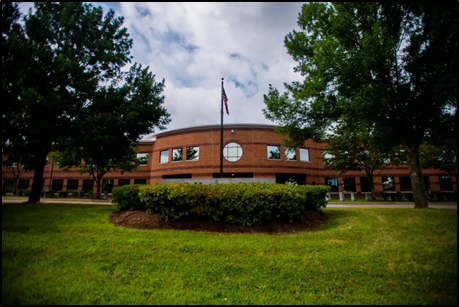
On a recent cold day, protesters blocked the facility’s parking lot entrances using a pop-up community garden built from giant planter boxes on wheels.
ICE officials did not respond to NPR’s specific questions regarding these facilities, their daily operations, or the specific uses of their harvested data. Department literature notes that the site houses a massive cache of information containing more than 100 million electronic records and biometric data available to federal, state and local law enforcement 24 hours a day, 365 days a year.
Expansion of Data Mining and Surveillance Infrastructure
A mile and a half away from the Harvest Lane center sits the National Criminal Analysis Targeting Center, tucked into a small business park between a local gym and a cafe.
Protester Elliott Hungerford describes this office as the heart of Homeland Security’s panoptic system. Human analysts and artificial intelligence tools constantly harvest and synthesize data to build comprehensive profiles of individuals across the country.

Kabbas Azhar, an attorney at the Electronic Privacy Information Center, notes an alarming shift following recent federal funding increases that made ICE the highest-funded law enforcement agency in the country. Analysts are moving beyond simple database queries toward proactive collection methods.
Recent contracts indicate that the Department of Homeland Security wants to expand its social media data mining capabilities across platforms like WhatsApp, TikTok, and LinkedIn to identify individuals suspected of posing a threat to ICE or the administration. Azhar warns that sentiment analysis inherently struggles with ambiguity and context, frequently sweeping protected speech into federal threat monitoring systems.
Protesters Gather Outside Targeting Center
Outside the targeting center, a small crowd of roughly 30 protesters gathered for music, dancing, and a planned evening punk show.
Julie Macuga remains undeterred by the modest turnout when considering the dynamic against federal infrastructure. She hopes local mobilization will signal that residents want these operations removed from their communities, much like public resistance previously kept ICE detention centers out of neighborhoods.