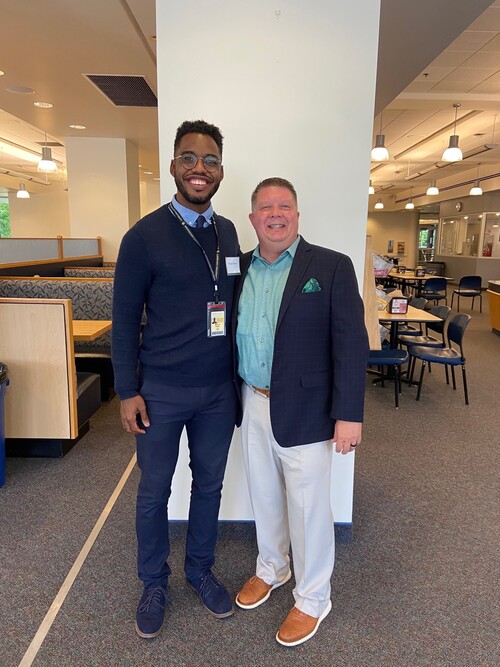
Mason Grimmett’s daily travels are logged roughly a million times every single month. That reality sits at the center of a constitutional challenge moving toward oral arguments this December, testing Wichita’s automated license plate reader surveillance network in Sedgwick County District Court.
A Decade-Long Expansion of Police Cameras
With the backing of the Kansas Justice Institute, Grimmett filed a lawsuit challenging the city’s extensive deployment of automated license plate readers. The legal battle targets a surveillance apparatus that has grown over more than a decade to encompass nearly 200 fixed and mobile police cameras across the city.
Warrantless Data Collection Versus Standing
The core dispute centers on whether capturing a license plate number constitutes a search under the law. In September, attorneys for the city of Wichita filed a motion to dismiss the lawsuit, arguing that the plaintiff lacks standing. The city further asserted that snapping photographs of vehicle plates falls outside the protections of Section 15 of the Kansas Constitution and the Fourth Amendment of the U.S. Constitution because it supposedly does not qualify as a “search.”
“Wichita has spent more than a decade building out its large-scale warrantless ALPR dragnet surveillance program,” said Sam MacRoberts, litigation director for Kansas Justice Institute. “Nearly a million times per month, Wichita indiscriminately collects data on every traveler in Wichita, including Mr. Grimmett. They do all of this without a warrant, without probable cause, without even a hunch. That’s unconstitutional.”
Broadening Protections Under the State Constitution
Legal teams for the plaintiffs fired back with a detailed response refuting the city’s arguments. They contend that the continuous tracking amounts to a warrantless dragnet that shatters any reasonable expectation of privacy. Their legal filings emphasize that Section 15 of the Kansas Constitution provides broader protections than its federal counterpart, pointing to a recent federal ruling that found a similar ALPR search ran afoul of Fourth Amendment rights.
Oral Arguments Scheduled for December
The upcoming hearing will test how local courts view automated tracking technology. Sedgwick County District Judge William Wooley is scheduled to hear oral arguments on the motion to dismiss at 9 a.m. on December 4, 2026, in courtroom 7-2 of the Sedgwick County Courthouse.