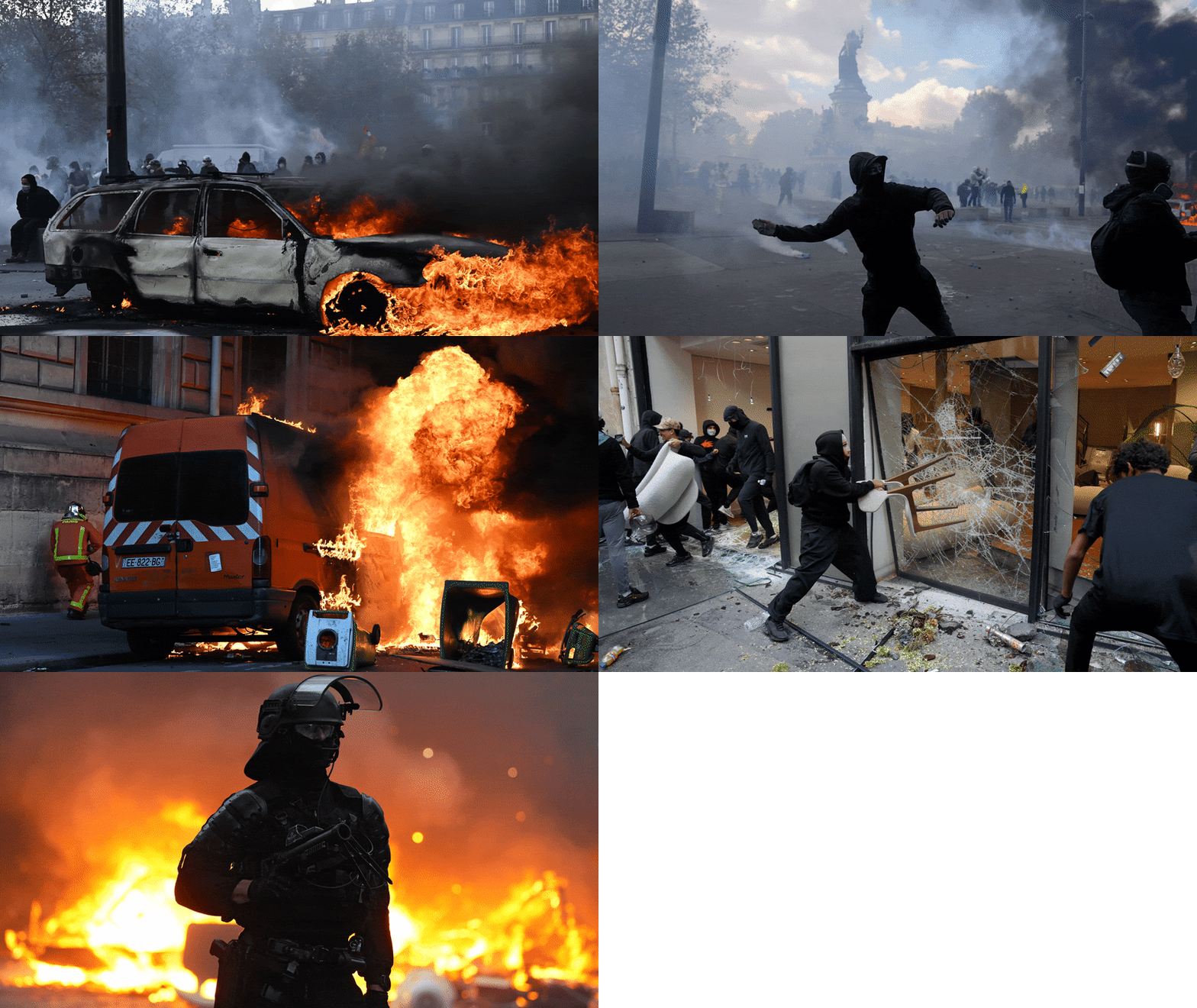
More than 1,200 people were arrested across France on Saturday as nationwide protests against rising living costs and public service conditions escalated into widespread violence. While hundreds of thousands marched peacefully, clashes between riot police and fringe groups resulted in fires, looting, and 150 injured police officers, prompting condemnation from President Emmanuel Macron.
Updated October 25, 2026
Protesters Gather Across France over Living Costs
Protests erupted across France on Saturday, drawing hundreds of thousands of people into the streets to voice frustration over the cost of living, energy prices, and the state of the education system. The scale of the mobilization remains a point of contention between the government and organizers. Interior Minister Laurent Nuñez reported that approximately 550,000 people participated in 110 marches nationwide. Conversely, the CGT labor union and various student organizations estimated the total turnout at 800,000.
The demonstrations, which began last month as student-led school blockades, have expanded to include trade unionists and participants linked to the “gilets jaunes” (yellow vests) movement. This coalition has sought to channel broad economic discontent into a unified challenge against government policy. In Paris, despite police efforts to restrict access to the Champs-Élysées and government buildings, an estimated 110,000 demonstrators gathered near the Place de la République.
Protesters in fluorescent yellow vests were frequently seen at these rallies, an echo of the movement that first appeared in 2018. One participant, identified as Mabrouk, criticized policies that favour the rich and always hit the poorest people in their wallets.
The demonstrations have been characterized by some as a movement that will grow with all parts of society,
according to student protesters.
Violence in Limoges, Lyon, and Paris
While the majority of marches remained orderly, the day was marked by intense clashes in several cities. In the central town of Limoges, the 143-year-old town hall was “largely lost” to a fire ignited during the unrest. Similar scenes unfolded in Lyon, where a tourist office was set ablaze, and in Marseille, where protesters briefly forced their way into the lobby of City Hall and damaged furniture after knocking over a bust of Marianne, the symbol of the French Republic.
In Paris, the atmosphere turned volatile as masked groups targeted shops and police vehicles.
Authorities reported break-in attempts at city halls in Lille and Calais, as well as violence directed at a police station in Brest. Further disturbances were noted in cities including Rennes, Toulouse, Montpellier, and Grenoble.
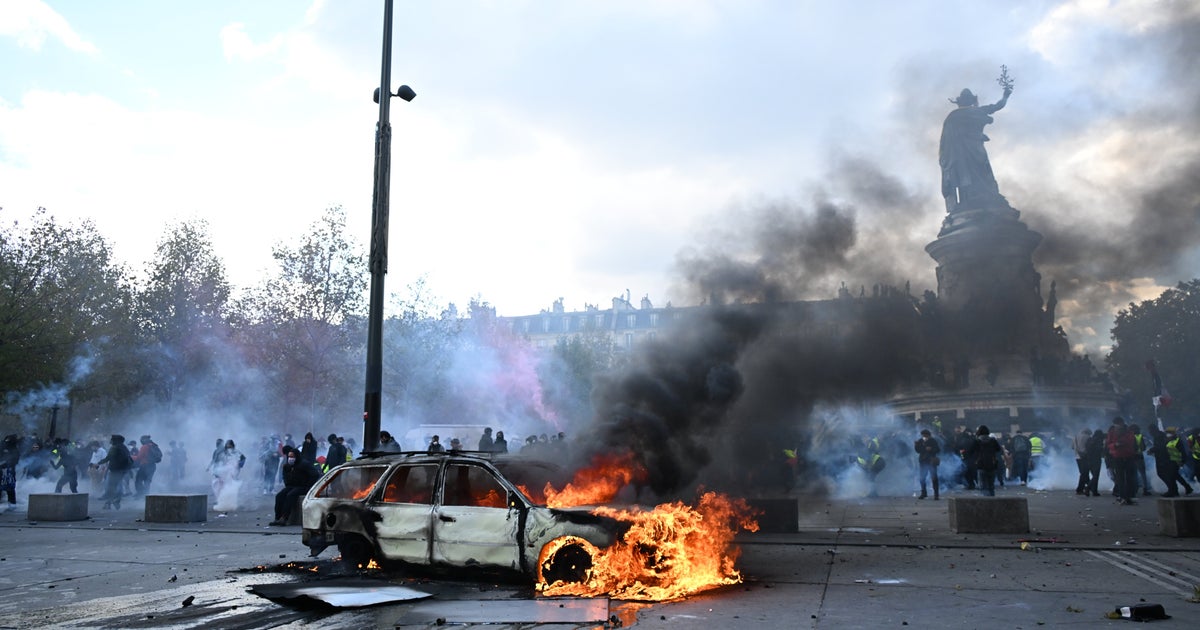
Macron Condemns Violence During Nationwide Demonstrations
Macron denounced the presence of individuals who were there solely to cause damage and create unrest,
describing such acts as “unacceptable.” He stated that the government would not declare a state of emergency but vowed to deal with those responsible for the destruction firmly.
We will stand united against those who sow chaos … and who prevent people from peacefully expressing their demands.
Emmanuel Macron, President of France
Interior Minister Laurent Nuñez characterized the destructive elements as opportunistic delinquents
who hijacked the protests to pillage and loot. According to the Interior Ministry, 150 police personnel were injured during the Saturday clashes, a figure that Prime Minister Sébastien Lecornu noted could have been much worse. It's a miracle the toll wasn't higher,
Lecornu remarked while visiting officers in Paris.
Riot Control Weapons Cause Severe Protester Injuries
The use of riot-control weapons has become a focal point of criticism among activists. Nuñez had previously suspended the use of a specific type of police stun grenade against high school demonstrators after a 15-year-old lost a hand, though he noted that the suspension did not apply to the broader protests staged on Saturday. Additional reports indicate that a protester in Saint-Étienne lost a hand in a grenade incident, and a student suffered a similar injury in Lens earlier in the month.
The movement has drawn varying political reactions. The right has positioned itself in support of the police. As France approaches its next presidential election in 2027, the government has acknowledged students’ concerns and pledged to find swift solutions, even as it faces criticism from opposition figures regarding the police response to the unrest.
Update (October 25, 2026)
According to the BBC, France's Chambers of Commerce and Industry estimated the nationwide destruction at hundreds of millions of euros, with more than 2,000 shops and businesses directly impacted. French authorities subsequently imposed overnight curfews in Paris and other cities.
The BBC also reported that about 1,000 police officers were injured, and one demonstrator's hand was blown off by a police crowd-control grenade, according to the AFP news agency. Ahead of France's presidential elections in six months, leading contenders blamed Macron and his ministers. Similar mass protests also occurred internationally, including tear gas fired in Tirana, clashes in Brussels, and a heavy security operation preventing gatherings in Milan.