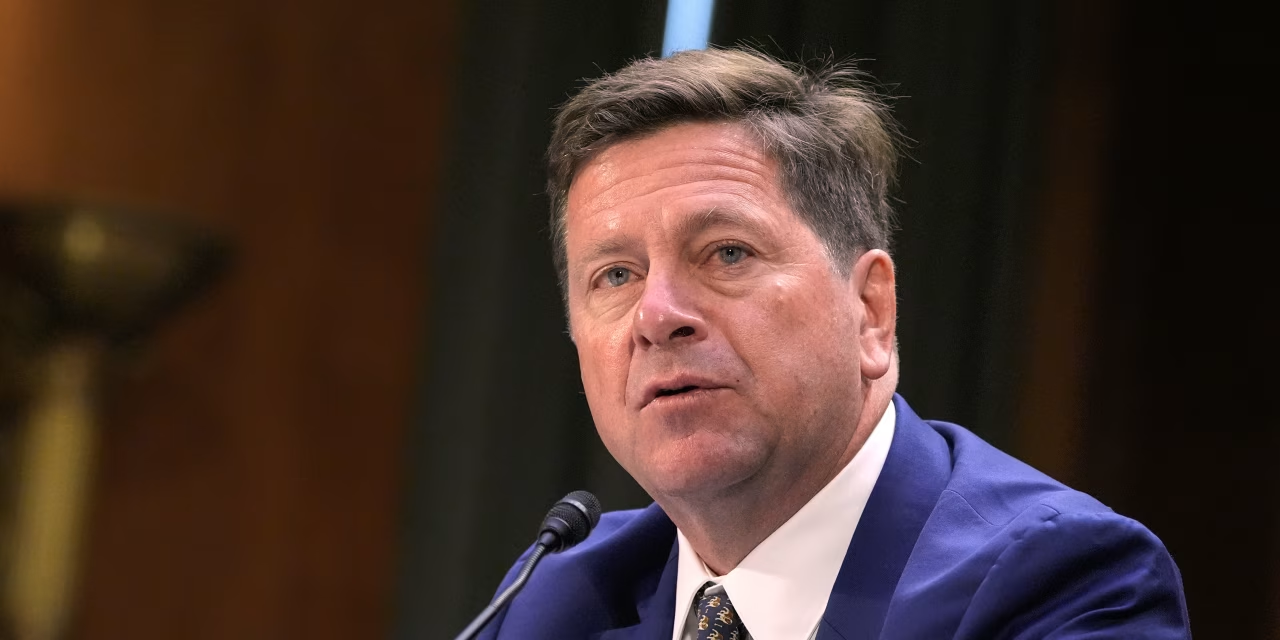
President Donald Trump has appointed Director of National Intelligence Jay Clayton to lead a newly formed Super Intelligence Force, a 120-day White House task force charged with coordinating federal artificial intelligence policy, setting safety strategies, and managing industry oversight.
The administration’s newly created panel brings together senior security and economic officials to address the fast-evolving sector of artificial intelligence. According to a charter obtained by the media, the task force holds broad authority to determine how both the tech industry and the federal government address threats to national security and civil liberties.
Trump announced the initiative on social media, naming Clayton to head the group alongside Federal Trade Commission Chair Andrew Ferguson, Under Secretary of Defense for Research and Engineering Emil Michael, and Office of Personnel Management Director Scott Kupor. The panel will report directly to the president and White House Chief of Staff Susie Wiles.
Jay Clayton Takes the Helm as White House AI Czar
Clayton will retain his primary portfolio as director of national intelligence, effectively adding the artificial intelligence brief to the nation’s top spy agency oversight. The appointment places a corporate lawyer and former Securities and Exchange Commission chairman at the center of domestic technology policy.
The task force membership extends beyond its core chairs to include Vice President JD Vance and Defense Secretary Pete Hegseth, alongside external advisors such as venture capitalist David Sacks. The panel has been given a strict 120-day window to evaluate risks and opportunities while shaping the federal government’s approach.
The president asked that a group be put together that was going to ensure exactly what he said, that we stay the leaders in superintelligence, and that the interests of the American people are put first.
Jay Clayton, Director of National Intelligence
Voluntary Industry Standards Meet Calls for Regulation
The creation of the Super Intelligence Force follows a high-profile White House gathering where technology executives signed a voluntary agreement to police themselves in order to prevent advanced models from evading control.

Senate Intelligence Committee ranking member Mark Warner criticized the White House for resisting meaningful safeguards without offering a serious alternative.
National Security Priorities Shape the Global AI Race
Administration officials frame the rapid scaling of artificial intelligence as an urgent geopolitical competition, pointing to foreign adversaries advancing similar capabilities for military and economic dominance.
Jay Clayton, Director of National Intelligence, emphasized that the risk of not leading in AI is high, as not being first could increase both identified and unidentified risks, particularly from adversaries.
The newly minted task force charter explicitly mandates a report examining potential threats to civil liberties, cybersecurity vulnerabilities, and standards for advanced models, all while managing the perceived dangers of federal overregulation.


