The United States government approved the export of approximately 879,000 advanced artificial intelligence chips to Chinese companies between December 2025 and May 2026, according to licensing data released by the US House Foreign Affairs Committee.
This disclosure highlights the tension between Washington’s trade restrictions and the ongoing flow of critical technology. The approved shipments include high-end processors from Nvidia and AMD, directed toward major Chinese technology firms that appear on a Pentagon list of companies with alleged military ties.
House Foreign Affairs Committee Chairman Brian Mast described the release as the most detailed public disclosure in the history of the Export Control Reform Act, a 2018 law that expanded the Commerce Department’s authority to restrict sensitive technologies for national security reasons.
During this six-month window, companies sought licenses to export millions of AI chips. While the committee confirmed the approval of 879,000 chips, it remains unclear how many of these licenses resulted in actual shipments.
- Chinese firms Baidu and BYD were granted licenses for 43,000 and 4,000 chips, respectively.
- US lawmakers have criticized the administration for easing export policies that were originally established to curb Beijing’s military and AI development.
Nvidia CEO Resignation and Security Concerns
An investigation by the US Commerce Department into prohibited chips reaching Megaspeed, a Chinese-linked entity, followed reports of the matter. Alice Huang, a Chinese citizen formerly employed in Chinese television, became a major shareholder in Megaspeed in 2023, according to Asianet News Malayalam. Public records show the two appeared together at a technology conference in Taipei in 2024 and were captured in photographs at a private event in 2025.
Expanding Global Restrictions on Data Access
These rules address concerns that Chinese firms have been utilizing foreign data centers to bypass direct sales bans on Nvidia chips. Previously, Singapore-registered Swift Data took over ownership of Megaspeed, a firm accused of facilitating these restricted chip flows. Officials expect these licensing requirements to be fully implemented within approximately 90 days, closing a critical loophole in the current trade enforcement framework.
Strategic Response to Technological Espionage
The intensifying scrutiny follows broader concerns regarding a massive espionage network aimed at semiconductor and AI technology. Western authorities have alleged that Chinese intelligence has successfully obtained sensitive data ranging from specialized foam for submarines to genetically modified agricultural seeds through cyberattacks and honey traps. The FBI has said that the number of hackers linked to China significantly outstrips its own cyber personnel, underscoring the scale of the threat.
In response to these risks, the US and its allies have increased their vigilance, with agencies like the UK’s MI5 warning that over 100 British researchers were unknowingly targeted by Chinese espionage.
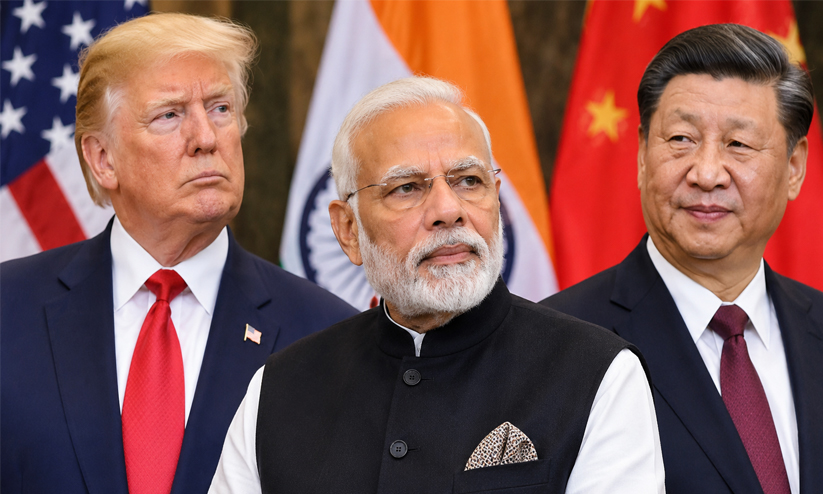
Meanwhile, India is positioning itself as an alternative hub for global AI investment, supported by its own “India AI Mission,” which has allocated significant funding and provided access to over 45,000 GPU chips for domestic startups and researchers. These developments reflect a growing global effort to insulate sensitive AI infrastructure from state-sponsored intelligence operations.
Espionage and Regulatory Hurdles
These regulations aim to prevent Chinese companies from using the computing power of US-made chips through foreign data centers. According to reports, Chinese intelligence agencies, specifically the Ministry of State Security (MSS), have been orchestrating efforts to bypass these restrictions.
MSS head Chen Yixin has reportedly formed a specialized committee to secure critical technologies that are unavailable through standard commercial channels, citing the need to defend against US political and ideological threats.

While China continues to pursue self-reliance in semiconductor production—with firms like Huawei selling hundreds of thousands of AI chips in the first half of 2026—Nvidia’s market share for AI chips in Chinese data centers fell during the same period. The US continues to restrict the export of Nvidia’s Blackwell and Rubin chips, fearing these technologies could be used to enhance China’s military capabilities and encryption-breaking systems.
As Chairman of the House Foreign Affairs Committee since 2025, Brian Mast has utilized his oversight authority to mandate transparency regarding the administration’s export licensing process. By releasing detailed data on the approval of hundreds of thousands of advanced AI chips for Chinese firms, Mast has sought to expose potential failures in national security enforcement.
This public disclosure serves as a direct challenge to the administration’s current trade strategy, which critics argue is inconsistent with the original intent of the 2018 Export Control Reform Act. Mast, a combat veteran who served as an explosive ordnance disposal technician with the 28th Ordnance Company during Operation Enduring Freedom, leverages this committee leadership to pressure the executive branch for stricter adherence to technology restrictions.
| Recipient | Approved Chip Count |
|---|---|
| Alibaba | 75,000 |
| Baidu | 43,000 |
| BYD | 4,000 |
As the debate over national security continues, the US maintains that its export controls are essential to slowing China’s rapid progress in AI supercomputing, where the US currently holds a significant majority of the global computing power compared to China.