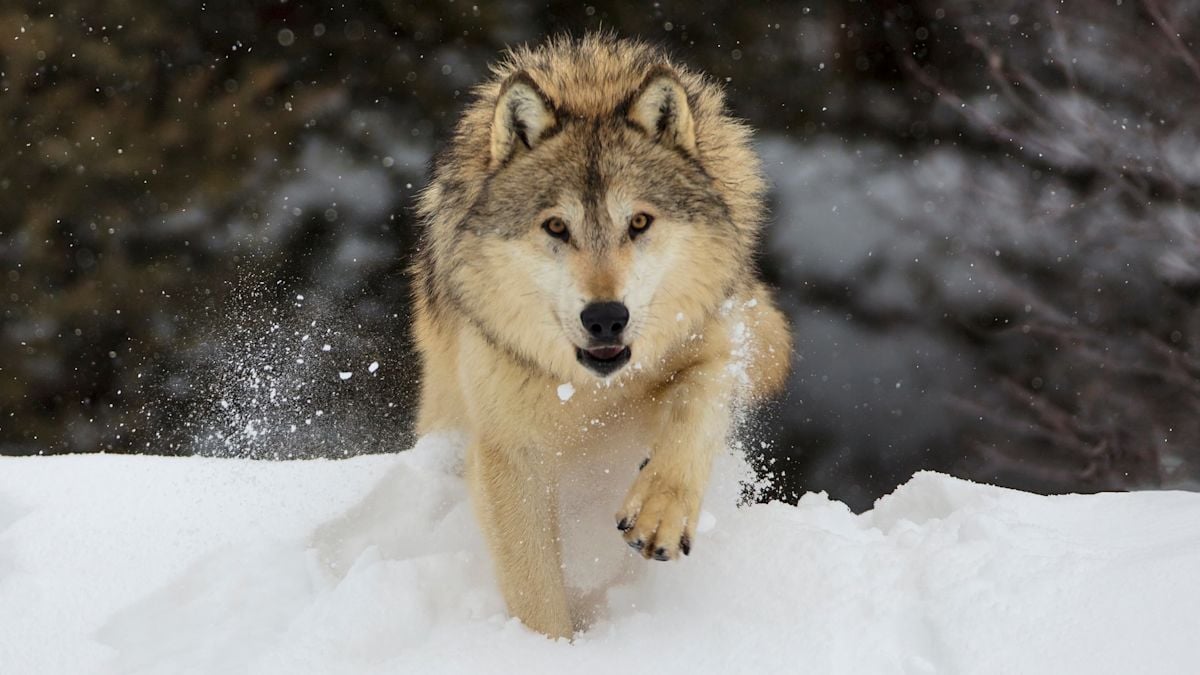
Three grey wolf pups engineered with pale fur, larger bodies, and bigger teeth in 2025 have ignited a sharp scientific debate over whether genetic editing can truly reverse extinction, or if the resulting animals are merely grey wolves with some dire wolf traits.
Biotech company Colossal Biosciences manufactured twenty targeted genetic edits in gray wolf cells to recreate characteristics of the dire wolf. This process yielded three surviving pups named Romulus, Remus, and Khaleesi, as Beth Shapiro told Andrew Huberman.
Marine biologist Andrew Davinack and biochemist Charlotte Daniels from Wheaton College Massachusetts said in a paper published in Biology Letters that calling this achievement a de-extinction is a fundamental misnomer. They said that an extinct species cannot be recovered because its evolutionary lineage has ended.
Species are historically continuous population-level lineages shaped by gene flow, mutation, drift, selection, demographic history and ecological interaction.
Andrew Davinack and Charlotte Daniels, via Yahoo News
The researchers said that a genome, even when accurately reconstructed, represents “at most a partial snapshot of an individual organism.” The environmental conditions, prey, and predators that shaped the original dire wolves more than 10,000 years ago no longer exist in the modern world.
Shapiro said that biology does not adhere strictly to rigid human definitions of species. She explained how Neanderthals and modern humans interbred historically, and how polar bears and brown bears continue to hybridize. Colossal applies a similar comparative philosophy to its projects, such as using artificial intelligence to locate regulatory DNA switches.
The dodo was last sighted in 1662 on the island of Mauritius. Researchers used an artificial intelligence tool to analyze genomic data and skull measurements from more than 70 bird species, identifying 2,300 genetic features linked to the bird’s distinctive beak and skull shape.
The answer turned out to be comparative: use the breadth of living bird diversity, combined with AI, to identify candidate loci for the next phase of testing.
Beth Shapiro, Colossal’s chief science officer, via Daily Star
Colossal chief executive officer Ben Lamm said that “de-extinction is as much a data problem as a biology problem.” He said that their platform learns how regulatory DNA shapes living birds to identify candidate elements for replication in the Nicobar pigeon, the dodo’s closest surviving relative.
Davinack and Daniels said that private companies and media outlets should use more precise terminology, distinguishing “lineage restoration” from “phenotypic reconstruction.” They do not claim genetic engineering lacks merit. They said that using preserved cells or embryos offers a more promising route for true biological continuity, citing cell preservation efforts attempted with the Pyrenean ibex in 2003.
Shapiro said that the stack of genetic tools serves both de-extinction and modern conservation. She noted applications such as cloned red wolves adding genetic diversity to tiny captive populations, and black-footed ferrets benefiting from frozen cell cloning, much like cell preservation efforts attempted with the Pyrenean ibex in 2003.