A Rare Case of Disseminated Bullous Impetigo in a Young Traveler
An 18-year-old woman recently returned from a trip to rural Costa Rica with a severe, widespread skin infection that highlights the complexities of diagnosing infectious diseases in international travelers. According to a case report published in Cureus, the patient developed disseminated bullous impetigo—a condition typically reserved for young children—after sustaining minor abrasions during her travels. This case serves as a clinical reminder that even in healthy, immunocompetent adults, environmental factors and skin barrier disruption can lead to atypical and aggressive bacterial presentations.
The patient’s journey to diagnosis was not straightforward. While in Costa Rica, she experienced a progressive vesiculobullous rash that was initially misidentified as contact dermatitis. Despite receiving various treatments, including antibiotics and topical steroids, her condition worsened. By the time she returned to the United States, she was suffering from high fevers and painful, spreading lesions that covered her trunk, buttocks, and extremities, eventually requiring hospitalization and specialized care.
The Clinical Challenge of Atypical Presentations
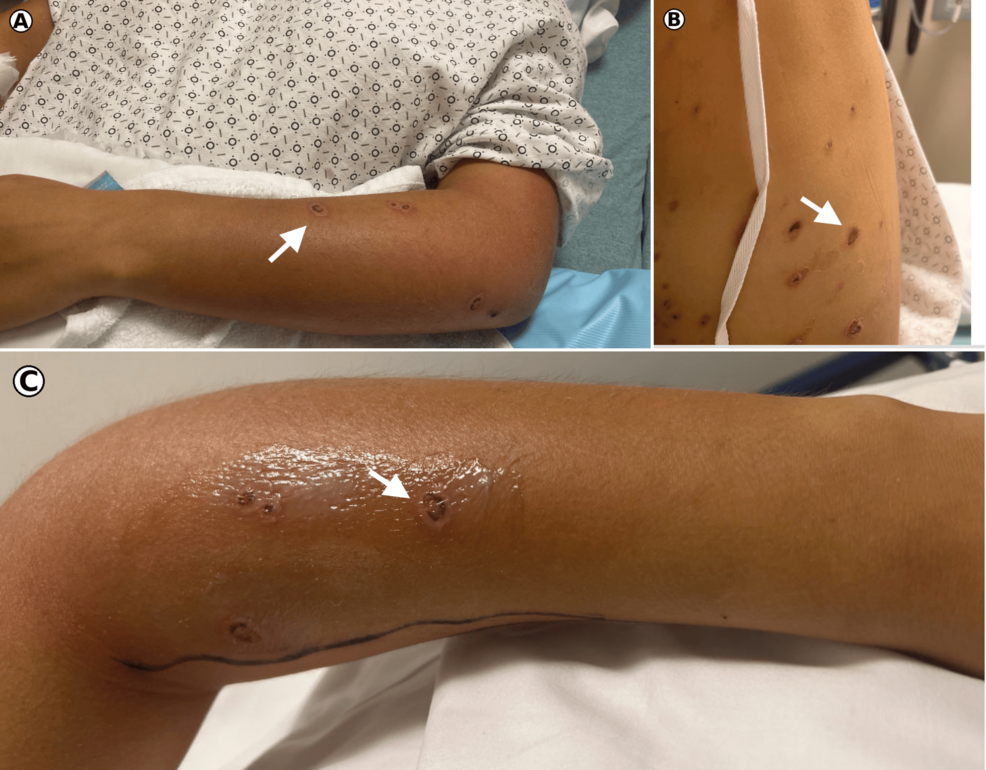
Bullous impetigo is commonly caused by exfoliative toxin-producing Staphylococcus aureus. The toxin works by cleaving desmoglein 1, a protein essential for holding skin cells together. While this mechanism is well-documented in pediatric populations, it is rarely seen in such an extensive, disseminated form in adults who lack underlying health issues. In this instance, the patient’s physical examination revealed a mix of crusted lesions, denuded bases, and pustules, with the infection spreading to her elbow, where it manifested as septic olecranon bursitis.
“This case highlights the broad differential for vesiculobullous eruptions, the role of skin barrier disruption and auto-inoculation, and the importance of evaluating for HIV in adults with bullous impetigo,” the authors noted in the Cureus report.
The severity of the patient's illness highlights the risks associated with tropical environments. High humidity, minor skin trauma—such as the scrapes she sustained on a forest log—and limited access to sterile hygiene facilities create an ideal breeding ground for bacteria. For travelers, these conditions can turn minor injuries into systemic infections, especially when the skin barrier is already compromised.
Diagnostic Rigor in the Face of Infection
Upon her admission to the hospital, clinicians utilized a comprehensive workup to rule out other serious conditions. The breakthrough in her treatment came from a wound culture, which confirmed the presence of methicillin-sensitive Staphylococcus aureus. This allowed doctors to narrow her treatment to cephalexin and topical mupirocin, leading to a successful recovery.
The case also sheds light on the importance of considering the social and environmental context of a patient’s travel. The patient had engaged in unprotected sexual activity while abroad, which prompted a thorough screening for sexually transmitted infections. While those tests were negative, the report emphasizes that bullous impetigo in adults—particularly in sexually active populations—should always prompt a careful evaluation for underlying immunodeficiency, including HIV.
The Stakes for Travelers and Clinicians
For the average traveler, this case acts as a cautionary tale regarding the importance of wound care in tropical climates. A simple scrape or abrasion, if left unattended or exposed to the elements, can escalate into a significant health crisis. For the medical community, the lesson is equally clear: clinicians must maintain a high index of suspicion for bacterial infections when evaluating skin eruptions that fail to respond to initial therapies.
As more individuals explore rural and tropical regions, the potential for encountering rare or misdiagnosed dermatological infections remains a persistent variable in travel medicine.