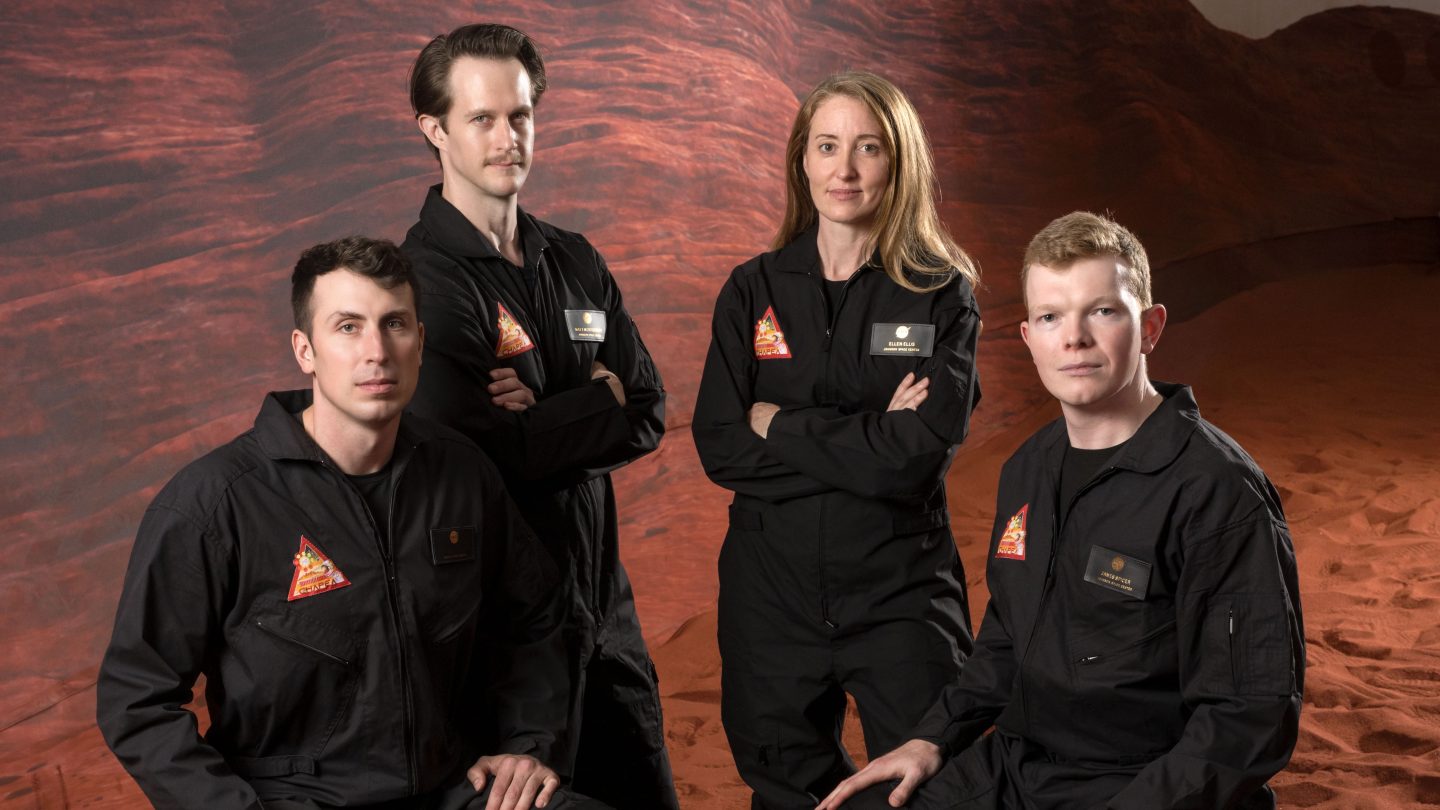
Four volunteers left a 1,700-square-foot simulated Mars habitat at NASA’s Johnson Space Center on October 31, 2026, after completing 378 days of isolation. The CHAPEA Mission 2 crew tested resource limits, crop growth, and communication delays to gather data for future deep space exploration.
The heavy airlock door of the habitat swung open on October 31, 2026, allowing Ross Elder, Ellen Ellis, Matthew Montgomery, and James Spicer to step back into Earth’s atmosphere. They had spent 378 days sealed inside a 3D-printed facility housed within a hangar at the Johnson Space Center in Houston.
The mission, designated as NASA’s second Crew Health and Performance Exploration Analog or CHAPEA, began on October 19, 2025. Inside the 1,700-square-foot structure built with a 3D printer, the volunteers lived cut off from natural light and outside air.
Their environment was engineered to replicate the physical and psychological stressors astronauts will face during a real expedition to the Red Planet.
NASA can utilize physiological and operational metrics gathered during the simulation to formulate strategies addressing human spaceflight hazards for upcoming Artemis operations and lunar outpost activities.

Johnson Center Director Vanessa Wyche and NASA astronaut Jack Hathaway provided remarks during the departure proceedings, while media gathered outside the hangar holding the facility. The Earth-based mission provides foundational data to inform human exploration of the Moon, Mars, and beyond, supporting vehicle design and mission planning.
Crew Tests Communication Delays and Resource Limits in Houston
To simulate the vast distance between Earth and Mars, NASA introduced communication delays and managed bandwidth on the Deep Space Network. James Spicer noted he received over 4,000 emails over the course of the mission.
During one phase of the expedition, the participants spent a full fortnight entirely cut off from outside contact. This replicated an actual communication blackout scenario that could occur if the sun positioned itself directly between Earth and Mars.
The crew managed strict resource limitations while maintaining their living quarters, conducting simulated spacewalks in a red-sand arena inside the hangar, and growing their own crops.
John DeWitt, Rice University’s director of sports science and a former NASA scientist, pointed out that heavy exercise creates a challenge for deep space missions regarding food system design.
Matthew Montgomery, a two-time University of Central Florida electrical engineering graduate, spent 378 days in the habitat after entering on October 19, 2025.
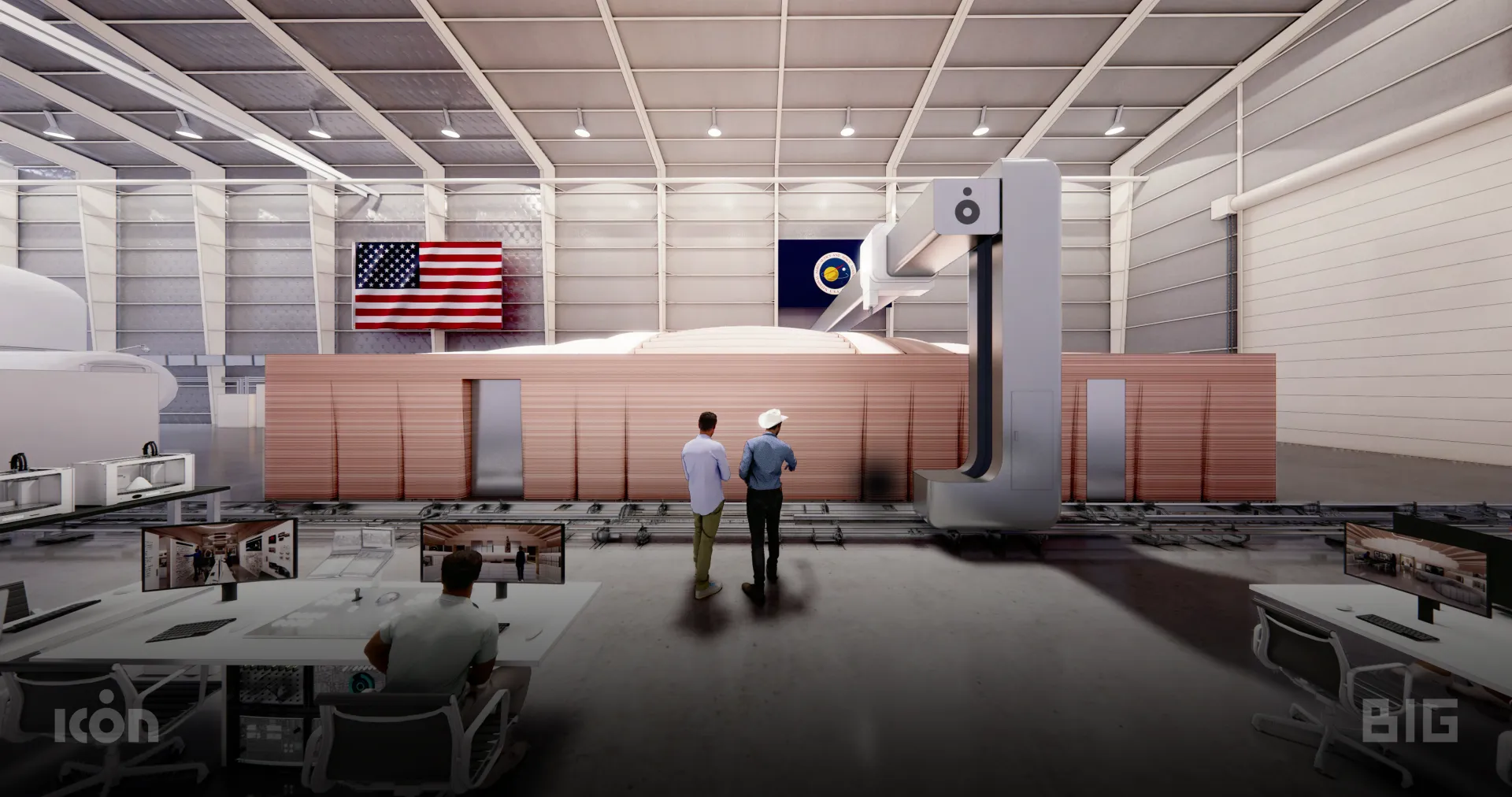
Vanessa Wyche, the Johnson Center Director, noted that the crew lived in an isolated environment for more than a year. They conducted critical research and helped NASA better understand what it will take to send humans to Mars.
Scientists Collect Data for Future Artemis and Deep Space Missions
Sara Whiting, a NASA Human Research Program project scientist, stated that lessons learned will inform real-life mission planning, surface habitat designs, and other resources.
The first CHAPEA crew completed its own simulated Mars stay from June 25, 2023, to July 6, 2024, in a mission NASA also planned for 378 days.
NASA Prepares Applications for the Next Simulation Cycle
Applications are currently open for an upcoming Moon and Mars Exploration Analog, which will be another 12-month mission commencing no sooner than August 2027.
For Mars, the risks are great, but through seeking understanding, strong vision and leadership, creativity, fortitude, hard work, and an incredible foundation, the goal of putting humans on Mars is not only achievable, but rather inevitable.
Ross Elder, Commander
The first CHAPEA crew completed its own simulated Mars stay from June 25, 2023, to July 6, 2024, in a mission NASA also planned for 378 days.