An Office Coexistence
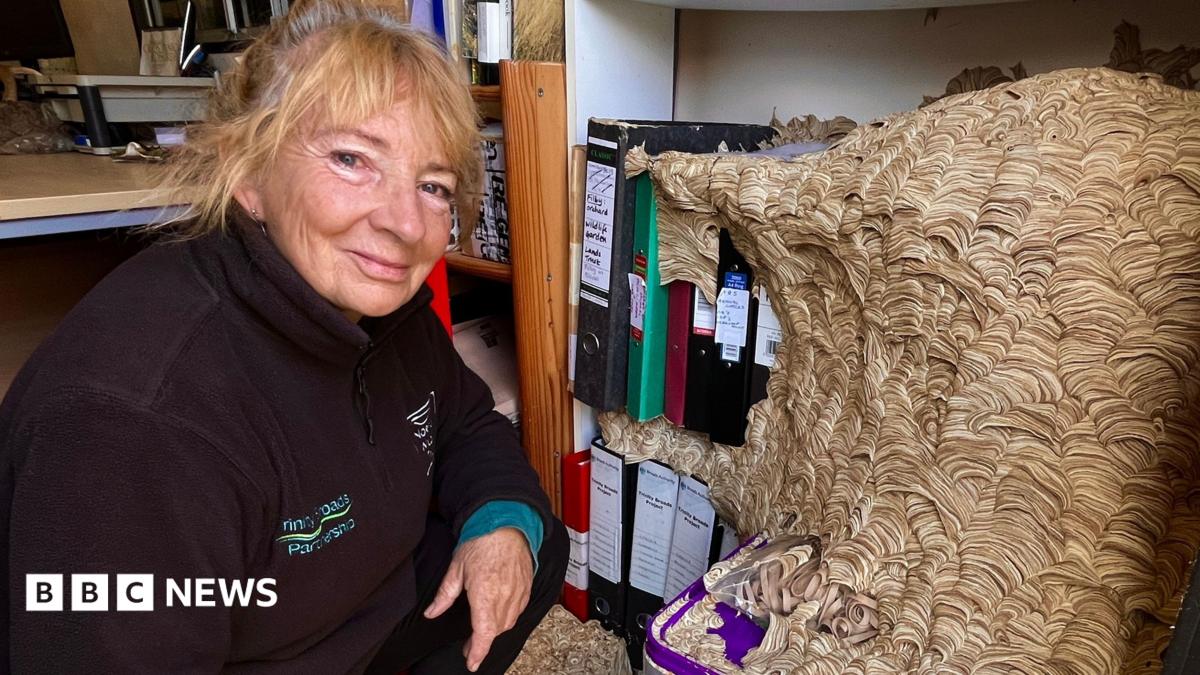
Rothney, who manages the Trinity Broads, first noticed the colony in June. At that time, the nest was roughly the size of a paperback book. Over the summer, the insects utilized a hole in the office door frame to enter and exit, maintaining a constant presence that Rothney estimated at tens to twenties of wasps at any given time. The office’s location, near a meadow and a pond, offered the colony easy access to food and water, allowing the structure to expand to approximately one metre in height.
The manager chose to let the colony thrive, citing a professional commitment to conservation and the ecological importance of all insect species. According to Rothney, wasps perform essential functions within natural systems, including pollination and pest control. She observed the insects through the summer months, describing their nest material as resembling exotic paper.
Dismantling the Architecture
Rothney waited until the autumn, when she was certain the colony had naturally vacated the office, before beginning the removal process on a Tuesday. As she peeled back the layers of the papery structure, she described herself as “amazed” by the complexity of the internal design. Upon reaching the shelves and ring binders, she uncovered the intricate, hexagonal cells where the larvae had been raised.
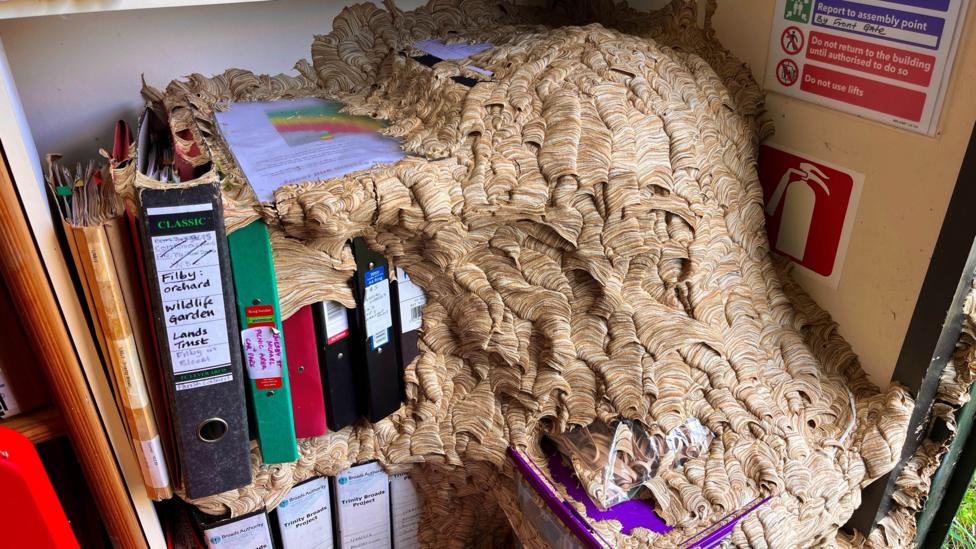
While the manager noted that she will miss her office colleagues, she remains confident that the specific colony will not return, as the season has reached its natural conclusion. However, she indicated that she would be open to the insects returning to the space next year.