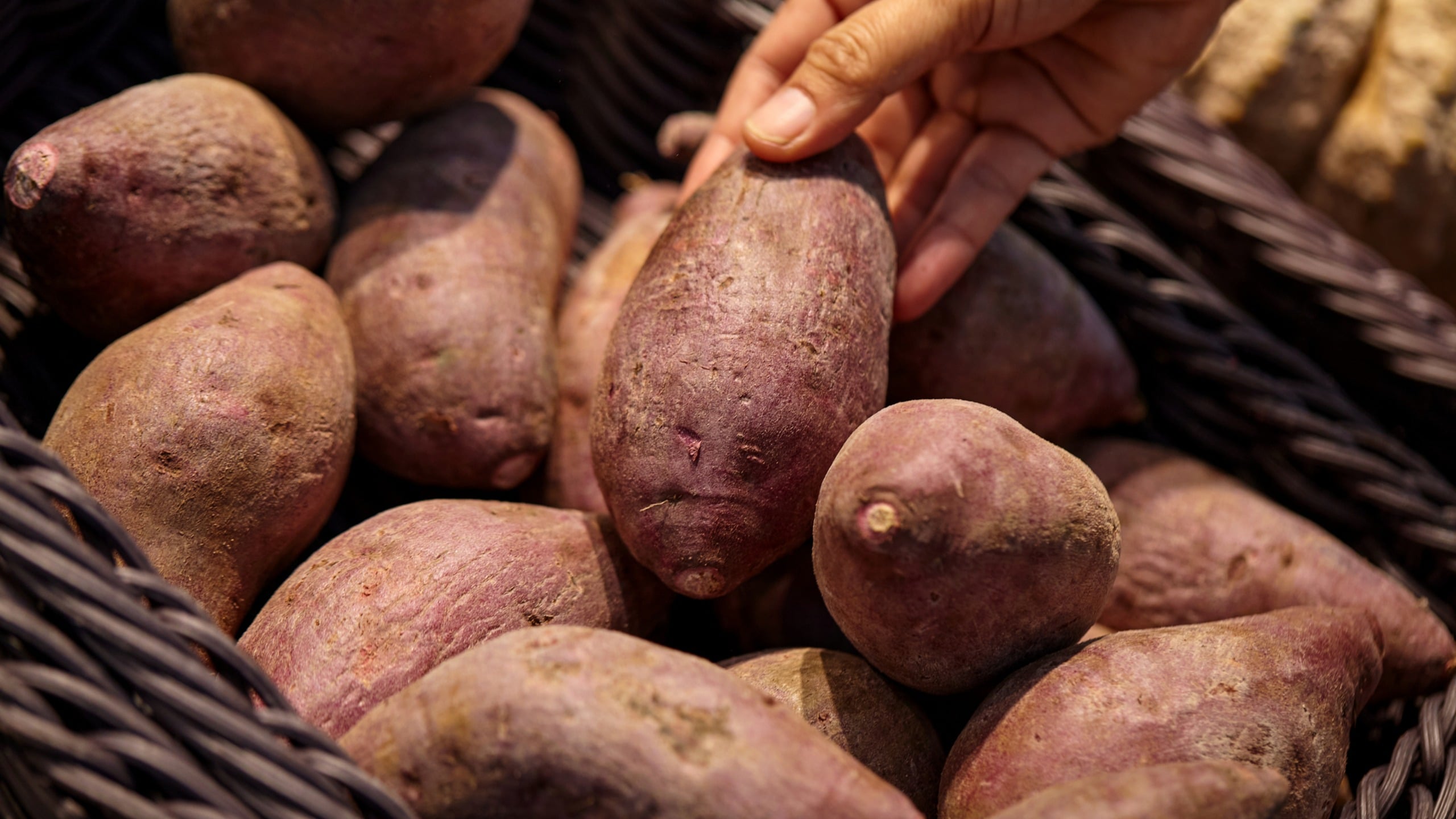
“The natural presence of Agrobacterium T-DNA in sweet potato and its stable inheritance during evolution is a beautiful example of the possibility of DNA exchange across species barriers,” said Prof. Lieve Gheysen, describing how genetic modification happens in nature.
Scientists discovered that cultivated sweet potatoes from around the world carry active bacterial genes acquired thousands of years ago, long before modern agriculture began.
Researchers studying the genome of sweet potatoes identified foreign DNA sequences originating from soil bacteria belonging to the genus Agrobacterium.
When analyzing 291 tested accessions of cultivated sweet potato, the investigative team found that every single sample contained one or more transfer DNA sequences.
The microbe naturally inserts a segment of its own genetic material into plant cells during infection. In the case of the sweet potato, these bacterial genes successfully entered the plant’s genome, became actively expressed, and remained stable as the crop reproduced over evolutionary timeframes.
The specific T-DNA sequences appear across all cultivated sweet potato clones yet remain absent in the crop’s closely related wild relatives. This distribution indicates that the acquired traits provided distinct advantages that ancient farmers selected during domestication in Central and South America.
Evidence published in Planta highlights that these naturally acquired genes can assist plants with temperature adaptation, pathogen defense, and oxidative stress reduction.
Additional findings point toward enhanced tissue growth and antioxidant production, explaining why harmful bacterial sequences were likely discarded while beneficial traits persisted through generations of cultivation.
The investigation was led by authors including Tina Kyndt, Dora Quispe, and Hong Zhai, involving a collaborative team of eight researchers. Their institutional affiliations include Ghent University’s Department of Molecular Biotechnology in Belgium.
Other teams worked at the International Potato Center located in Lima, Peru, the China Agricultural University’s Beijing Key Laboratory of Crop Genetic Improvement, and the Agricultural Research Service within the US Department of Agriculture.
The findings were made public on the website of the Proceedings of the National Academy of Sciences before appearing in print.
Scientists uncovered bacterial DNA sequences while inspecting the entire DNA code of the crop for viral diseases.
Because of this foreign material, investigators note that the sweet potato functions as a natural GMO.
High-throughput genome analyses in recent years have revealed growing evidence of horizontal gene transfers across different species. Such exchanges contrast with standard inheritance patterns passed from parents to progeny within a single species.
Testing showed that the acquired genetic material appeared to benefit the organism in numerous ways.
The discovery alters the prevailing scientific paradigm regarding the unnatural status of transgenic foods.
Modern biotechnology utilizes the exact transfer mechanism discovered in ancient sweet potatoes.
Scientists employ modified bacterial vectors to introduce beneficial characteristics into crops.
Gheysen said that while natural transgenic plants operate beyond human control, human-made equivalents offer precise oversight regarding added traits.
The International Potato Center (CIP), based in Lima, Peru, is a CGIAR research center established in 1971 that works to reduce poverty and achieve food security through science on potato, sweet potato, and other root and tuber crops.
In addition to safeguarding germplasm, CIP collaborates on functional research that connects natural genetic variation to crop improvement.
Beyond sweet potatoes, researchers note that similar bacterial gene transfers appear in other staple crops, including cranberries.