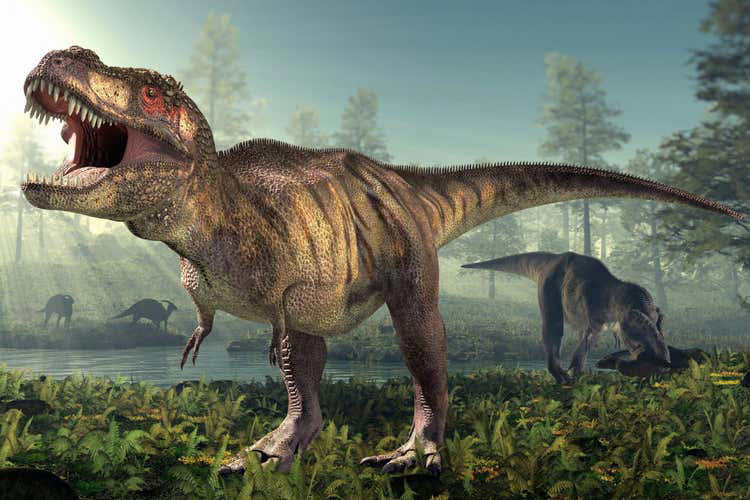
Using chemical clues preserved in Tyrannosaurus rex teeth from Montana, scientists have discovered that the apex predator was warm-blooded with a body temperature of 97.3 degrees Fahrenheit.
Dental Enamel Reveals a Warm-Blooded Predator
Chemical analysis of three T. rex teeth unearthed in Montana shows that the massive meat-eating dinosaur possessed a body temperature of 97.3 degrees Fahrenheit (36.3 degrees Celsius), plus or minus 4.5 F (2.5 C). That reading aligns closely with the average human body temperature of 98.6 F (37 C).
According to the research published Wednesday in the journal Science Advances, the findings should change how people view the celebrity dinosaur. Rather than a sluggish brute reliant on external heat, the animal was thermally independent of its surroundings.

It stops being a reptile in the way people picture reptiles. An animal at 36 degrees Celsius is not waiting for the sun to warm up. It is thermally independent of its surroundings, and in that respect closer to an elephant or an ostrich than to a crocodile.
Aradhna Tripati, UCLA geoscientist and senior author
The Natural History Museum of Los Angeles County provided the teeth used in the study. Two came from a well-preserved young adult specimen nicknamed Thomas, while the third was an isolated partial tooth from a second Tyrannosaurus originating from the same locale in Montana’s Carter County.
Clumped Isotopes as a Prehistoric Thermometer
Tooth enamel forms inside an animal at body temperature, making the chemical makeup of that enamel a natural thermometer. Researchers examined the ratio of specific carbon and oxygen isotopes present in the enamel using a technique known as clumped isotopes.
To extract the sample, scientists used a minimally destructive method involving a low-speed rotary drill with a tungsten carbide bit. They collected about 5 milligrams of enamel powder—less than a pinch of salt—from each tooth.
The research team also tested five similarly old crocodilian teeth recovered from the same rock formation. Those teeth yielded average body temperatures of 87.6 F (30.9 C), matching modern crocodilians and sitting well below the thermal readings recorded for Tyrannosaurus.
Endothermy Increases Food Requirements for T. Rex
Endothermy, or warm-bloodedness, involves generating and conserving internal metabolic heat. While this biological trait provides distinct advantages such as sustained energy, stamina, and the ability to thrive across diverse climates, it also carries a significant cost.
Higher metabolic rates mean higher food requirements and potentially more active hunting to acquire it. An endothermic T. rex would have had to acquire significantly more food to sustain its higher metabolic rate, but would also be capable of more sustained activity to find food and migrate, and live in colder environments.
Robert Eagle, UCLA geobiologist and study co-author
Tyrannosaurus roamed western North America during the Cretaceous Period roughly 66 million years ago near the end of the age of dinosaurs. Fossils of the species stretch from the Canadian provinces of Alberta and Saskatchewan south through Montana, Wyoming, and the Dakotas, into New Mexico and Texas.
Climate modeling suggests that an endothermic Tyrannosaurus could inhabit cold environments where it would experience freezing temperatures. Tripati noted that the findings point to an animal that was far more mobile and adaptable
than previously imagined.


