The object, catalogued as J1504+6252 and nicknamed Dún Aonghasa after a prehistoric stone fort on Ireland’s Aran Islands, sits at a redshift of 8.13.
That pushes the quasar frontier back by roughly 39 million years — about 6% of the universe’s age at that epoch — marking the largest single advance in nearly a decade. The findings appear in Astronomy & Astrophysics.
Launched in 2023 to map dark matter and dark energy, Euclid’s wide-field infrared survey flagged the candidate among millions of sources during its first 18 months of operations. The quasar was first identified in the Euclid Wide Survey, Euclid’s large map of the sky, according to the Max-Planck-Institut für Astronomie.
A multi-telescope campaign followed: the W.M. Keck Observatory and Hubble Space Telescope provided initial data, the Large Binocular Telescope added measurements, and the James Webb Space Telescope delivered the decisive spectroscopic confirmation.

Webb’s spectra reveal a supermassive black hole of roughly 360 million solar masses — about 85 times heavier than the Milky Way’s central black hole. Yet it is feeding at only 12% to 44% of the theoretical maximum rate, the Eddington limit. At that pace, a black hole grown from a typical stellar seed could not reach this mass in just 630 million years.
The mass estimate carries significant uncertainty. Single-epoch calibrations — formulas built from nearby, well-studied black holes and applied to one spectrum of a very young one — yield a plausible range of roughly 210 million to 780 million solar masses. The redshift measurement, by contrast, is precise.
Euclid’s wide survey is expected to yield more distant quasars. The previous record holder — another Euclid find at redshift 7.77 — was announced only months ago. Before Euclid, the record stood at redshift 7.64, corresponding to about 670 million years after the Big Bang.
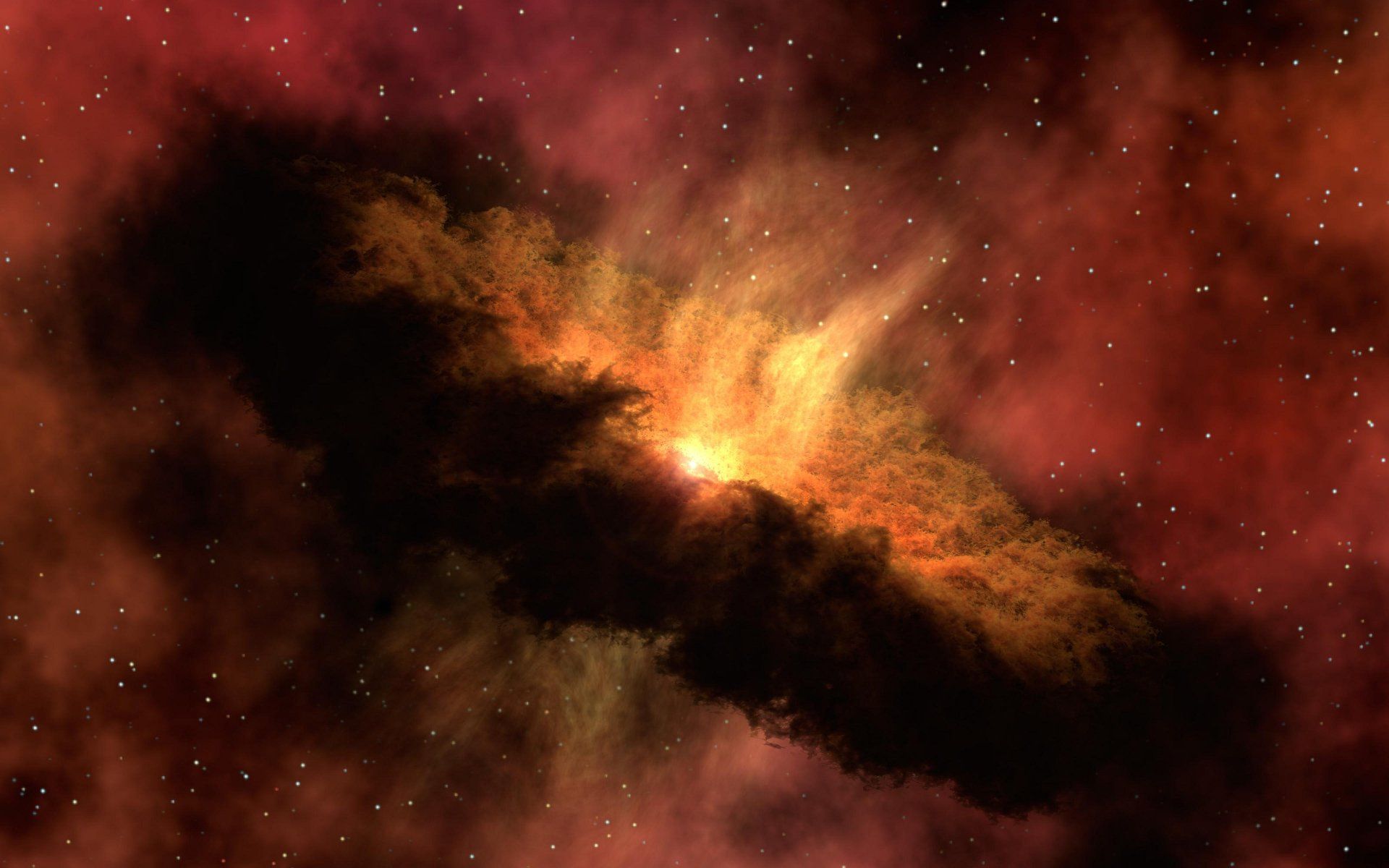
The redshift frontier had previously advanced from 7.642, set by the quasar J0313−1806 in 2021, to 7.77 with Euclid’s July 2026 discoveries. Dún Aonghasa now pushes the record to 8.13, extending observations roughly 39 million years closer to the Big Bang.
Webb will remain essential for confirming future candidates and studying their host galaxies. Each new quasar at this frontier tests whether early supermassive black holes grew through brief, intense bursts or formed from massive direct-collapse seeds — a question that a single object, however remarkable, cannot settle.