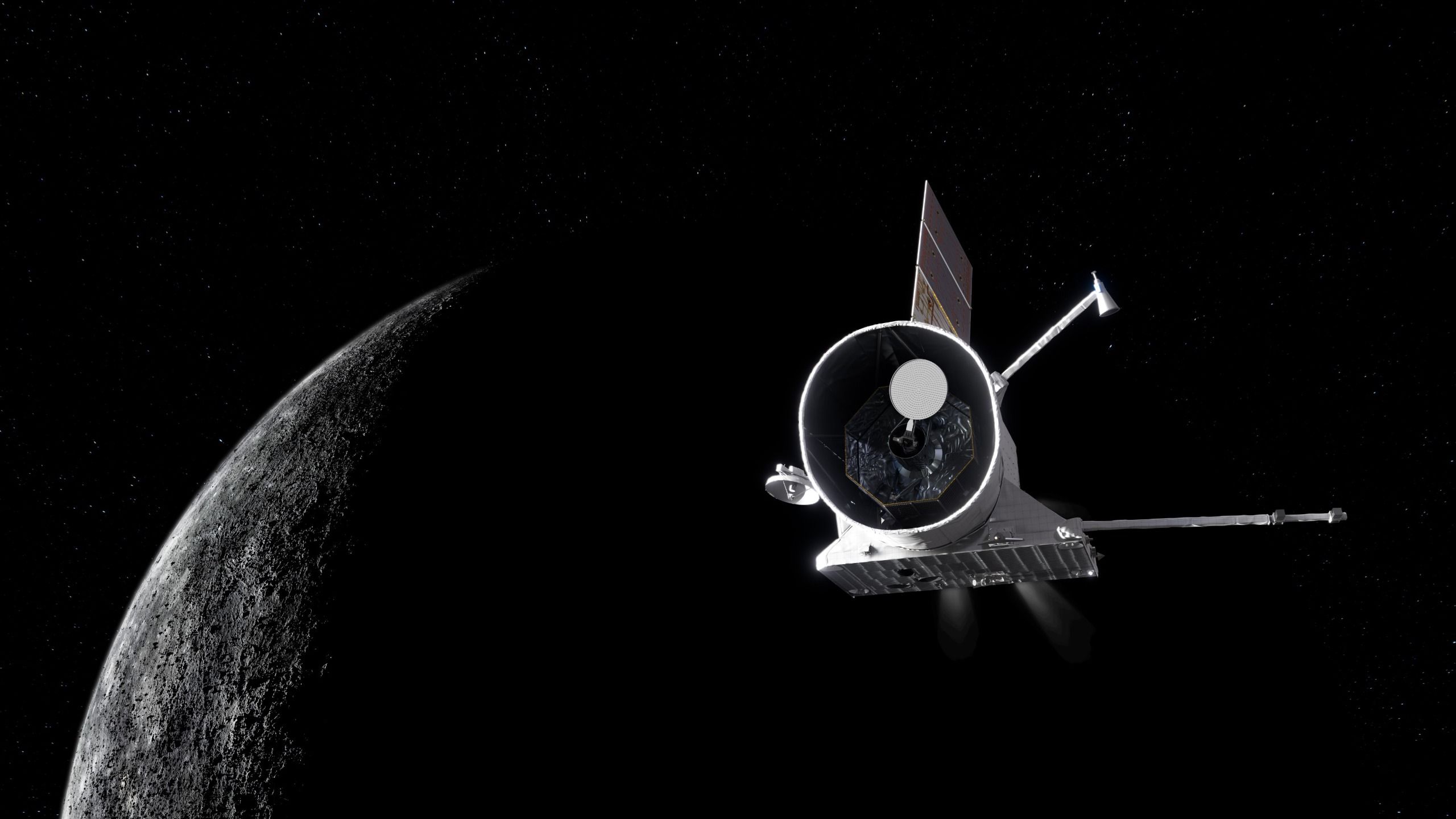
Mercury reached its greatest western elongation on 20 November, placing the innermost planet at its farthest apparent distance from the Sun in the morning sky and creating a brief window for observation.
The planet remains well placed for the next few mornings, sitting low above the east-south-east horizon around 06:30 GMT on 24 November.
Mercury shines at roughly magnitude –0.5 and stands about 7° high an hour before sunrise, while Venus blazes higher in Virgo near the star Spica.
Because Mercury never strays far from the Sun, the viewing window is narrow. Between 06:00 and 06:15 GMT the sky is still relatively dark, but the planet is already above the horizon. Binoculars help locate the dim, star-like point, but observers must stop using them before sunrise to avoid accidentally sweeping the bright solar disk.
Latitude dictates the quality of the show. From London the ecliptic rises steeply, lifting Mercury to a workable altitude. In the southern hemisphere the same geometry presses the planet closer to the horizon, making it noticeably harder to spot.
Greatest western elongation is the moment Mercury appears farthest west of the Sun as seen from Earth, so it rises ahead of the Sun and becomes a morning object.
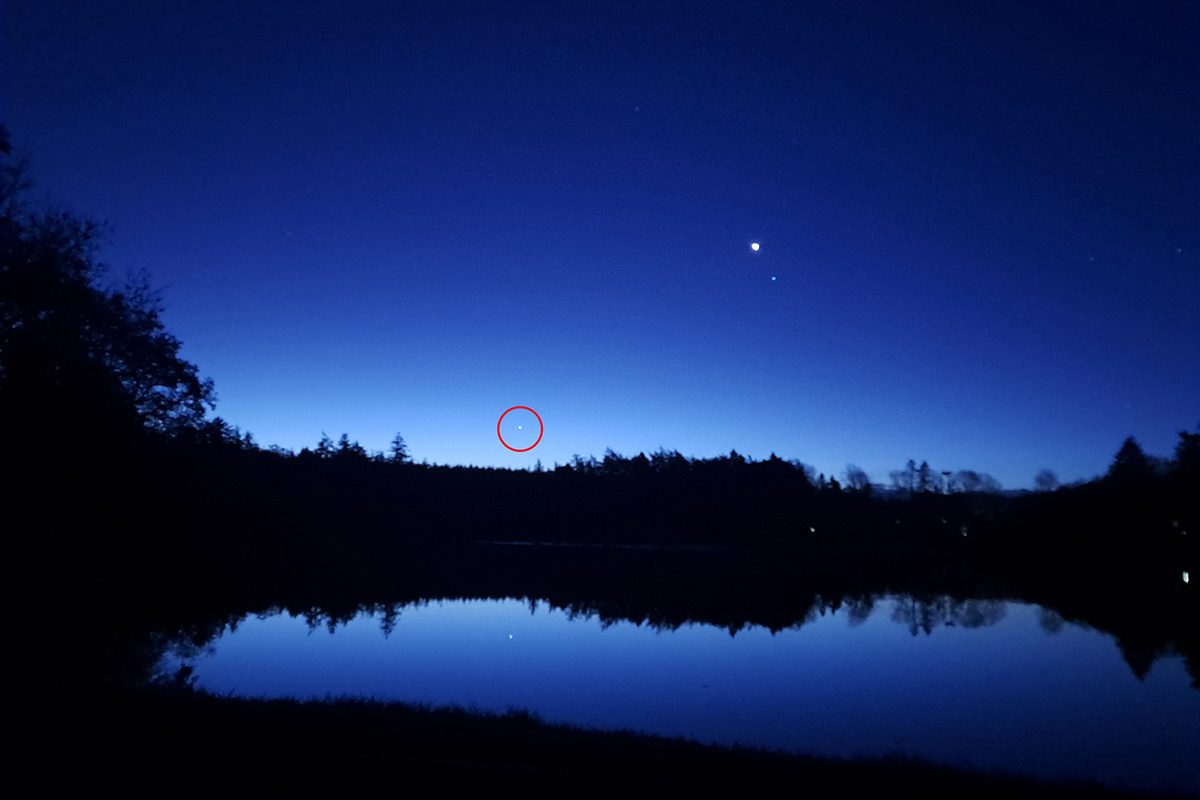
On 20 November the separation reached 20°, and the planet’s phase was 62% illuminated — a gibbous disk just 7 arcseconds across. By contrast, Venus showed a 19% crescent spanning 46 arcseconds, larger than Jupiter’s apparent size.
Mercury’s phase will continue to fatten, reaching 84% lit by month’s end, even as the planet slowly sinks back toward the solar glare.
On the morning of 20 November, BBC Sky at Night Magazine editor Iain Todd walked to a local park under dark skies around 06:00 UTC.
Venus was already a brilliant beacon; Mercury remained hidden below the horizon. After 30 minutes of watching Venus, Mars, Jupiter and familiar star patterns, he returned at 06:35 UTC as twilight brightened and found Mercury “shining much dimmer than Venus but visible nonetheless” below and to the left of its brighter neighbour.
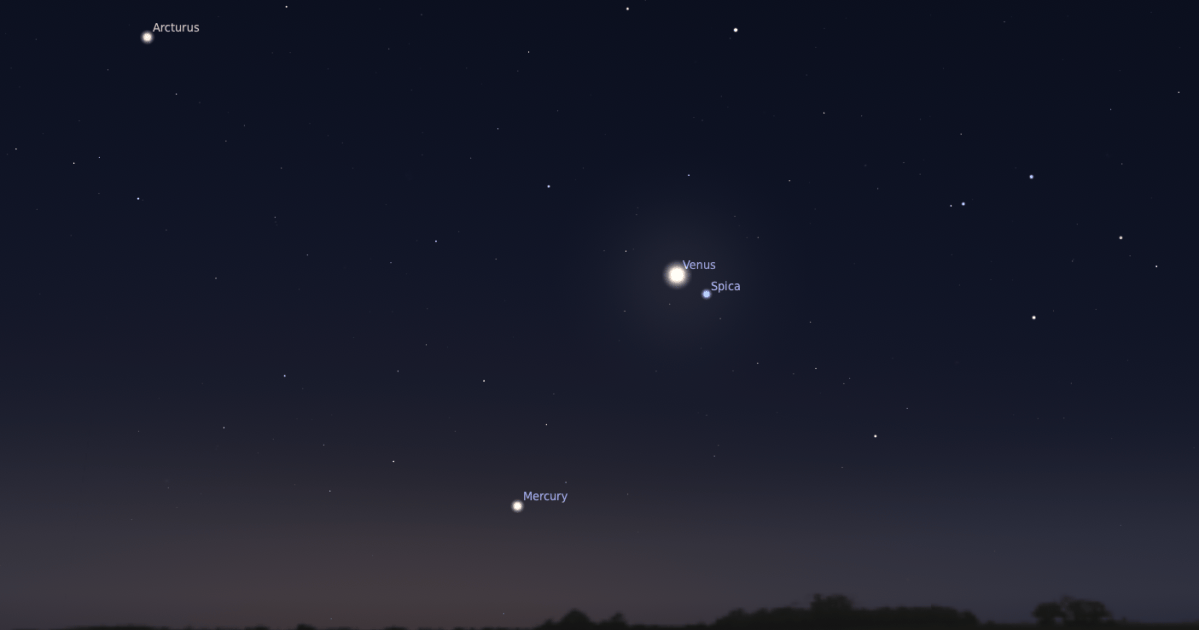
He captured both planets with a Samsung Galaxy A53 5G smartphone in Pro mode, including a frame showing Mercury’s reflection in a lake.
greatest western elongation
Starwatch column, The Guardian
The late Patrick Moore once said you wouldn’t notice Mercury unless you were deliberately looking for it — advice that still holds. The planet is dim, hugs the horizon, and vanishes quickly into dawn. If you catch it this week, you’ve earned the sight.