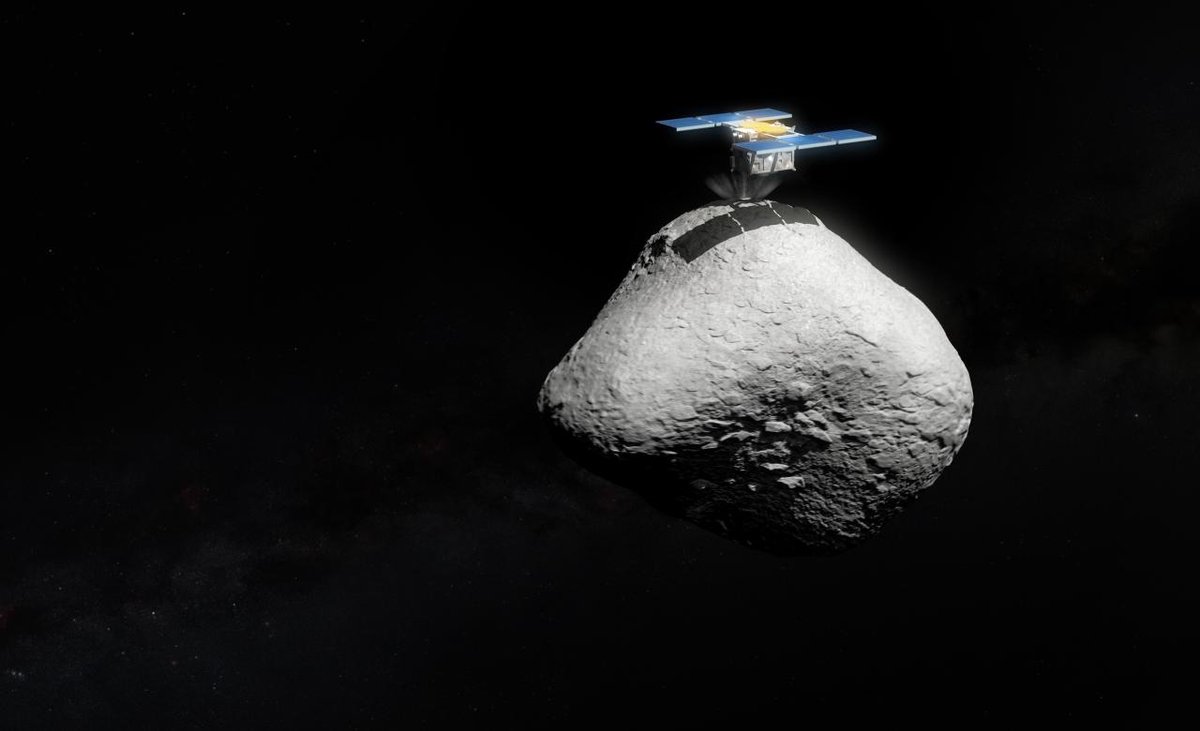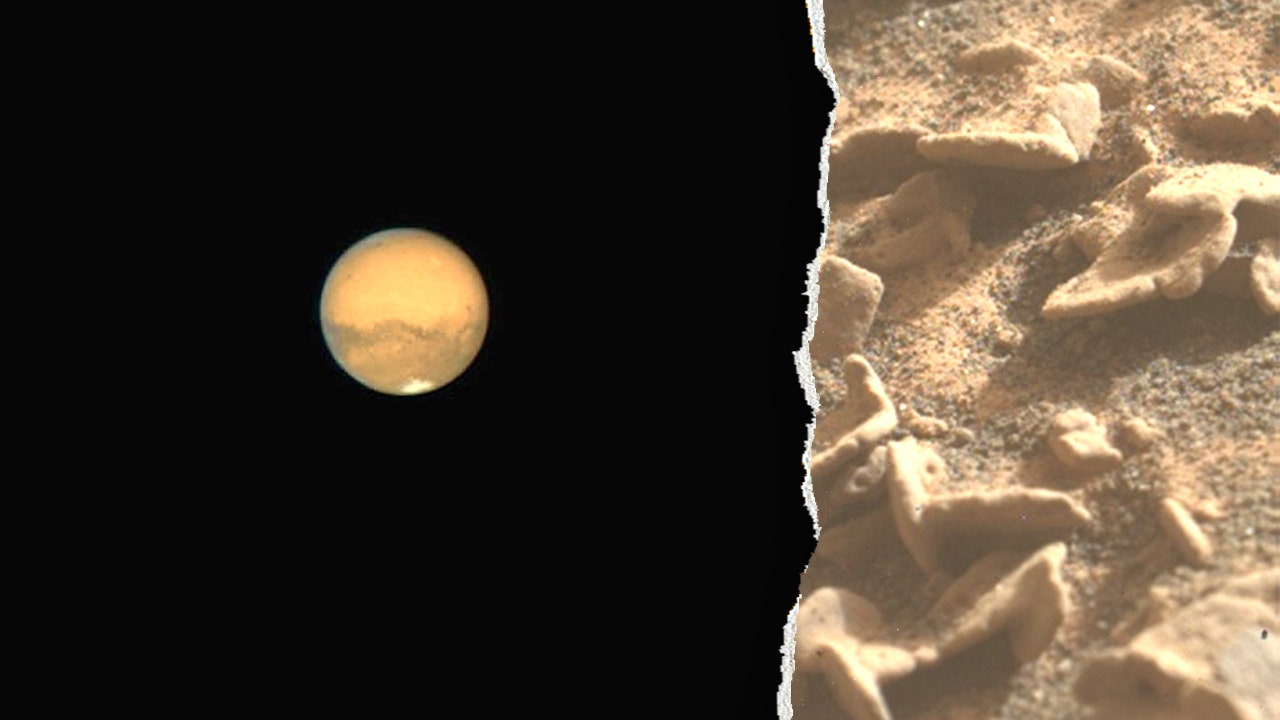
NASA’s Curiosity rover has identified unusual, “potato chip-shaped” rock formations on Mars while conducting a drilling campaign at a site nicknamed Nazca.
The rover, which has been exploring the Martian surface since 2012, encountered the structures earlier this month. Scientists are currently analyzing the formations to determine their chemical composition and how they developed, as the shapes are embedded directly into the planet’s bedrock.
NASA’s Curiosity blog said that the mission continues to document changes in the environments that formed and altered these rocks over time. On Sol 5073, or the 5,073rd Martian day of the mission, the rover’s Mast Camera (MastCam) captured imagery of the terrain at 15:45:05 UTC.
Investigating the Nazca Site
The Nazca site is situated in a region where researchers have previously observed disk-shaped features in the bedrock. NASA described the area as being characterized by “bedrock containing disk-shaped (or, in a liberal interpretation, potato-chip shaped) crystal forms,” according to an official mission blog post published November 11. These formations exhibit irregular and curled structures that appear to be part of the surrounding rock layer.
To study the formations, the team utilized the rover’s onboard laboratory, the Sample Analysis at Mars (SAM) instrument, to analyze chemical data from samples collected at the drill hole.
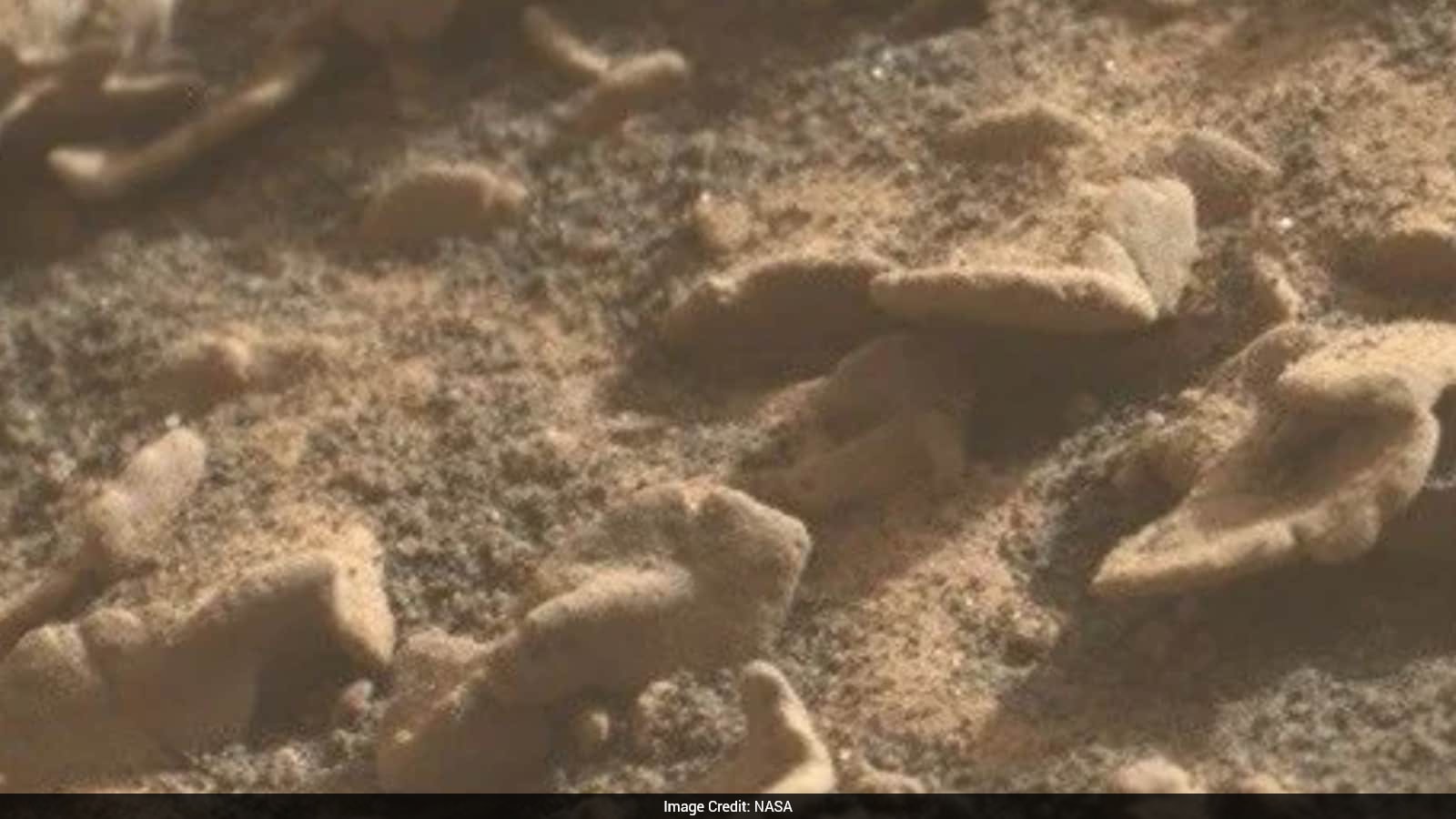
NASA scientists have said that a primary objective of the current mission phase is to “better characterize these chip-shaped features.” The research aims to understand the geological processes that created these shapes, which are currently treated as mineral structures rather than being of biological origin.
Imaging and Chemical Analysis
Beyond physical sampling, Curiosity is employing several instruments to document the formations in detail:
- ChemCam: This laser-equipped instrument is being used to conduct chemical analysis on specific targets, including a crystal-shaped formation nicknamed Colca, a resistant layer in the Nazca block, and a nearby dark float rock.
- MAHLI: The Mars Hand Lens Imager, a camera mounted on the rover’s robotic arm, is capturing high-resolution, close-up images of the structures. On November 7, the camera recorded these images, utilizing white-light and ultraviolet LED lamps to photograph the crystals at night.
NASA’s blog said that “ChemCam LIBS observations were planned for each sol including a cluster of crystal forms, a resistant layer in the side of the Nazca block and a dark float rock.” These measurements are part of a broader effort to document the chemistry and textures of the Martian surface.
Scientific Context and Future Path
While the formations have drawn comparisons to potato chips due to their irregular, curled appearance, researchers maintain that this is a visual description rather than a classification of their nature. The investigation into these crystals is part of a larger ongoing exploration of the solar system.
In a separate development last month, astronomers using the Vera C. Rubin Observatory in Chile identified a potential dwarf planet beyond Pluto. Provisionally named 2026 ED138, the object is estimated to measure between 370 and 930 miles across, which could rank it among the largest dwarf planets discovered in the distant solar system.
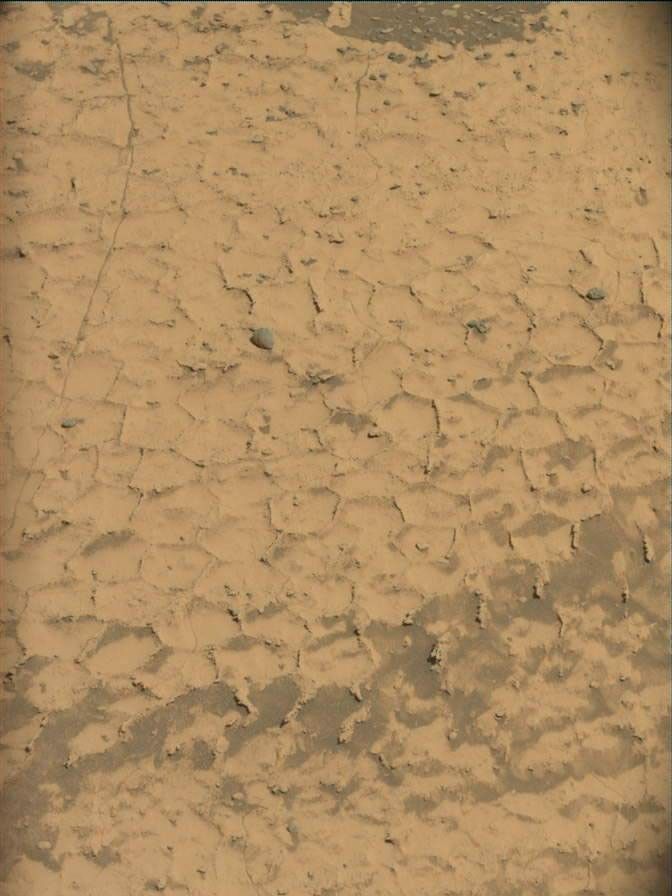
Mars, the fourth planet from the Sun, is a desert-like rocky world with a thin carbon dioxide atmosphere and surface gravity roughly a third of Earth’s. Its mean diameter of 6,779 km is about half of Earth’s, yet its total surface area roughly equals all dry land on Earth. The planet features a stark north–south divide: flat northern plains contrast with heavily cratered southern highlands.
Geologically, Mars hosts Olympus Mons, the tallest volcano in the solar system at 21.9 km, and Valles Marineris, one of the largest canyons at 4,000 km long. Probes have operated continuously on or around Mars since 1997, following the first successful flyby by Mariner 4 in 1965 and the first orbital insertion by Mariner 9 in 1971.
Following the completion of its work at the Nazca drill site, the rover is scheduled to resume its southward journey, continuing its ascent of Mount Sharp. Curiosity will proceed with its mission to document the chemistry and textures of the rocks it encounters, providing ongoing data about the evolution of Mars’ habitability. The rover’s findings at the Nazca site contribute to a larger scientific mosaic regarding the planet’s geological past.