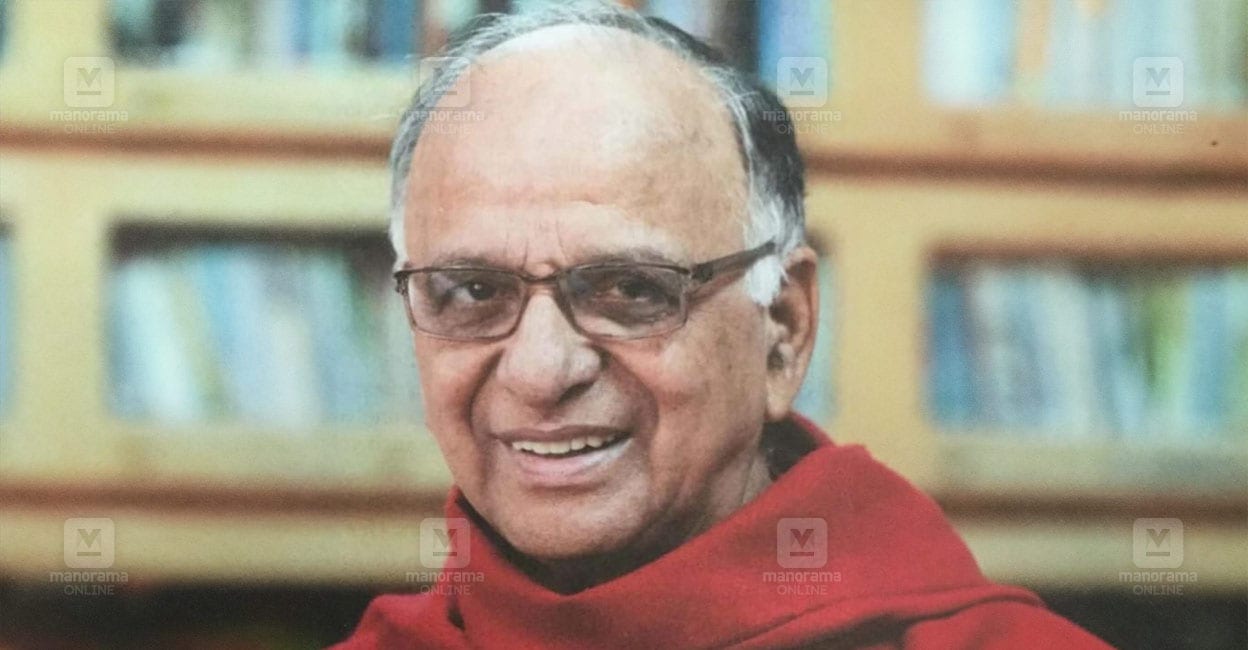
Archbishop Thomas Menamparampil, the retired prelate who spent decades mediating ethnic and tribal conflicts across Northeast India and earned the title prophet of peace, died at a hospital in Hyderabad on Wednesday at the age of 90.
Missionary Roots and Rise to the Guwahati Archdiocese
Born in Vakakkadu near Pala in Kerala on October 22, 1936, Thomas Menamparampil completed his early education at St. Thomas English School in Pala before finishing high school in Darjeeling, West Bengal. He joined the Salesians of Don Bosco on May 24, 1955, and was ordained to the priesthood on May 2, 1965.
Following his ordination, he was assigned to the northeastern region of India. He served as headmaster of the Salesian juniorate high school in Shillong and as hostel warden at St. Anthony’s College. From 1972 to 1975, he acted as vice provincial of the Salesian Society in Northeast India.
Pope John Paul II appointed him bishop of the Diocese of Dibrugarh in July 1981. When the new Diocese of Guwahati was established in April 1992, he became its first bishop. When Guwahati was elevated to an archdiocese in August 1995, he assumed office as its first archbishop, a position he held until his retirement in 2012.

Mediating Ethnic Conflict in Northeast India
For more than four decades, the prelate operated on the front lines of sensitive ethnic and tribal conflicts in Assam, Manipur, and surrounding areas. In 1996, when a Bodo-Adivasi ethnic conflict in Kokrajhar, Assam, left hundreds dead and displaced people into relief camps, he led relief efforts and brought rival leaders together for peace talks with the backing of local authorities.
He intervened in similar clashes across the region, including the Kuki-Paite conflict in Churachandpur, the Dimasa-Hmar violence in Haflong, and the Kuki-Karbi clashes in Diphu. In 2003, he helped establish the Joint Peace Team, bringing together multiple Christian denominations in Northeast India to coordinate mediation efforts.
He described that objective as his life’s mission, emphasizing dialogue, mutual respect, and listening over retribution.
Ending Illness and Funeral Details Announced
CNewsLive and Kairali News likewise confirmed that his passing occurred at the exact same morning hour at the same Hyderabad medical facility on Wednesday, November 25.
Asianet News also said that the departed prelate was widely respected and enjoyed broad public consensus throughout the country.
Archbishop Helps Restore Peace in Churachandpur
Manorama Online reported that when intense conflict struck Churachandpur in Manipur during 1999, resulting in over four hundred fatalities, the archbishop stepped forward immediately to help restore peace.

Vatican News reported his personal conviction that his core mission centered on being a missionary, establishing peace, and fostering brotherhood among populations. He shared a message with the world that small acts of affection and listening to one another can build profound harmony.
Pope Francis Appoints Apostolic Administrator
His mediation work brought regional and international recognition. In 1998, he received the Mazumdar Award in Mumbai—an honor previously given to Mother Teresa and Baba Amte. That same year, he served as special secretary to the Asian Synod in Rome. In 2010, Pope Benedict XVI invited him to draft the meditations for the Way of the Cross at the Colosseum on Good Friday.
In 2011, his sustained efforts to build bridges among conflicting ethnic communities led to his nomination for the Nobel Peace Prize.
Following his retirement from Guwahati, Pope Francis appointed him apostolic administrator of the Diocese of Jowai in 2014, where he served until 2016. Throughout his life, he also authored numerous books and articles on peace, education, and culture.