United Nations-backed negotiations in Geneva concluded Saturday without a commitment to legally binding rules for autonomous weapons, opting instead for a two-year extension to continue discussions. While a majority of nations pushed for an immediate treaty, major military powers successfully blocked the effort, leaving the development of AI-driven combat systems to continue without new international restrictions.
The Geneva Conference Standoff
The Seventh Review Conference of the Convention on Certain Conventional Weapons (CCW) ended in a stalemate between a global majority seeking strict prohibitions and a small group of military powers—led by the United States, Russia, and Israel—that opposed a binding treaty.
The conference, which ran from November 16 to November 20, 2026, required consensus for decisions, effectively granting any single member state the power to veto formal treaty negotiations. UN Secretary-General António Guterres had warned in August that the world was nearing a “moral red line” where autonomous weapons could kill without human involvement, expressing a desire for a legally binding treaty by the end of 2026.
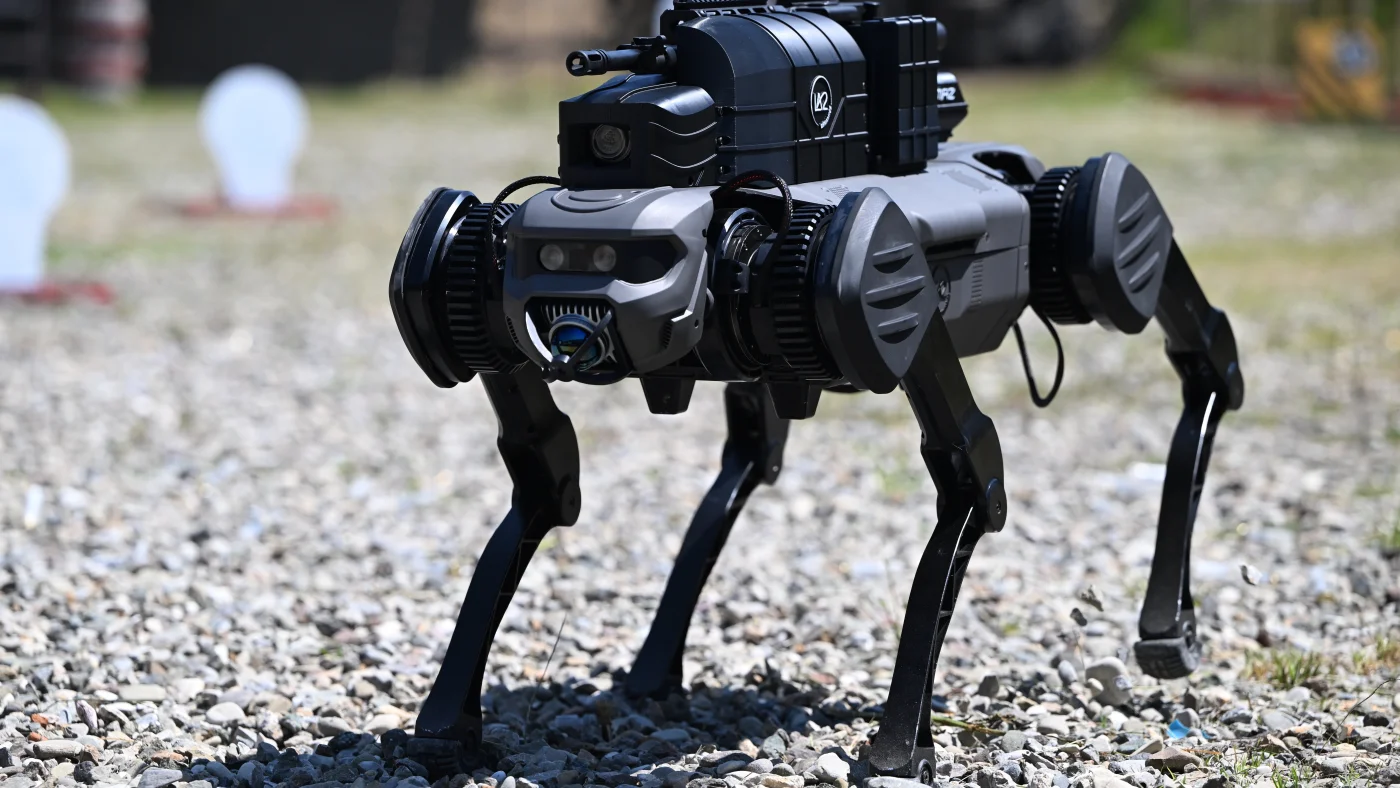
Instead of launching a treaty process, delegates agreed to a watered-down mandate that tasks the Group of Governmental Experts with elaborating an international instrument on lethal autonomous weapons systems (LAWS) over the next two years.
“States have agreed it is sufficient to just talk about the issue, for the 14th year, while these weapons enable atrocities,” said Max Tegmark, a machine learning specialist at the Massachusetts Institute of Technology and founder of the Future of Life Institute.
Resistance From Military Powers
The United States and other major military nations have consistently opposed a legally binding prohibition, arguing that existing international humanitarian law is sufficient to govern new technologies. In a November 4 working paper, the U.S. proposed a five-year track toward voluntary, non-binding guidance rather than a new treaty protocol.
Paul Lushenko, a senior fellow at Cornell University Tech Policy Institute, said that leaders fear losing their competitive advantage, driven by the belief that “whoever wins the AI race will dominate the world.”
This position contrasts sharply with the demands of over 100 countries that support a binding instrument. “The international community has critical choices to make, right now, about the future of armed conflicts and the role of human beings in decisions over the use of force,” Volker Türk, the UN high commissioner for human rights, stated ahead of the conference.
Other advocates, including the International Committee of the Red Cross (ICRC), warned that the window to regulate these technologies is rapidly closing. “A machine must never have the power to decide whether a human being survives or dies,” Türk argued, calling for urgent action to protect human lives.
“If we leave this unregulated, it will be much more difficult to put the genie back in the bottle,” said Dr. Cordula Droege, the director of international law, movement and partnerships at the ICRC. Some rights groups have expressed concern that the current delay allows private industry and militaries to set the de facto norms for how autonomous weapons are utilized.

The Risks of Unregulated AI Combat
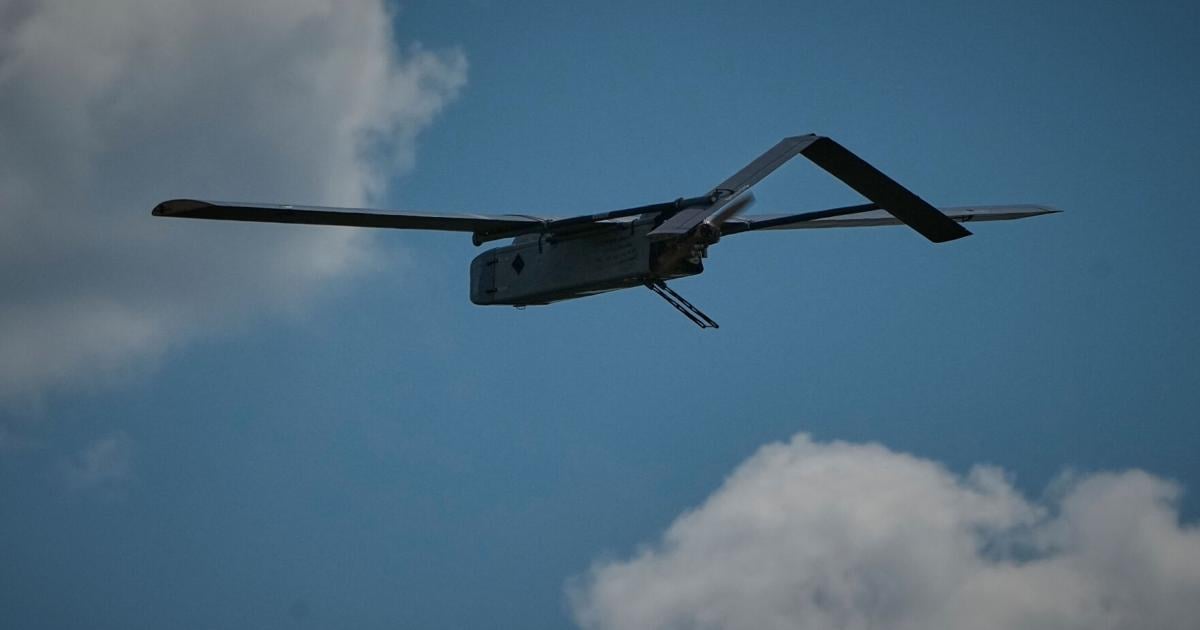
The debate has gained urgency as AI-powered drones and targeting systems are increasingly deployed in active conflict zones. In Ukraine, drones from both the Ukrainian and Russian sides are still largely remotely piloted but are increasingly relying on automated targeting capabilities to finish missions, and there have been reports they have been used against human targets.
Geopolitical Tensions Exacerbate Diplomatic Impasse
The current impasse is exacerbated by geopolitical tensions. During the conference, Russia blocked the agenda by objecting to the participation of civil society groups and the European Union, a tactic it had employed at previous meetings.
While a UN General Assembly resolution in October 2026 passed with a 163-to-5 margin calling for negotiations on an instrument for autonomous weapons, the CCW process requires consensus, which remains the primary obstacle to progress. Anna Hehir, head of military AI governance at the Future of Life Institute, cautioned that further delays to a strong treaty could lead to the widespread proliferation of these systems.
Military Powers Obstruct Geneva Discussions
The conference faced immediate deadlock as Russia blocked the adoption of the agenda by objecting to the presence of observers, including European Union representatives and civil society groups.
According to Geneva Solutions, these delay tactics derailed the proceedings, forcing the Swiss president of the conference to suspend the opening session. The American delegation, while criticizing the Russian maneuver, simultaneously worked to narrow the scope of the talks by pushing for voluntary guidelines instead of a legally binding treaty.
Military powers involved in the competition for AI dominance have consistently sought to maintain their operational flexibility. Benjamin Tallis of Helsing noted at the 2025 Internet Governance Forum that nations are currently engaged in an AI arms race, viewing autonomous weapons as the inevitable evolution of military command and control.
Humanitarian Risks Outpace Diplomatic Progress
Experts warn that the rapid integration of AI into active combat zones has already moved the debate from hypothetical scenarios to a dangerous reality. As the war in Ukraine approaches its fifth year, both sides are increasingly utilizing automated targeting to gain advantages, a trend that Ambassador Frederico Meyer of Brazil warned is occurring far faster than diplomacy can manage.
Humanitarian organizations remain deeply concerned about the lack of accountability inherent in machine-led warfare. “A computer can never be held accountable” IBM wrote in a 1979 internal training manual, said IBM.
Rights groups argue that this principle is now being ignored, pointing to the risk of catastrophic errors when meaningful human control is replaced by algorithms. UN High Commissioner for Human Rights Volker Türk emphasized that prohibiting autonomous weapons designed to target human beings is the most effective way to uphold humanitarian obligations.
Frequently Asked Questions
Why can a few countries block a global treaty?
The CCW operates on a consensus-based decision-making model. This means that any one of the 128 member states can stop a proposal from moving forward. This allows major military powers to prevent the adoption of a treaty even when a large majority of other countries support it. This has led some frustrated nations to consider shifting discussions to the UN General Assembly, where decisions are reached by majority vote.
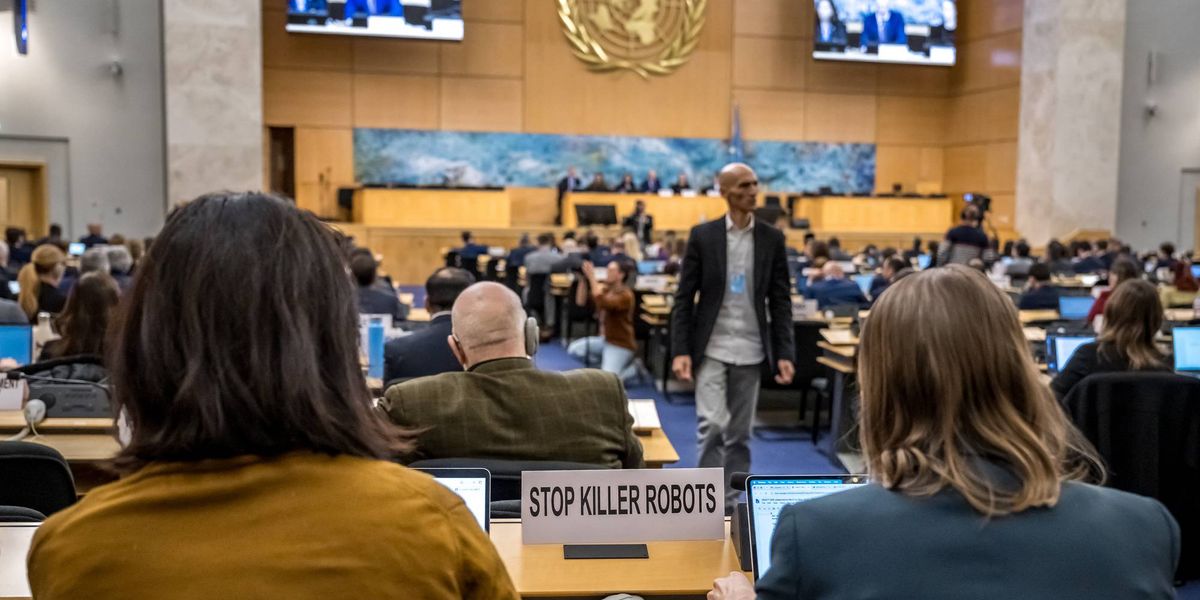
The Group of Governmental Experts (GGE) on Lethal Autonomous Weapon Systems functions within the Convention on Certain Conventional Weapons (CCW) to examine the legal, ethical, and moral implications of autonomous combat robots. Established by the High Contracting Parties in 2016, the group serves as a platform where member states discuss the application of international humanitarian law to emerging technologies.
Under its two-year mandate to elaborate an international instrument, the GGE is tasked with developing, by consensus, specific elements of a possible instrument or other regulatory measures. By drawing on legal, military, and technological expertise, the group aims to address the characterization of these systems and questions of accountability, though its consensus-based model means it cannot predetermine the final form of any resulting agreement.
What happens to autonomous weapons development now?
Without a binding international treaty, development continues largely under national directives. In the United States, for example, the Department of Defense is working under a mandate from President Trump to rewrite autonomous weapons directives, and Defense Secretary Pete Hegseth has ordered a four-star Autonomous Warfare Command to be standing by October 1, 2027. Meanwhile, developers continue to refine systems that can autonomously detect, prioritize, and engage targets using algorithmic processes.