International climate negotiations collapsed in Antalya, Turkey, on Sunday after nearly 200 countries failed to reach an agreement on phasing out the fossil fuels driving global warming.
Antalya Plenary Breaks Down Over Fossil Fuel Omissions
The COP31 summit stretched 44 hours past its scheduled Friday deadline. That made it the longest United Nations climate conference in history.
Plenary proceedings dissolved when European Union delegates and other member states rejected the final draft. It omitted any explicit requirement to move away from coal, oil, and gas.
The last time a major UN climate agreement collapsed in this manner was at COP15 in Copenhagen in 2009.
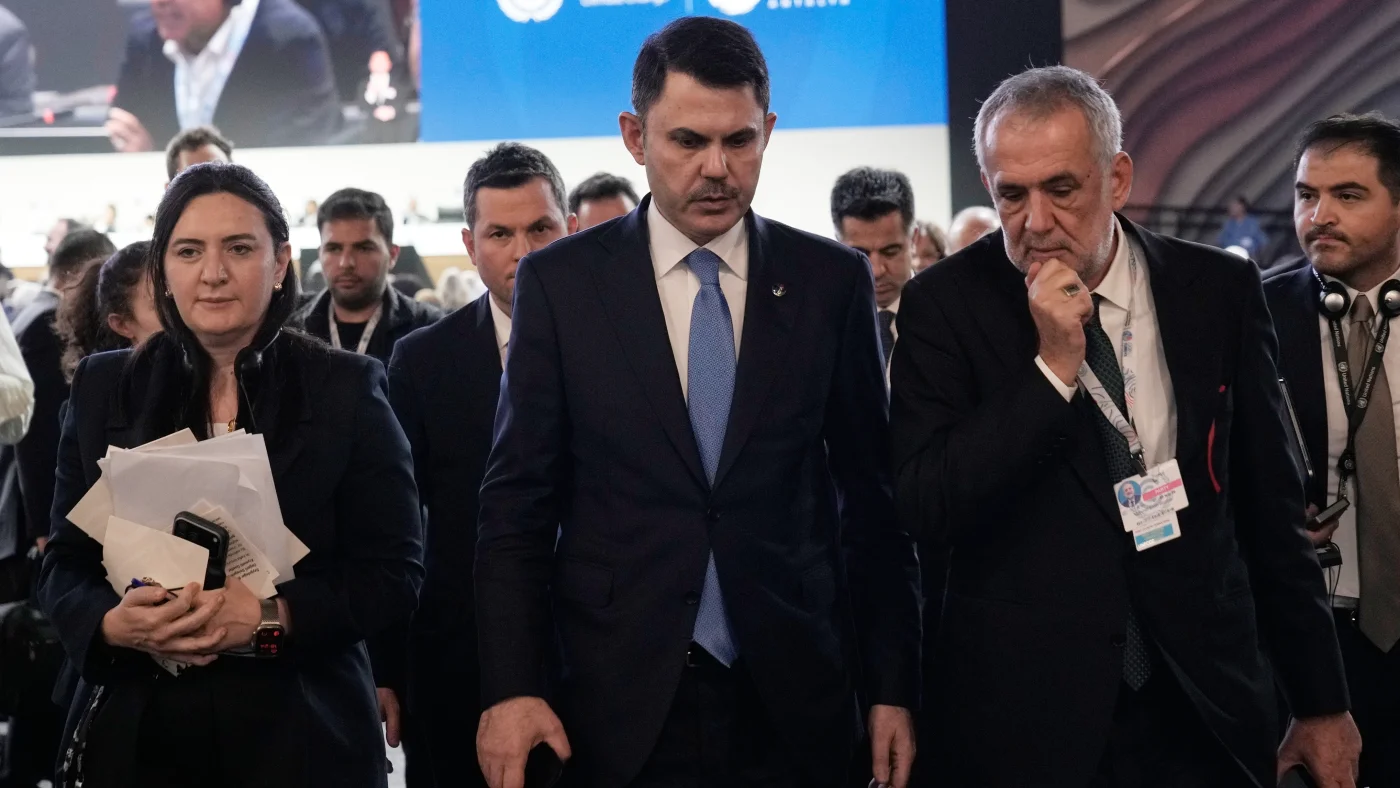
United Nations Climate Change Executive Secretary Simon Stiell took part in sessions at the Antalya Expo Centre. COP31 President Murat Kurum, who is also Turkey’s minister of environment, urbanisation and climate change, also joined those sessions.
Turkey’s COP31 president Murat Kurum acknowledged that support was not present to push the pact through.
When the proposed deal fell apart during the plenary session, Turkish Environment Minister Murat Kurum was absent. He left Elchin Allahverdiyev of Azerbaijan to announce the failure.
It is unconscionable that we would have a climate act that makes no reference to fossil fuels, no reference to transitioning away from fossil fuels.
Darragh O’Brien, Ireland’s environment minister
An initial draft published on Monday had called for an immediate transition away from fossil fuels in energy systems.
Subsequent revisions stripped those mentions following intense lobbying from oil-producing nations such as Saudi Arabia and Russia.
Instead, the final text made only an indirect reference to the agreement reached at COP28 in Dubai in 2023.
A considerably larger number of nations indicated that consensus on something was more important and accepted the decision, often reluctantly.
Several countries and the 27-nation European Union said they could not accept the final proposal from the joint Turkish-Australian leadership that lacked any mention of fossil fuels.
Ireland’s climate minister Darragh O’Brien, helping lead negotiations for the EU, said that the bloc would not endorse a deal that does not even mention fossil fuels, which represent the key driver of climate change.
Jeanne-Marie Huddleston, Canada’s chief climate negotiator, expressed deep disappointment that a consensus could not be reached.
Former environment minister Catherine McKenna told CBC News Network that there is no way to have a COP agreement that does not mention fossil fuels, saying that the problem must be recognized to reach solutions.
Diverging Stances on Energy Transition and Carbon Removal
Negotiations also fractured over proposals regarding industrial emissions and electricity targets.
At the same time, the document incorporated provisions for carbon capture and storage technologies.
Critics argued that carbon removal language served as a loophole allowing continued fossil fuel extraction, while oil producers defended the technology.
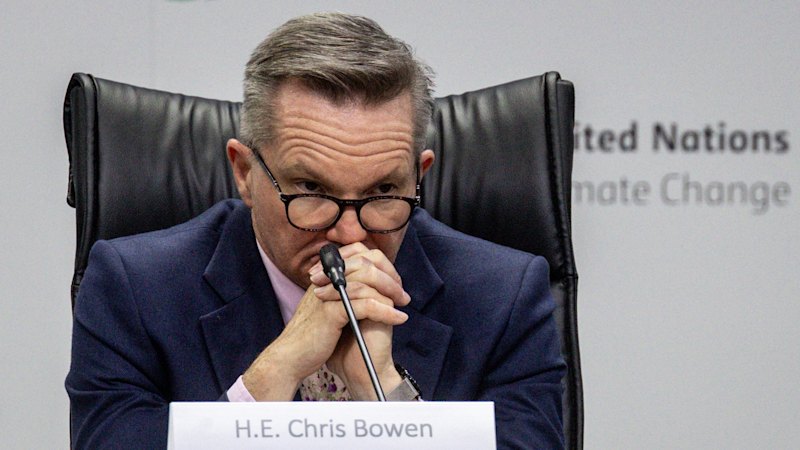
Climate Change and Energy Minister Chris Bowen said that electrification serves as the method for transitioning away from fossil fuels.

Sara Shaw, campaigns and networks director for the environmental group 350.org, described carbon capture as one of the biggest scams of the overshoot era.
Matt Webb, associate director for global clean power diplomacy at E3G, compared relying on carbon capture without phasing down fossil fuels to trying to quit smoking without putting down cigarettes.
A representative for the Saudi delegation expressed surprise at the resistance to the technology, which was presented as a concrete solution.
UN Secretary-General Antonio Guterres shared the profound frustration of those expecting governments to rise to the moment.
That is not acceptable. We do that with a heavy heart with many other countries, but we simply cannot accept this.
Wopke Hoekstra, European climate chief
Australia’s COP31 president of negotiations, Chris Bowen, called the outcome very disappointing.
Meanwhile, developing nations expressed frustration that the summit failed to secure concrete financial commitments or address special needs for adaptation funding in regions vulnerable to extreme weather.
The Philippines delegation said that climate finance must be fully mobilized to drive necessary scale and speed across mitigation, adaptation, technology transfer, capacity building, and loss and damage.
Mary Robinson, former president of Ireland and a COP veteran, said that recognition of overshoot dangers should have shaken leaders into action, calling the outcome a shameful lack of urgency and leadership.
Harjeet Singh, COP negotiations veteran and founding director of the Satat Sampada Climate Foundation, warned that a fossil fuel crisis cannot be solved by pretending phaseouts are unnecessary.
Ann Harrison, Amnesty International climate justice policy adviser, wrote that countries from across regions were right to reject the colossal betrayal that the co-presidencies tried to pass off as climate action.
Existing Frameworks Persist as Addis Ababa Prepares for Next Summit
Despite the collapse of the overarching cover decision, existing legal frameworks and agreements established at previous summits remain in effect.
United Nations officials confirmed that prior commitments under the Paris Agreement continue to govern international climate action.

The next UN climate summit is scheduled to take place next year in Addis Ababa, Ethiopia.
Fossil Fuel Lobbying and Industry Influence
Negotiations stalled as major oil producers, including Russia and Saudi Arabia, lobbied aggressively to keep energy sources out of the text, with Russian officials warning that rapid phase-outs would cause fuel poverty.
UN Secretary-General Antonio Guterres criticized powerful fossil fuel interests for mirroring tobacco tactics by distorting science, delaying policy, and blocking action for profit while the public pays the price.
Organizations like 350.org condemned the inclusion of carbon-removal technologies that allow continued extraction.
Australia’s Chris Bowen maintained that the real-world shift away from hydrocarbons remains irreversible.
Meanwhile, more than 50 frustrated nations have established alternative diplomatic channels, holding an inaugural transition conference in Colombia.
Financial Disagreements and Vulnerable Nations
Disputes over adaptation funding for developing economies severely hampered progress from the outset, leaving financial support for climate disasters dead in the water.
Poorer nations suffering the worst effects of global warming argued that the text ignored vulnerable populations who contributed the least to the crisis.
European climate chief Wopke Hoekstra walked out after saying the EU could not tolerate a weak deal.
The United Nations warned that humanity will soon surpass the 1.5-degree warming threshold set in Paris, saying that avoiding a 1.7 or 1.8-degree outcome requires cutting emissions by 45 percent by 2035.
Observers said that the summit failed to provide adequate protection for communities enduring severe droughts, floods, and storms.

Global Reactions and Parallel Climate Actions
Mohamed Adow, director of Power Shift Africa, an African climate and energy think tank, said that rich nations and polluting governments cannot keep arriving empty-handed, and described the collapse as a wake-up call for the world.
Juan Carlos Navarro, environment minister of Panama, said that side efforts represent the best hope for climate action until changes occur within the COP process.
More than 50 countries created a separate conference dedicated to phasing out fossil fuels, holding the first such international conference in Colombia in April, with Ireland and Tuvalu set to co-host the second conference in 2027.
Rachel Cleetus of the Union of Concerned Scientists placed the responsibility for science-based outcomes on richer nations, petrostates, and the COP presidents.
Simon Stiell reminded delegates that the UN climate process has suffered setbacks before and come back stronger.
Earlier coverage: COP31 Talks Extend Into Overtime After Fossil Fuel Language Removed