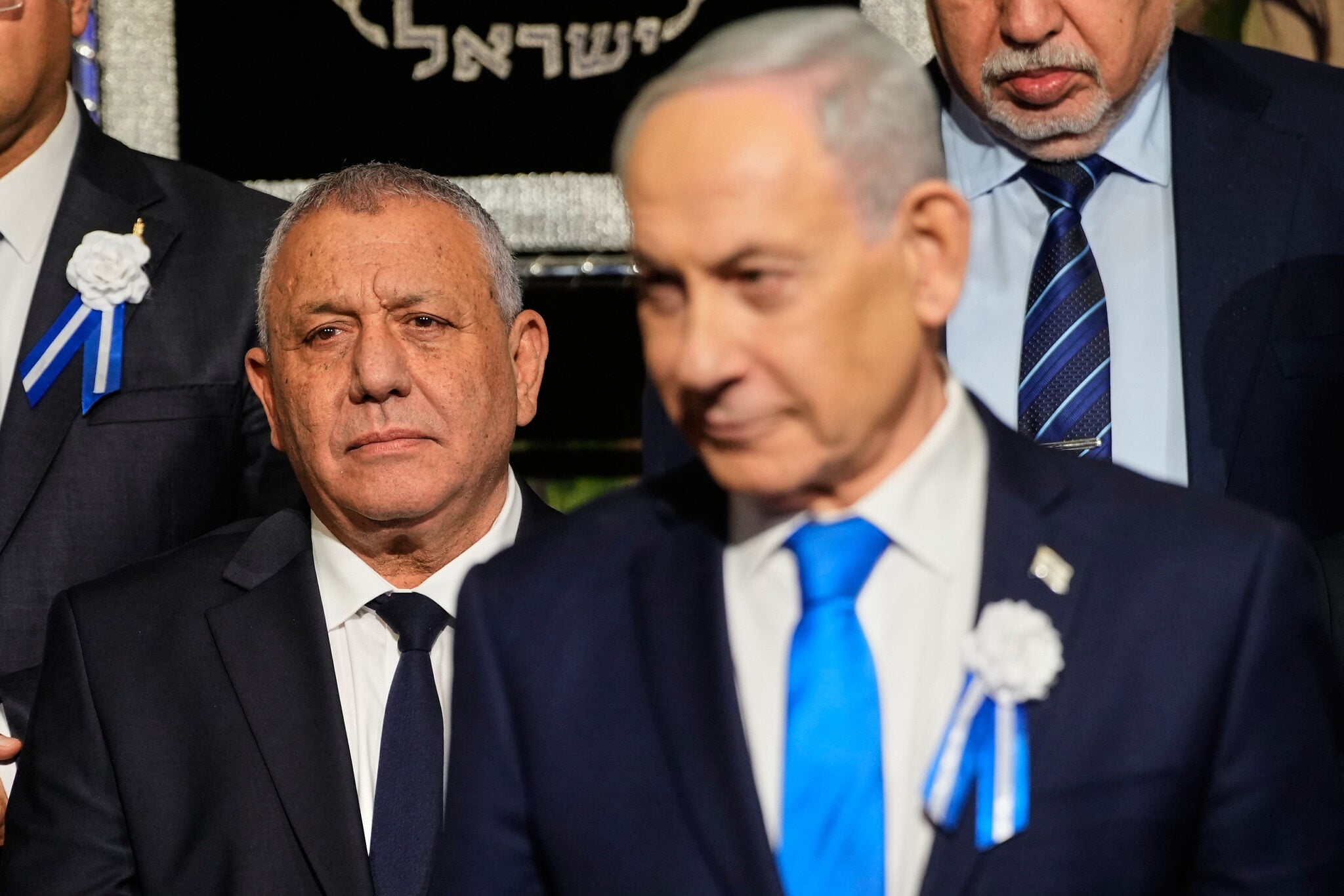
Former military chief Gadi Eisenkot is racing against an incoming December 6 deadline to form a new Israeli government before his mandate expires, relying on fragile legislative arithmetic that could displace caretaker Prime Minister Benjamin Netanyahu.
- Eisenkot’s four-party bloc holds 48 seats in the 120-member Knesset.
- Netanyahu’s coalition secured 53 seats, losing its parliamentary majority.
- Arab-led parties won a combined 19 seats, holding decisive influence.
Eisenkot Outlines Three Tracks to Build a Coalition
President Isaac Herzog gave Eisenkot the mandate to form a government after 67 members of the Knesset gave their recommendations, compared with 46 for Netanyahu, while seven lawmakers abstained. To reach a governing majority, the Yashar party leader has pursued three distinct avenues.
אם לא יבשילו הנסיונות הכנים אותם אני מוביל להקמת ממשלה רחבה, בכוונתי להקים ממשלת חירום לאומית – אותה אפעל להרחיב לפני השבעתה או לאחריה. כל חברי הכנסת יהיו חייבים לציית לצו מצפונם ולקבל את ההחלטה האם תקום ממשלה חדשה, או האם הם נכונים לגרור את מדינת ישראל ואזרחיה לבחירות נוספות…
The first track involves serious discussions with ultra-Orthodox parties to find formulas that preserve the status of Torah study while meeting security needs. The second track centers on negotiations with Likud, though Eisenkot has accused Netanyahu’s faction of failing to put a single concrete proposal on the table during two weeks of talks.
The third avenue involves establishing a national emergency or minority government dependent on the outside support of Arab-led parties. That path has drawn fierce internal resistance from right-wing allies within the change bloc.
Likud Considers Rotation Offer Amid Internal Division
Prime Minister Benjamin Netanyahu has privately expressed deep pessimism about his prospects, telling associates that only a miracle could stop Eisenkot from taking power. Even so, public broadcaster Kan reported that Netanyahu is preparing to offer a power-sharing arrangement through unofficial channels to maintain plausible deniability.
Under the reported terms, Netanyahu would serve as the second prime minister in a rotation after Eisenkot. Likud officials remain divided over the move, while Yisrael Beytenu chairman Avigdor Liberman dismissed the overture during a Knesset plenum session.
🇮🇱 Gadi Eisenkot, tasked with forming #Israel's next government, on Sunday called for caretaker PM Benjamin Netanyahu to immediately leave his post after reports emerged alleging election interference by a Netanyahu aide. Hours after representatives for the two camps met to… pic.twitter.com/cWCGh9JRsh
“The change government is taking shape,” Yisrael Beytenu chairman Avigdor Liberman wrote on X.
I wouldn’t rule out the possibility that Netanyahu will offer Gadi Eisenkot a rotation in which Netanyahu would serve second, but everyone needs to understand: this is merely a ploy.
Avigdor Liberman, Yisrael Beytenu chairman
Alliance Builders Secure Ministerial Portfolios
Eisenkot’s camp has reached formal agreements with several opposition factions. Yashar and the Democrats finalized a deal granting Yair Golan’s party four ministerial portfolios and the chairmanship of the Knesset Constitution Committee.
The Democrats announced plans to restore the public security portfolio to its former name following a term marked by record homicides in Israel’s Arab community. Yisrael Beytenu secured the immigration and absorption ministry, with Yulia Malinovsky slated to replace Ofir Sofer, alongside an agreement ensuring Avigdor Liberman would return to a senior cabinet role.
Parliamentary Votes Test the Opposition’s Growing Sway
While coalition talks continue, the opposition has used its growing legislative influence to advance major measures. Lawmakers approved a preliminary bill by 65 votes to 50 to establish a state commission of inquiry investigating the events surrounding the October 7, 2023, Hamas-led attacks.

Eisenkot has insisted that any unity government must agree to the commission, changes to the judicial system, and military service obligations. As the December 6 expiration of his mandate approaches, Eisenkot plans to consult coalition partners before deciding whether to request a 14-day extension from President Herzog.
Fierce Political Resistance Meets Legislative Demands
Likud accused Eisenkot on Friday of attempting to establish a dangerous left-wing administration with the backing of Arab parties. To form a coalition, Gadi Eisenkot is pursuing three distinct pathways, which encompass a minority administration reliant on external backing from Arab-led factions; he argued that Prime Minister Benjamin Netanyahu was placing Israel in extreme peril through his hostile rhetoric toward Arabs.
Reports in Israel: ‘Prime Minister Benjamin Netanyahu's statement: "On Thursday, I had an important conversation with Gadi Eisenkot. Gadi and I have known each other for many years, since his time as Chief of Staff and even before that. This meeting only reinforced my…
According to several Israeli media reports published on Friday, former Israeli military chief Gadi Eisenkot has reportedly turned down the prospective rotation deal that Israeli Prime Minister Benjamin Netanyahu is ready to present to his principal opponent. On Friday, Avigdor Liberman cautioned that Netanyahu might dangle a rotation premiership before Eisenkot as a tactical maneuver to sabotage the creation of a fresh administration.
Amid coalition formation efforts, Yisrael Beytenu chairman Avigdor Liberman warned that Prime Minister Benjamin Netanyahu’s prospective rotation offer to former military chief Gadi Eisenkot was merely a tactical ploy designed to sabotage a new administration. As the Yisrael Beytenu chairman, Liberman secured an agreement ensuring his own return to a senior cabinet role alongside the immigration and absorption ministry.
Coalition Architecture and Policy Debates
The intricate effort to cobble together a governing cabinet has brought together figures from across the political spectrum, including secular leftists, an Islamist dentist, and ultra-Orthodox rabbis. Campaign trail taboos have given way to realpolitik as the change bloc attempts to finalize agreements before the expiration of the allotted mandate.
Eisenkot has warned that Netanyahu’s rhetoric puts the country in a precarious position, pointing to a dangerous climate surrounding 21% of the population. Likud countered by accusing the opposition leader of attempting to assemble a dangerous left-wing administration relying on Arab factions. Meanwhile, negotiations continue behind closed doors as teams prepare for marathon bargaining sessions.