U.S. Central Command disabled the Palau-flagged M/V Pacific Archer in the Gulf of Oman on November 26, using precision munitions from a military aircraft to halt the bulk carrier after it departed the Iranian port of Bandar Abbas.
- U.S. Central Command disabled the Palau-flagged M/V Pacific Archer in the Gulf of Oman on November 26.
- The military said 158 merchant ships have complied and been redirected since the blockade resumed in July.
- Iran’s navy commander warned of operations to break the blockade and drive out regional forces.
Blockade Enforcement and Maritime Interdictions in the Gulf of Oman
The Pacific Archer departed from Bandar Abbas, a port city in Iran, and attempted to run the naval blockade enforced by the United States to cut off Tehran’s revenue. According to U.S. Central Command, an aircraft struck the vessel’s stern, disabling its propulsion system while leaving the civilian crew unharmed.
With its destination recorded on ship tracking websites as Singapore, the bulk carrier was struck after departing from Bandar Abbas.
🇺🇸🇮🇷 A U. S. strike just crippled a ship running the Iran blockade on Thanksgiving… is the war back on? CENTCOM says it knocked out the engines of the Pacific Archer after the ship left Bandar Abbas and ignored repeated warnings, with the crew unharmed. Bobby Jones, a retired… pic.twitter.com/OVtZNOlJgL
The action marks the sixth vessel disabled by the U.S. military since the blockade was reinstated in July, following a period when the blockade was lifted during summer talks with Tehran.
Earlier incidents in the enforcement campaign include the November 7 disabling of the St. Kitts-flagged cargo ship M/V Huda in the Gulf of Oman, and a May strike on the Iranian tanker Hasna. In June, an attack on a Guinea-Bissau-flagged tanker attempting to evade the American blockade resulted in three deaths, drawing international condemnation.

Since July, military authorities report that 158 compliant merchant ships have been redirected away from Iranian ports. American forces maintain a sizable naval deployment across the region, featuring a constant presence of two aircraft carriers accompanied by auxiliary warships.
Iranian Military Response and Regional Diplomatic Pressures
Iranian officials condemned the interdiction and vowed to challenge the naval restrictions. The commander of the Iranian navy, Shahram Irani, said on state television that Iran would carry out operations to counter the U.S. presence.
An Iranian military commander made multiple FALSE claims concerning U. S. Forces over the past 24 hours: 🚫 CLAIM: The U. S. military stole two Iranian oil tankers and the IRGC’s navy retook the vessels while American troops on board slept. ✅ FACT: Iran no longer has a navy. The… pic.twitter.com/xWqvXKZEW4
“that will not only break the naval blockade but also drive the enemy out of the region’s waters,” Irani said.
Meanwhile, Mohammad Mokhber, an adviser to Iran’s supreme leader, asserted through state media that the blockade would not remain in place and that the Strait of Hormuz would not be reopened on those terms. The Islamic Revolutionary Guard Corps reported that two oil tankers encountered mines near the Omani coast while attempting to transit the Strait of Hormuz through unauthorized routes.
CENTCOM disabled a commercial vessel in the Gulf of Oman, Nov. 26, after the crew attempted to run the U. S. naval blockade, despite multiple warnings, following departure from Bandar Abbas. A U. S. military aircraft launched precision munitions that struck the stern of… pic.twitter.com/uD2orCew6b
Regional security officials from Persian Gulf nations, alongside Pakistan and Turkey, have also engaged in diplomatic talks with senior U.S. officials to prevent further escalation, while President Donald Trump has wavered between threatening large-scale strikes on Iran and insisting that the military conflict is effectively over.
Military Actions and Regional Developments
U.S. Central Command said that an aircraft fired precision munitions at the stern of the M/V Pacific Archer on Thursday, disabling the ship’s propulsion while the civilian crew remained unharmed. According to U.S.
Iran tested the US blockade – and failed to break it. Tehran didn't use an oil tanker, but a bulk carrier. "CENTCOM continues to strictly enforce the blockade. US forces have redirected 158 compliant commercial vessels and disabled 6 that refused to comply."…
President Donald Trump said that victory over Iran would come whenever he wanted it while celebrating Thanksgiving at Mar-a-Lago in Palm Beach, Florida. Meanwhile, Shahram Irani asserted on state television that the armed forces would carry out operations to break the naval blockade and expel the enemy from the region’s waters.
Legal Context and Economic Squeeze on Trade Routes
Legal scholars, including Emory University law professor and retired Navy JAG officer Mark Nevitt, have assessed the core blockade declared on April 13 as having a sound legal basis due to its specific scope targeting ships entering or leaving Iranian ports. Concurrently, the blockade has involved repeated strikes intended to prevent ships from proceeding.
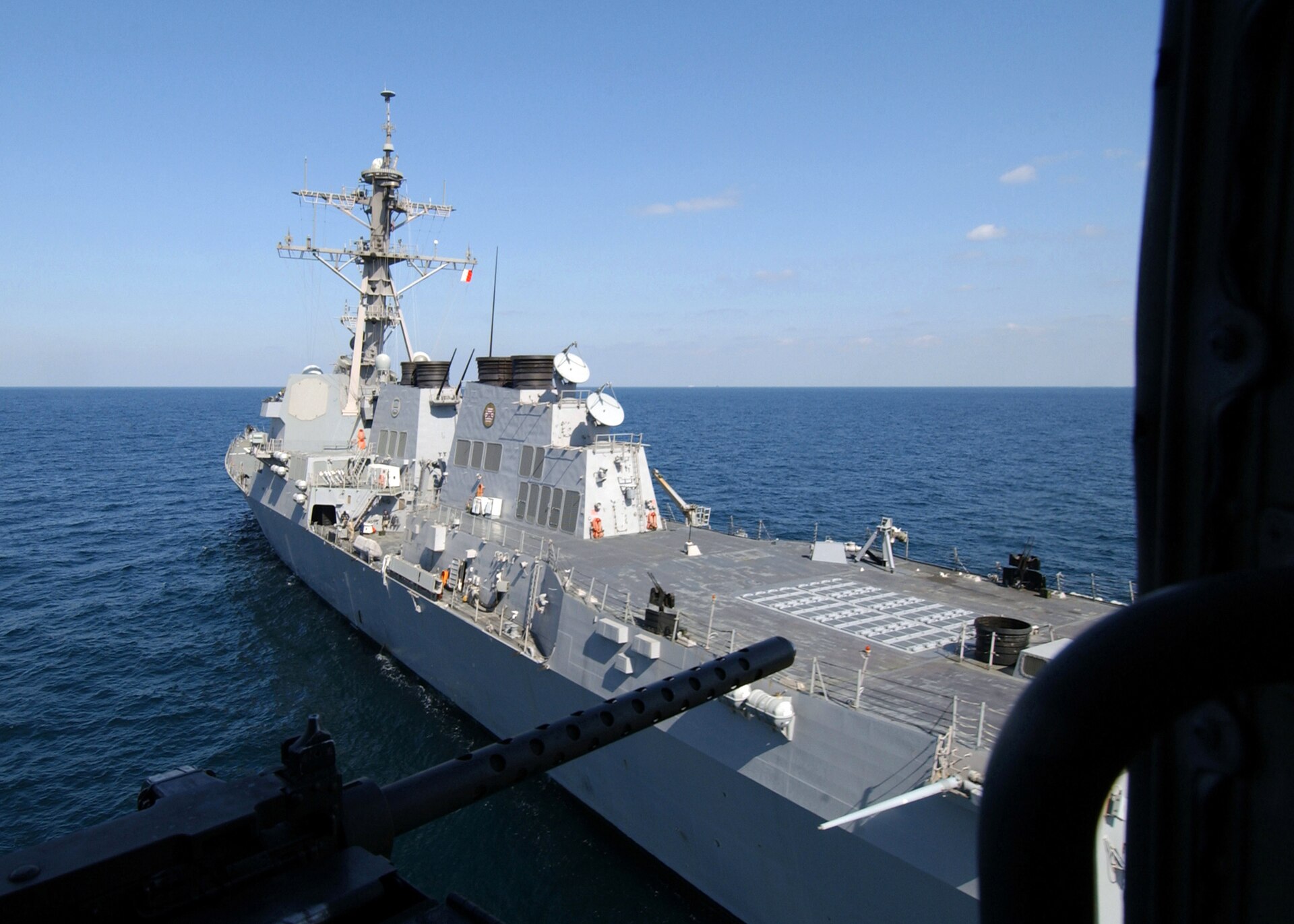
Tensions between the two nations have escalated following a period of direct military conflict. The United States and Israel launched a war with Iran in 2026, which was initiated after the assassination of supreme leader Ali Khamenei. This history of confrontation underpins the current maritime restrictions intended to limit the country’s economic capacity.
With seaborne oil exports all but stopped, Iran depends more on alternative land routes, inland transport, and logistics arrangements to sustain commerce. Iraqi forces recently closed the Sheikh Saleh crossing in Iran’s western Kermanshah province, adding to localized trade friction even as major crossings like Mehran remain open for travelers and pilgrims.
Trade between the two countries is worth $15 billion to $18 billion a year, including about $4 billion in Iranian gas, though trade continues through alternative logistics arrangements at significantly elevated costs.