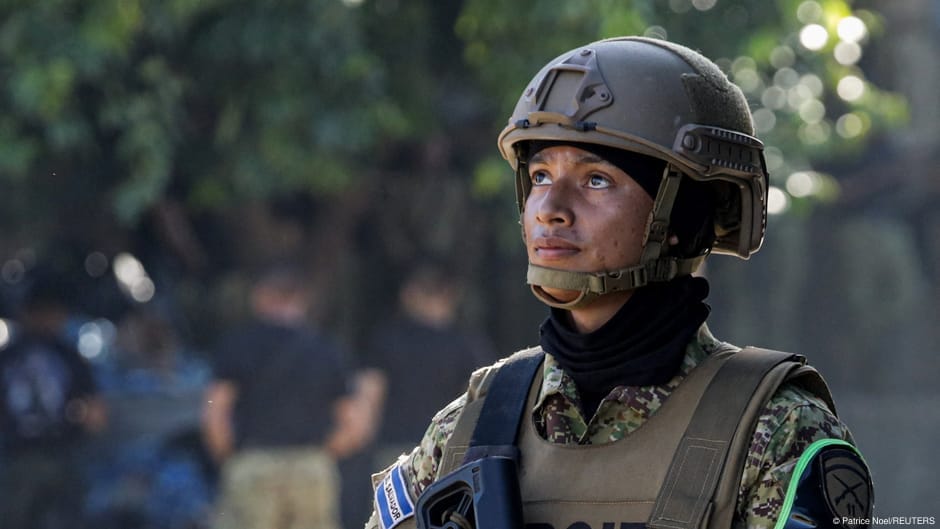
El Salvador deployed approximately 2,500 troops to Haiti following the October 18 ambush of an armored vehicle in Croix-des-Bouquets that left four Salvadoran aviation technicians missing near Port-au-Prince.
Salvadoran Forces Secure Stade Sylvio Cator
Haitian and Salvadoran forces secured Stade Sylvio Cator in downtown Port-au-Prince on November 12, ending two years of gang control over the national football venue. The facility had been occupied by armed groups since early 2024, forcing the national soccer team to play World Cup qualifiers abroad in Curaçao.
The operation brought together the Haitian National Police, the Haitian Armed Forces, the government’s Task Force, and Salvadoran special forces under a bilateral security agreement. Following the takeover, security of the complex was handed over to the Salvadoran armed forces, with more than 20 armored vehicles and transport trucks stationed inside the grounds.
President Nayib Bukele announced that the venue will serve as an operational base for advancing deeper into gang-controlled neighborhoods. During the operation, forces discovered human skulls inside the facility, though authorities have not released an independent forensic assessment of the remains.
Deployment of Armed Quadruped Robots in Capital Operations
Footage published by Bukele on November 12 documented four-legged robotic systems equipped with rifles operating alongside Salvadoran soldiers inside the stadium. The mechanical systems, resembling commercial Unitree Go2 quadruped robots, carried assault-style firearms mounted on their backs as they traversed stairways and narrow passageways.

The appearance of armed robotic systems in an active urban intervention highlights the expanding technological footprint of the campaign. Quadruped platforms are engineered for terrain that presents physical risks to human soldiers, though officials have not disclosed the specific manufacturers, control systems, or rules of engagement governing the hardware.
Bilateral Intervention Complicates Multinational Security Framework
The Salvadoran deployment operates largely outside the United Nations-backed Gang Suppression Force, which has authorized thousands of personnel but deployed only a fraction of its mandate. This parallel structure has raised questions regarding coordination and accountability among the security actors operating in and around the capital.
While local crowds have cheered Salvadoran soldiers in some neighborhoods, human rights advocates have raised concerns over civilian casualties resulting from intensifying ground and aerial operations.
Relations between El Salvador and Washington have warmed during Donald Trump’s term, with the U.S. president offering endorsement for security measures. At the same time, Secretary of State Marco Rubio distanced Washington from the Salvadoran offensive, warning that poor coordination could create friendly fire risks among multinational personnel.

Military Response Follows Croix-Des-Bouquets Ambush
The military response escalated rapidly after the October 18 ambush in Croix-des-Bouquets, a suburb roughly seven kilometers outside of Port-au-Prince. Salvadoran officials said that the armored vehicle carrying the four aviation technicians was struck by gunfire and explosives, catching fire before the personnel went missing.
In response to the attack, El Salvador’s Foreign Ministry confirmed six days later that more than 2,000 soldiers were present on Haitian territory, operating outside the command of the UN-backed Gang Suppression Force, which itself had only about 1,500 personnel deployed out of 5,550 authorized by the Security Council.
Destruction of Gang Headquarters and Conflicting Official Accounts
Prior to capturing the stadium, Salvadoran and Haitian forces struck positions linked to the 400 Mawozo gang in Croix-des-Bouquets on November 8, an assault that left approximately 20 people dead. President Bukele released footage of attack helicopters firing on a compound during the operation, claiming it successfully demolished the headquarters of gang leader Wilson Joseph.
However, differing narratives emerged regarding subsequent actions, as both Bukele and the Haitian National Police claimed credit for securing Sylvio Cator Stadium, and those distinct institutional accounts remained unverified by outside observers.
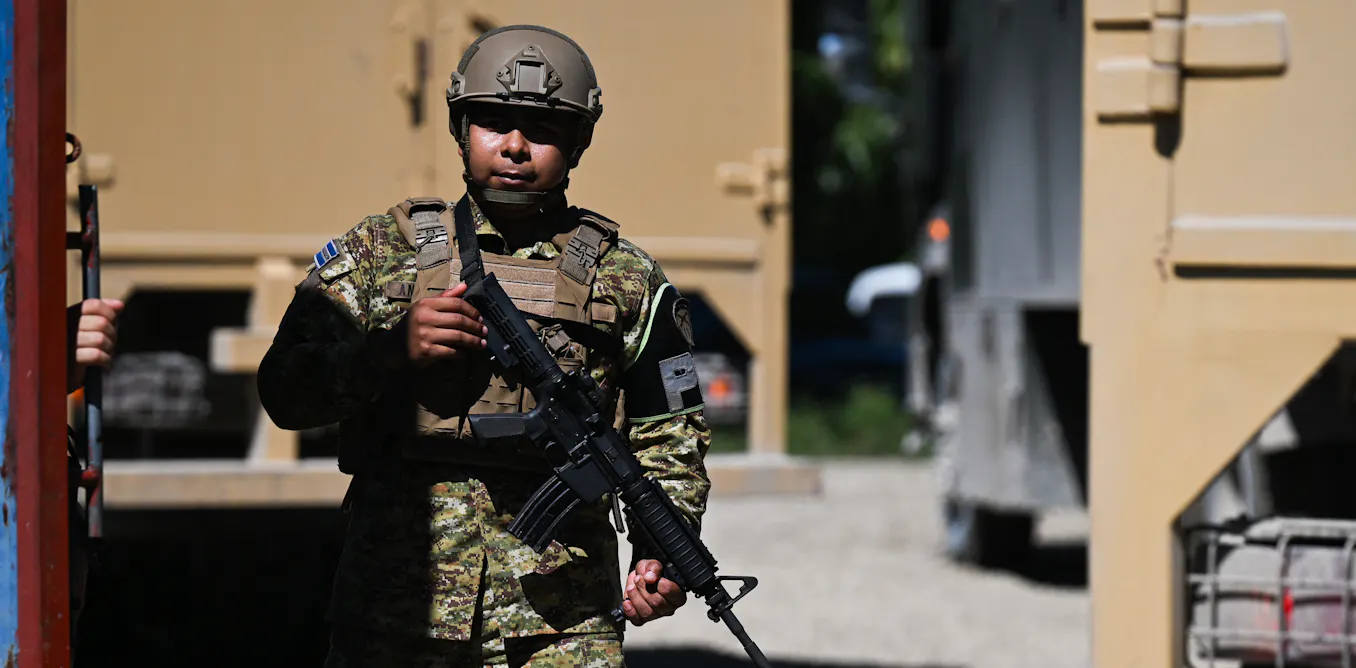
“the commitment of the Salvadorean forces in the fight against gangs,” Haiti's Prime Minister Alix Didier Fils-Aime said.
Bukele's Security Model Moves Beyond El Salvador
The intervention marks a deployment of Nayib Bukele’s security model outside El Salvador’s borders. While the hardline approach achieved a dramatic drop in homicide rates at home, experts and international monitors have expressed concern over its application in a country as deeply entrenched in crisis as Haiti. The deployment coincides with regional developments, including discussions regarding the future of the bilateral security arrangement.
“Haiti does not currently have the conditions to replicate the Salvadoran model: Its prisons were emptied in 2024, its justice system is largely paralyzed and criminal groups resemble militias more than gangs, with territory, taxes, weapons of war and political networks that protect them,” Haiti expert Romain Le Cour Grandmaison said.