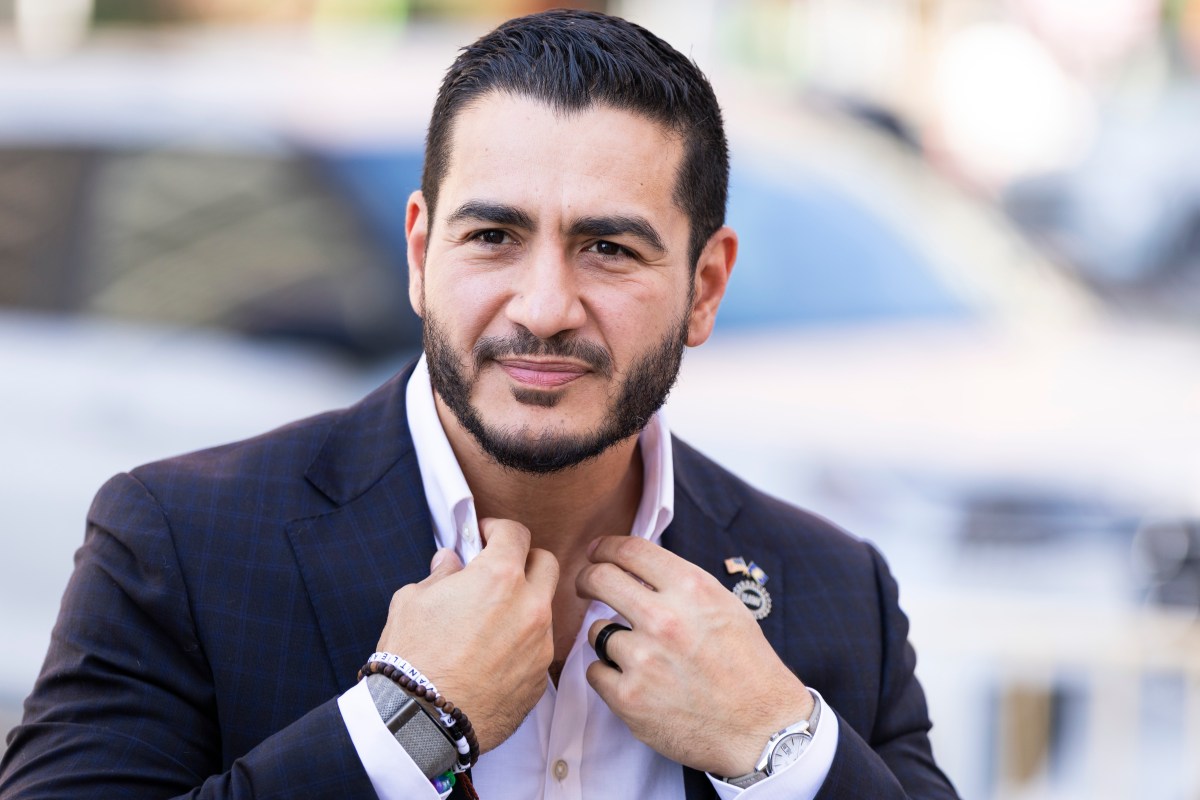
Michigan Democratic Senate candidate Abdul El-Sayed engaged in a tense town hall exchange in Caro on Saturday, clashing with a man who pressed him to disavow the Muslim Brotherhood as questions continue over resurfaced family social media posts ahead of the November 3 election.
Town Hall Confrontation in Caro
The confrontation unfolded on Saturday in Caro, Michigan, when a young audience member stood up and shouted a direct question during the Democratic Senate nominee’s town hall event. The man identified himself only as Tommy and demanded to know whether the candidate would disavow the Muslim Brotherhood.
Instead of offering a simple yes or no, El-Sayed met the inquiry by turning the questioning back onto the audience member. The candidate asked why the question was being posed and whether the man assumed he would not make such a disavowal, leading to an extended five-minute verbal exchange about constitutional rights and personal faith.
For me, that Constitution is the guiding light.
Abdul El-Sayed, Democratic Senate nominee
When Tommy maintained that he had never heard the candidate publicly disavow the organization before, El-Sayed asked whether the man asked everyone in his life if they disavowed the group. The exchange concluded when El-Sayed asked if the interlocutor disavowed attempts to introduce religious doctrine into American law. When the man refused to answer, El-Sayed replied, So I think it’s you who needs to understand the Constitution, not me.
The man then left the town hall as the crowd cheered.
The Identity of Interlocutor Tommy Teepell
Reporting identified the questioner as Tommy Teepell. The moment was not entirely organic. A report revealed that a conservative political action committee named America Next offered College Republicans $200 to travel to campaign events, boo the candidate, and ask inflammatory questions designed to generate embarrassing viral clips.
Abdul El-Sayed says he has no connections to the Muslim Brotherhood. But in a since-deleted Substack article, El-Sayed defended a man he described as his “friend” who was jailed for funding the Egyptian Muslim Brotherhood. The man, Mohamed Soltan, is the son of a senior… pic.twitter.com/Nmx97YLCQ2
Tommy Teepell is the son of Timmy Teepell, a Republican strategist who worked for former Louisiana Governor Bobby Jindal and helped Hawley win his United States Senate seat. The elder Teepell also maintains strong ties to Christian Nationalist figures such as Sean Feucht, who rose to prominence during the Covid-19 pandemic for opposing lockdowns.
Half-Sister Social Media Posts Trigger Scrutiny
The controversy driving the questioning stems from social media posts originally published in 2012 and 2013 by El-Sayed’s half-sister, Eman Abdelhadi, who is now a researcher at the University of Chicago. In the resurfaced messages, Abdelhadi wrote about her mother’s activism in the Muslim Brotherhood in Egypt during the early 1970s and stated that their family had long been connected to the organization, though she added that she believed the movement had handled politics poorly.
El-Sayed has repeatedly denied any personal or family ties to the group. In an interview with NBC News, he dismissed his half-sister’s historical social media commentary as hearsay evidence from old tweets, stating that he was not raised by his mother and had never discussed those matters with her. His campaign has characterized the line of attack as bad-faith rhetoric designed to distract voters from economic concerns such as the cost of living and soaring prices for groceries and gasoline.
Meanwhile, Republican opponent Mike Rogers has amplified the family posts in campaign videos, while national figures including President Donald Trump have targeted the candidate over the issue ahead of the November 3 election to succeed retiring Senator Gary Peters.

Wider Campaign Dynamics and Polling
The contest for the open seat being vacated by Senator Gary Peters features El-Sayed squaring off against Republican nominee Mike Rogers. The race has drawn national attention and intense scrutiny across Michigan. Amid the controversies over family history and policy positions, public opinion surveys have shown a tightly contested race between the Democratic and Republican contenders.
A Fox News poll conducted between September 24 and 28 captured the narrowing margins, indicating El-Sayed with a slim advantage of 50 percent to 49 percent over Rogers. Other polling firms have recorded varying margins in the final stretch of the campaign. Mitchell Research registered a lead for El-Sayed at 46 percent to 41 percent, while the Trafalgar Group placed him ahead at 47 percent to 45 percent. Previous election cycles in the state have similarly produced razor-thin margins, such as the 2024 Senate race where Elissa Slotkin secured victory with 48.6 percent of the vote compared to Rogers’s 48.3 percent.
Beyond domestic policy and economic arguments involving gas and grocery prices, El-Sayed has faced tough questioning regarding foreign policy positions. During debates and media appearances, he has addressed questions concerning international relations in the Middle East, including inquiries comparing the security challenges posed by Iran and Israel. The candidate’s remarks on foreign actors have drawn sharp rebukes from critics and conservative figures, who argue his stances depart from conventional U.S. security consensus.
As election day approaches, national surrogates and high-profile figures have frequently weighed in on the Michigan matchup. Conservative commentators and political analysts have continued to debate the implications of the candidates’ platforms. El-Sayed’s campaign maintains that voters remain focused primarily on domestic economic pressures rather than manufactured controversies, while opposition figures press forward with scrutiny regarding his family’s past statements.