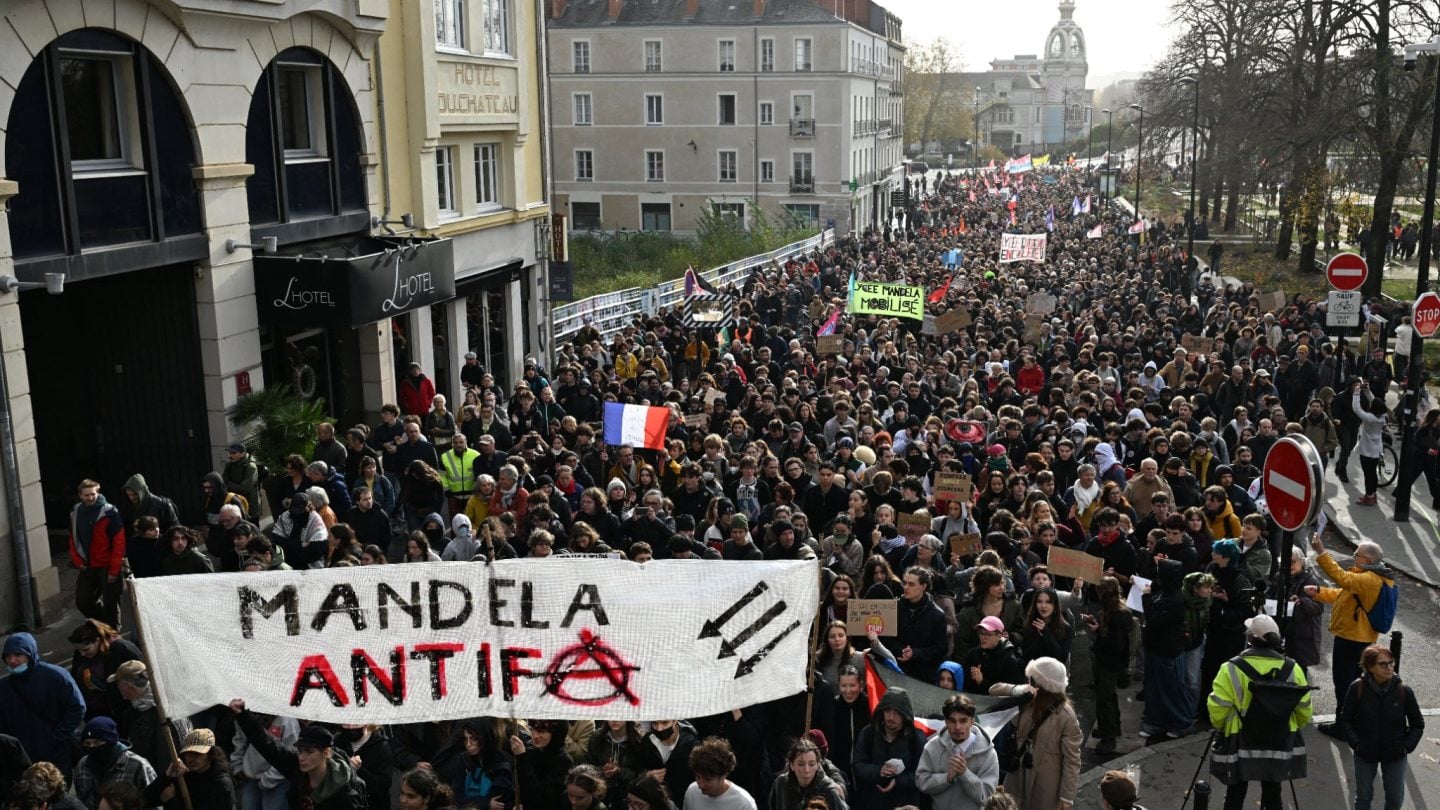
Public sector workers across France launched a coordinated strike on Tuesday to demand significant salary increases and protest against the rising cost of living.
According to the Ministry of National Education, the strike saw a low turnout among teaching staff, with 3.76% of teachers participating, while 9.28% of school support staff joined the movement. Nationally, the Ministry reported similar participation levels across the public sector branch.
Despite these figures, the inter-union coalition—which includes the CGT, FSU, Solidaires, and the UNSA—asserts that the movement represents a broad cross-section of society. The demonstrations also drew participation from railway workers, students, and members of the “Gilets jaunes” movement.
Trade unions argue that public agents have faced a nearly 16% decline in purchasing power since 2017, leading to what they describe as the “smicardisation” of the workforce. A central point of tension is the government’s refusal to implement a general increase in the index point.

The government maintains that a 1% increase in the index point would cost the public purse 2.4 billion euros, an amount deemed incompatible with the state of public finances. Instead, the government has confirmed it will grant additional points to the lowest salary tiers, a measure projected to take effect in 2027.
Sophie Binet, secretary general of the CGT, said that the government’s approach is insufficient, urging the executive to make large corporations contribute more, as they “capture“the majority of public aid. She argued that”when a strike is well followed in a company, we immediately win salary increases and the opening of negotiations,” adding that “strikes always pay off.”
Police sources estimated that between 220,000 and 300,000 people were expected to participate in demonstrations across France. In Paris, organizers planned a march from the Place de la Nation to the Place d’Italie.
The movement has also led to legal battles over public safety; in Lyon, the administrative tribunal overturned a prefectural ban, allowing protesters to march in the city center. Conversely, in the Somme, authorities established a perimeter around Amiens to prohibit all static or mobile demonstrations.

Transportation services faced varying levels of disruption. While the Minister of Transport said that TGV and Intercités trains operated normally, the SNCF reported that regional TER lines were affected across several regions, including Auvergne-Rhône-Alpes, Bourgogne-Franche-Comté, Brittany, Centre-Val-de-Loire, Hauts-de-France, Nouvelle-Aquitaine, Occitanie, and Pays-de-Loire. In the Paris region, transit lines D, J, N, and R were specifically identified as being under stress.
As the government refuses a general salary hike, union leaders continue to press for the index point to be indexed to inflation. Meanwhile, the judiciary is expected to rule on specific labor disputes, such as the case involving 16 strikers at the Bosch factory, who face legal action from management following the filtering of delivery trucks.