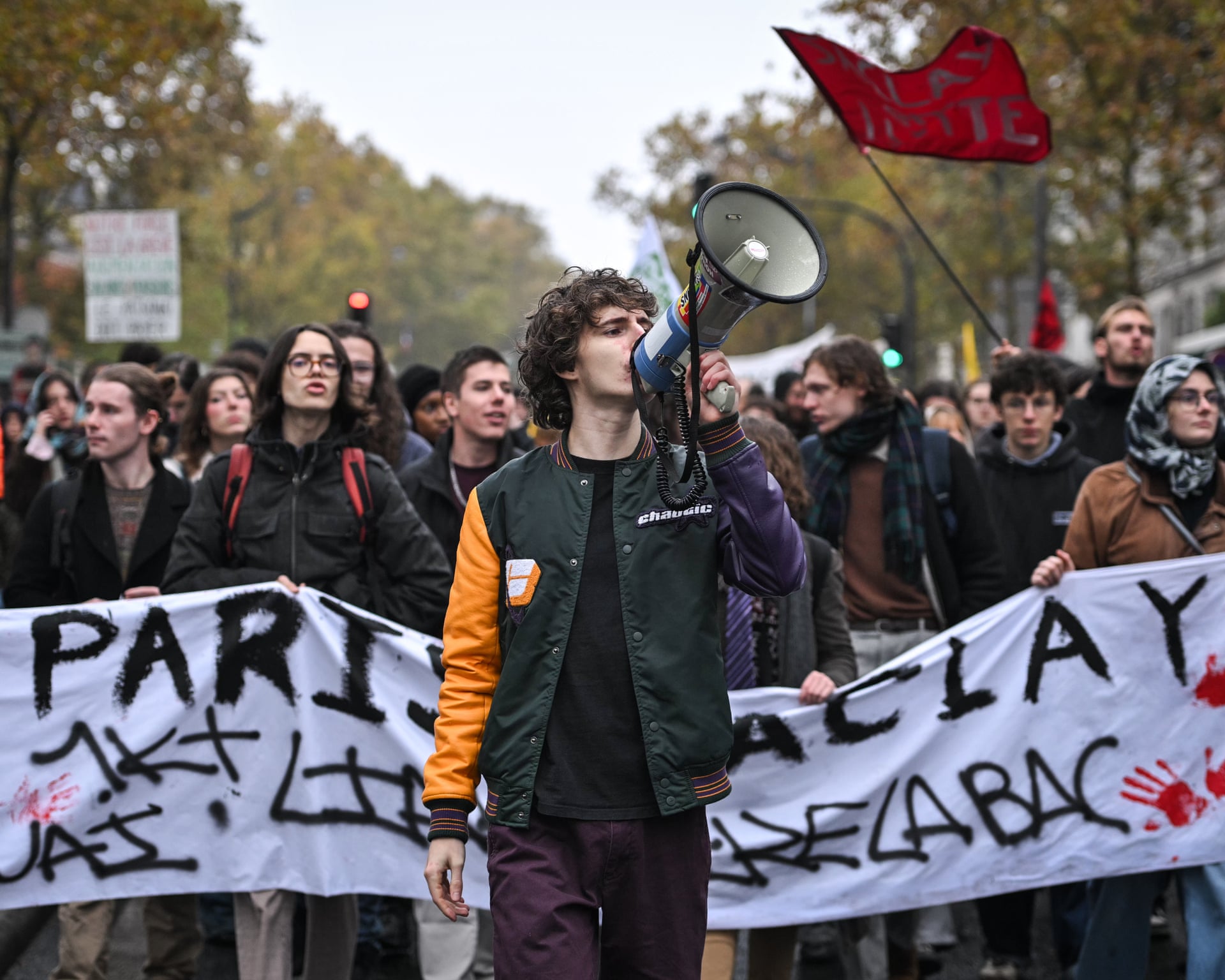
France entered its eighth week of youth-led unrest as high school blockades and nationwide demonstrations continued to disrupt classes across the country.
The movement, which began in September, has seen students protest dilapidated school buildings, teacher shortages, overcrowded classes, and the national higher-education admissions platform known as Parcoursup. As the crisis enters its second month, the friction has exposed deep divides among students themselves over how to achieve reform.
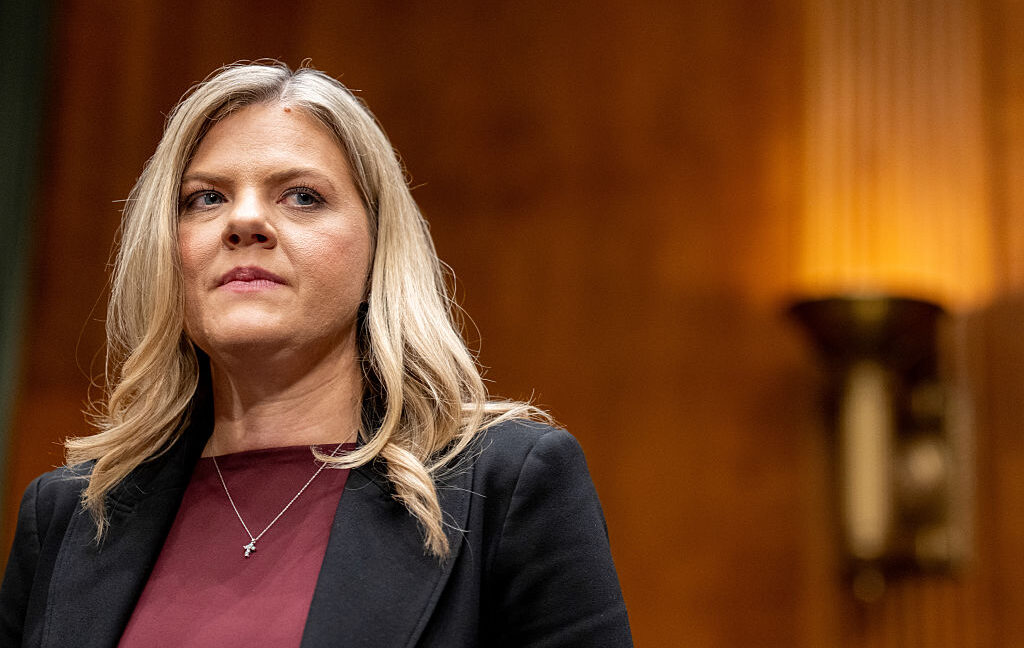
The protests have propelled two young women from opposite political backgrounds into the public eye, highlighting the broader polarization of French youth five months ahead of a presidential election. Soumaya Sarré, an 18-year-old history and Arabic studies undergraduate, has emerged as a prominent voice for the youth-led demonstrations.
“I can carry our voices, the voices of young people from working-class neighborhoods,” Sarré said in an interview published by The New York Times.

Sarré experienced university admissions hurdles firsthand when she was not immediately accepted to her first-choice program despite strong academic marks. She subsequently helped establish a union for students in working-class neighborhoods and maintains that the demonstrations should persist as long as there is no concrete change.
Conversely, Louise Montangon, a 22-year-old philosophy undergraduate from rural France, has organized opposition to the blockades. Montangon argued on television panels and social media that the majority of students prefer attending classes.
“It’s possible to make our voice heard without breaking everything, without blocking everything,” Montangon said, according to KhanList.
Montangon recalled her own high school experience featuring overcrowded classrooms and poorly insulated buildings. She said that her conservative politics took shape after she started her bachelor’s degree at an extremely politicized university in Bordeaux, where she observed pressure on students who did not want to join left-wing groups and on professors whose classes were disrupted by activists.
Injuries and Classroom Disruptions
The government initially responded with a security crackdown, deploying riot police outside educational institutions. Clashes resulted in injuries, including schoolchildren. According to figures reported by The Guardian, more than 360 schoolchildren and 245 staff members have been injured since the unrest began, and at least 50 principals have made requests to quit their posts to cope with the confusion and chaos.
Teachers and administrators are now confronting mounting stress and uncertainty over missed instruction time. Julien Roy, a history and geography teacher at Lycée Balzac in Tours who represents the SNALC education union, described a difficult atmosphere on campus.
The French administration is trying to impose a kind of smokescreen of wishful thinking, that everything is alright, stiff-upper-lip, no problem, but everyone needs to face up to what is happening.
Julien Roy, history and geography teacher and union representative via The Guardian
Roy said that ten colleagues at his school were on sick leave, including the principal and deputy principal, as tensions continued over firework mortars and bin fires outside the building. Teachers unions have accused the government of letting the protests fester into an increasingly dangerous mood of violence as fireworks are fired outside schools and inside classrooms in different parts of France.
“There is absolute uncertainty over how we can return to proper teaching. This is becoming an intractable situation with no end in sight,” a teacher who demonstrated outside a central Paris police station said.
“We need to get back to class to teach our pupils again, some of whom are booing us,” Julien Roy, a history and geography teacher at Lycée Balzac in Tours who represents the SNALC education union, said.
Government Proposes Legislative Changes to Address Unrest
The unrest unfolds against the backdrop of declining support for moderate solutions following years of centrist governance under term-limited President Emmanuel Macron. Polls of individuals under 25 indicate that over 40 percent support far-left candidate Jean-Luc Mélenchon, while more than 20 percent back far-right figure Marine Le Pen.
To address the unrest, the government presented a legislative package on October 26 tied to the 2027 budget. The proposal includes a cap of 28 pupils for first-year classes on the general and technological track starting in 2027, the addition of 500 teaching posts while canceling 836 planned job cuts, indexing student grants to inflation, creating 15,000 new higher-education spaces, replacing Parcoursup in 2028, and €4 billion in low-interest loans for building repairs.
However, lawmakers rejected those budget commitments in an initial vote on November 4, leaving the implementation of those concessions uncertain as protests and strikes continue to affect regional transport and public services.