Sao Paulo Grand Prix Grid Penalties Reshape the Grid as Verstappen and Hamilton Face Back-of-the-Grid Starts
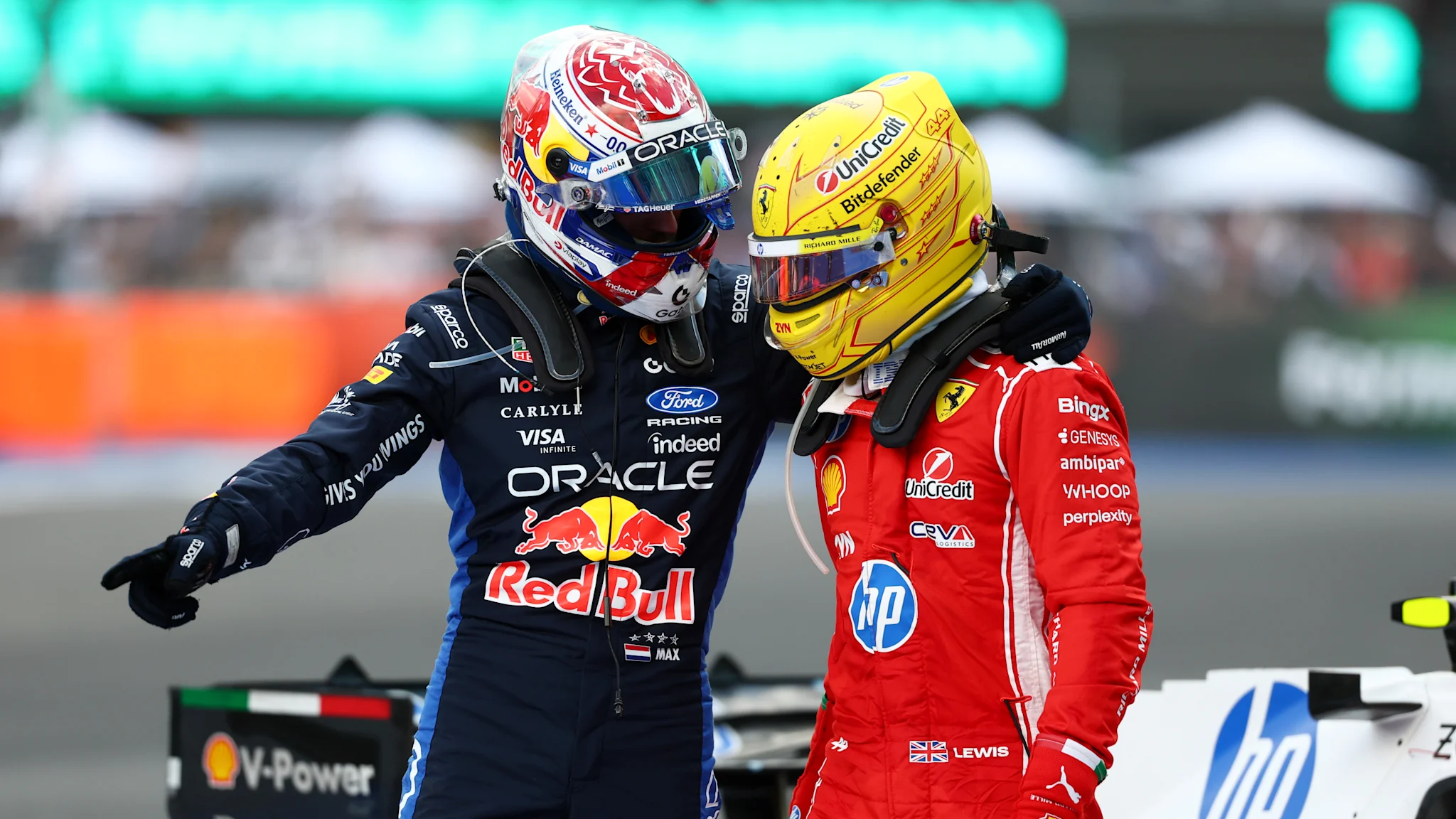
Max Verstappen of Red Bull and Lewis Hamilton of Ferrari will both line up at the rear of the field for Sunday’s Sao Paulo Grand Prix following power unit penalties at Interlagos. Hamilton initially faced a 10-place penalty for exceeding his power-unit allowance for the season, but the new internal combustion engine fitted on Saturday morning failed during final practice. This forced Ferrari to install an entire new power unit, triggering the back-of-the-grid demotion.
Red Bull also went over the component limits on Verstappen’s car after discovering issues following Friday practice. Verstappen amassed 30 places worth of penalties after Red Bull exceeded the season limit for the Internal Combustion Engine, Turbo Charger, and Exhaust. Meanwhile, Red Bull team principal Laurent Mekies confirmed the penalty for the Dutchman ahead of third practice, stating that Verstappen knows the back-of-the-grid position very well here from the last two years.
Ferrari and Mercedes Adjustments Ripple Through the Field
The penalties extend far beyond the two drivers. Hamilton’s teammate Charles Leclerc and Mercedes driver George Russell have also incurred grid drops for Sunday’s race. Leclerc received a 10-place penalty for fitting a new internal combustion engine, which marked the first time Ferrari exceeded the limit of four engines per season on his car. Russell, who had already gone beyond that allocation previously, received a five-place penalty for his latest engine change.
Formula 1 returns to Brazil for Round 20 of the 2026 FIA Formula One World Championship! 🇧🇷 Set in São Paulo, the Autódromo José Carlos Pace combines high-speed sections, technical corners and significant elevation changes.#FIA #F1 #BrazilGP pic.twitter.com/GXJz89723718611443
George Russell will start no higher than sixth on the grid, noting that the Mercedes driver always anticipated taking a penalty before the end of the season following his earlier reliability setback. Mercedes enters the weekend with a chance to clinch the Constructors’ Championship if they outscore Ferrari by three or more points, while Russell looks to recover from fourth in the drivers’ standings after teammate Kimi Antonelli secured the 2026 drivers’ title in Mexico.
| Driver | Team | Penalty Details |
|---|---|---|
| Max Verstappen | Red Bull | 30 places (Back of grid – ICE, Turbo, Exhaust) |
| Lewis Hamilton | Ferrari | Back of grid (Full power unit replacement) |
| Charles Leclerc | Ferrari | 10 places (New Internal Combustion Engine) |
| George Russell | Mercedes | 5 places (New Internal Combustion Engine) |
Championship Battle and Interlagos Recovery Precedents
The timing of these changes sets up a recovery battle in the drivers’ championship, where four drivers are separated by just 16 points in the fight to finish second behind Kimi Antonelli. Interlagos has a history of dramatic comebacks from the back of the field. Back in 2021, Hamilton famously charged through the field from the rear of the grid across both the Sprint and the Grand Prix in Sao Paulo, whereas Verstappen secured impressive wins and podium finishes starting far down the order during the 2024 and 2025 editions of the Sao Paulo Grand Prix.
Cadillac newcomer Sergio Perez also incurred a 30-place penalty after taking a new Ferrari ICE, Turbo Charger, and Motor Generator Unit-Kinetic, cementing a heavily disrupted starting order for Sunday’s main event at Interlagos.
Disclaimer: The analytical insights and data provided in this article are for informational and entertainment purposes only and do not constitute medical advice or sports betting recommendations.
DOC 39 – Infringement – Car 11 – Changes to PU elements https://t.co/nVLPv627jK #SaoPauloGP #F1 #FIA pic.twitter.com/M1gHLiM6P2