United Nations nuclear inspectors remain barred from returning to key Iranian atomic sites, deepening an oversight blackout that has persisted since military strikes in June 2025.
IAEA Cannot Verify Isfahan Enrichment Plant Status
The International Atomic Energy Agency warned in a confidential report circulated to member states that it cannot verify the location or operational status of an underground uranium enrichment facility near Isfahan. Iran declared the Isfahan Fuel Enrichment Plant on June 12, 2025, just one day before Israel launched military strikes against Iranian nuclear and military infrastructure, a campaign joined later that month by the United States.
Inspectors had planned to visit the site on June 13, 2025, but the bombing campaign made the inspection impossible. “The agency does not know IFEP's exact location, status for safeguards purposes or whether it contains nuclear material,” the confidential IAEA report to member states said, creating what the watchdog termed a serious proliferation concern requiring urgent action. Authorities at the watchdog voiced heightened anxiety over Tehran’s rejection of requests to grant inspectors access to the Isfahan uranium enrichment plant or its design documentation.
According to the agency, it does not know the facility’s precise location or whether nuclear material is present. Without access to the site, inspectors cannot independently determine its operational status. The 12-day military campaign by Israel and the United States destroyed or badly damaged Iran’s other uranium enrichment plants, which form the heart of its nuclear program.

The targets included a tunnel network at Isfahan where diplomats have stated they believe the Isfahan Fuel Enrichment Plant is located, though a senior diplomat said that its whereabouts and status remained unknown.
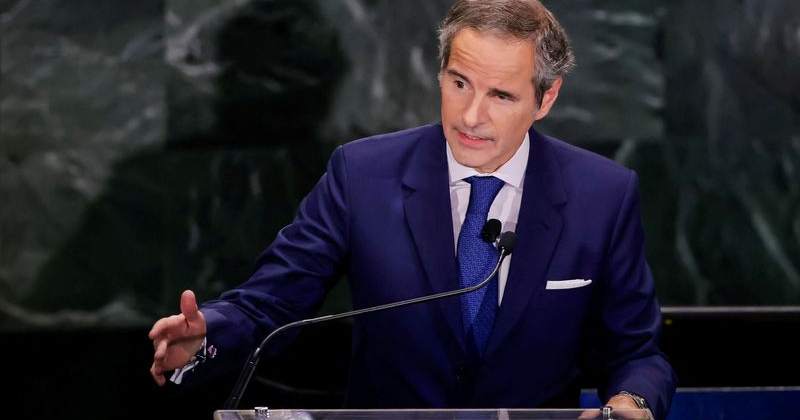
In March, the head of the IAEA, Rafael Grossi, indicated that his organization suspected a substantial portion of Iran’s highest-grade enriched uranium was housed inside the subterranean chambers at Isfahan.
While the report singled out the Isfahan facility, it also reiterated that Iran should inform the agency of the status of its enrichment plants as well as its stock of highly enriched uranium, and let inspectors return to the bombed sites to account for the material.
Inspectors Cannot Track 60 per Cent Uranium Stockpile
Prior to the military operations in June 2025, the organization calculated that Iran possessed 440.9 kilograms of uranium refined to a purity level of 60 per cent, leaving only a brief technological leap to reach the 90 per cent weapons-grade threshold.
While the reactor currently running at Bushehr uses uranium from Russia enriched to 4.5 per cent, inspectors have been unable to verify the quantity, composition, or whereabouts of the 60 per cent stockpile since the bombing campaign. Although this discovery does not prove that atomic material has been siphoned off elsewhere, it highlights the organization’s inability to independently confirm its current whereabouts and condition.
The Bushehr nuclear power plant remains the only facility in the country where inspectors have been permitted access, with a visit conducted on Sept. 12-15. IAEA Director General Rafael Mariano Grossi pointed out Iran’s persistent refusal to cooperate with the agency to settle long-standing compliance questions, cautioning that this lack of collaboration has weakened international supervision over Tehran’s atomic program.
Iran Suspends Cooperation Citing Security Threats
Iranian officials have defended the suspension of routine monitoring by pointing to ongoing military threats. Tehran told the organization that it was not possible to allow the inspections to continue amid the current security situation. Iran passed a law suspending cooperation with the agency after inspectors were withdrawn for safety reasons following the bombing of the nuclear facilities.

until the root causes of the present situation are addressed and the essential requirements for normal safeguards implementation are restored.
Iranian state position, via Al Jazeera
In a communication directed to the IAEA, Iranian representatives voiced apprehension regarding a recent United States proposal offering a bounty reaching $20 million for details about Iran’s atomic initiatives. Iranian officials underscored the necessity of safeguarding the secrecy of the watchdog’s operations and ensuring that sensitive details concerning the nation’s nuclear framework are shielded against exposure, abuse, or exploitation. Meanwhile, during a United Nations Security Council meeting, Iranian deputy ambassador Gholamhossein Darzi attacked the council for its silence after the United States and Israeli attacks, denouncing their wars of aggression against Iran and accusing the United States of committing war crimes against the Iranian people.
The unresolved safeguards obligations are scheduled for discussion during the IAEA Board of Governors meeting in Vienna from Nov. 18 to 20, 2026.
President Donald Trump said that one of the major reasons the United States went to war with Iran on Feb. 28 was to deny Tehran the ability to develop nuclear weapons, even as he insisted that strikes carried out on Iranian nuclear sites in June 2025 obliterated the country’s atomic program.
IAEA chief Rafael Grossi reported during a Security Council meeting that there has been no indication Iran has tried to repair or reconstruct its nuclear facilities damaged in military strikes this year or last year, adding that since June 2025, the agency has not identified any activity to repair or reconstruct any of the damaged facilities.
Indirect talks between Washington and Tehran continue through mediators such as Qatar, though analysts note that the two sides remain distant on key terms. Tehran has said that negotiations depend on Washington meeting its demands. Miller said that Trump could claim victory by reopening Hormuz, lowering energy prices, ending the fighting and securing an Iranian commitment not to build nuclear weapons.
“We don't need a deal with Iran,” Trump said, according to CBS News.
Earlier coverage: Trump Declares No Deal Necessary With Iran and Sidelines Vance