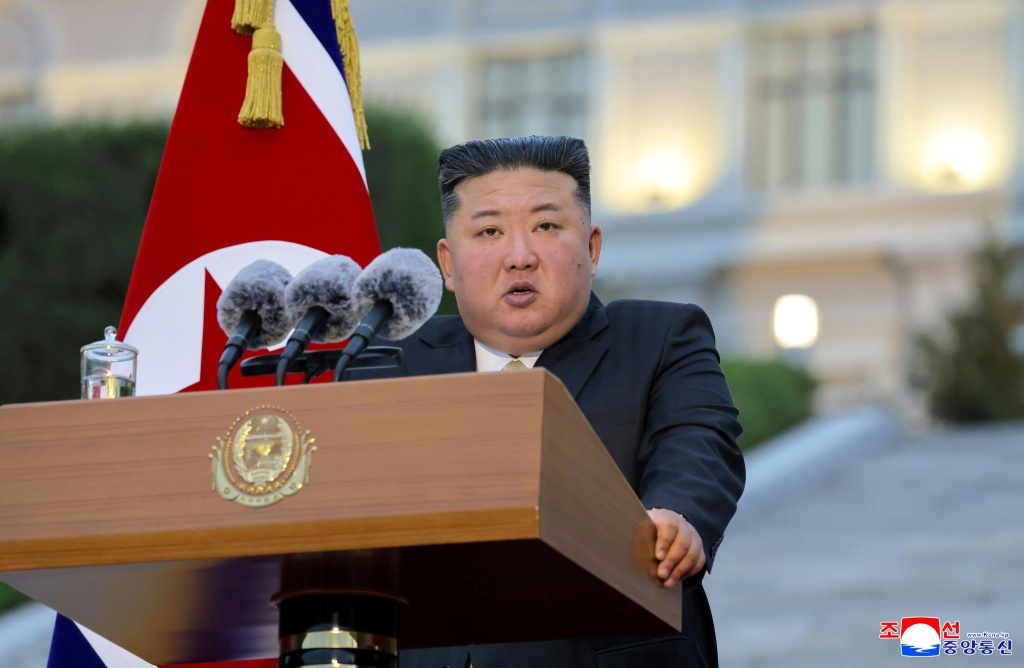
North Korean leader Kim Jong Un visited the Chinese border city of Dandong on Saturday, crossing the newly opened New Yalu River Bridge. The unannounced trip, timed to mark the anniversary of China’s entry into the Korean War, signaled a focus on historical ties rather than immediate diplomatic breakthroughs with the United States.
A Symbolic Crossing of the New Yalu River Bridge
Kim Jong Un’s arrival in Dandong via the New Amnok River Bridge marked a significant moment for the cross-border infrastructure that had sat dormant for over a decade. Completed in 2014 at a cost of approximately US$310 million, the four-lane, 3,026-meter bridge remained unused for years due to a lack of connecting roads and customs facilities on the North Korean side. Its inauguration on October 15, 2026, has now opened a more efficient path for trade between the two nations. The bridge serves as a primary conduit for North Korea’s trade with the outside world, and its opening is viewed as an opportunity to expand personnel exchanges and trade cooperation.
While the bridge holds the potential to expand trade and accommodate heavy cargo, the visit itself was primarily commemorative. Analysts noted that the trip, occurring just before the October 25 anniversary of Chinese troops entering the 1950-53 Korean War, emphasized the shared history of the two nations rather than contemporary economic or diplomatic deals. The event marks the date when Chinese forces first fought alongside North Korea against U.S.-led United Nations forces, a conflict that ultimately ended in a 1953 armistice, leaving the peninsula technically at war.
Meetings with Wang Huning and the Commemoration of Blood Ties
The visit appeared designed to reaffirm the “blood-forged” alliance between the two countries at a time when North Korea’s deepening ties with Russia have drawn scrutiny in Beijing. Kim also toured a bus factory during his brief time in the city.
We will always remember the history when the excellent sons and daughters of the Chinese people helped our revolution at the cost of their blood and steadily and firmly carry forward the history of the DPRK-China friendship.
Kim Jong Un, via Korean Central News Agency
According to Xinhua, Kim expressed his gratitude for China’s long-term support for North Korea’s socialist cause and voiced a desire to expand practical cooperation to bring tangible benefits to their peoples.
Experts Analyze Reasons Behind Kim's Visit to Beijing
Yang Moo-jin, former president of South Korea’s University of North Korean Studies, noted that Kim might have sought to press Beijing for active support ahead of a possible summit between North Korea and the United States. Conversely, some observers argued the visit was intended to dispel unfounded rumors regarding Kim’s health that had circulated on social media, including unsubstantiated claims that he had suffered a cerebral hemorrhage.

Experts remain skeptical of a direct link between the visit and renewed negotiations with Washington. Leif-Eric Easley, a professor at Ewha University in Seoul, suggested that while Kim may be playing Russia and China against one another, Beijing remains economically indispensable to the North in ways Moscow cannot replace.
>