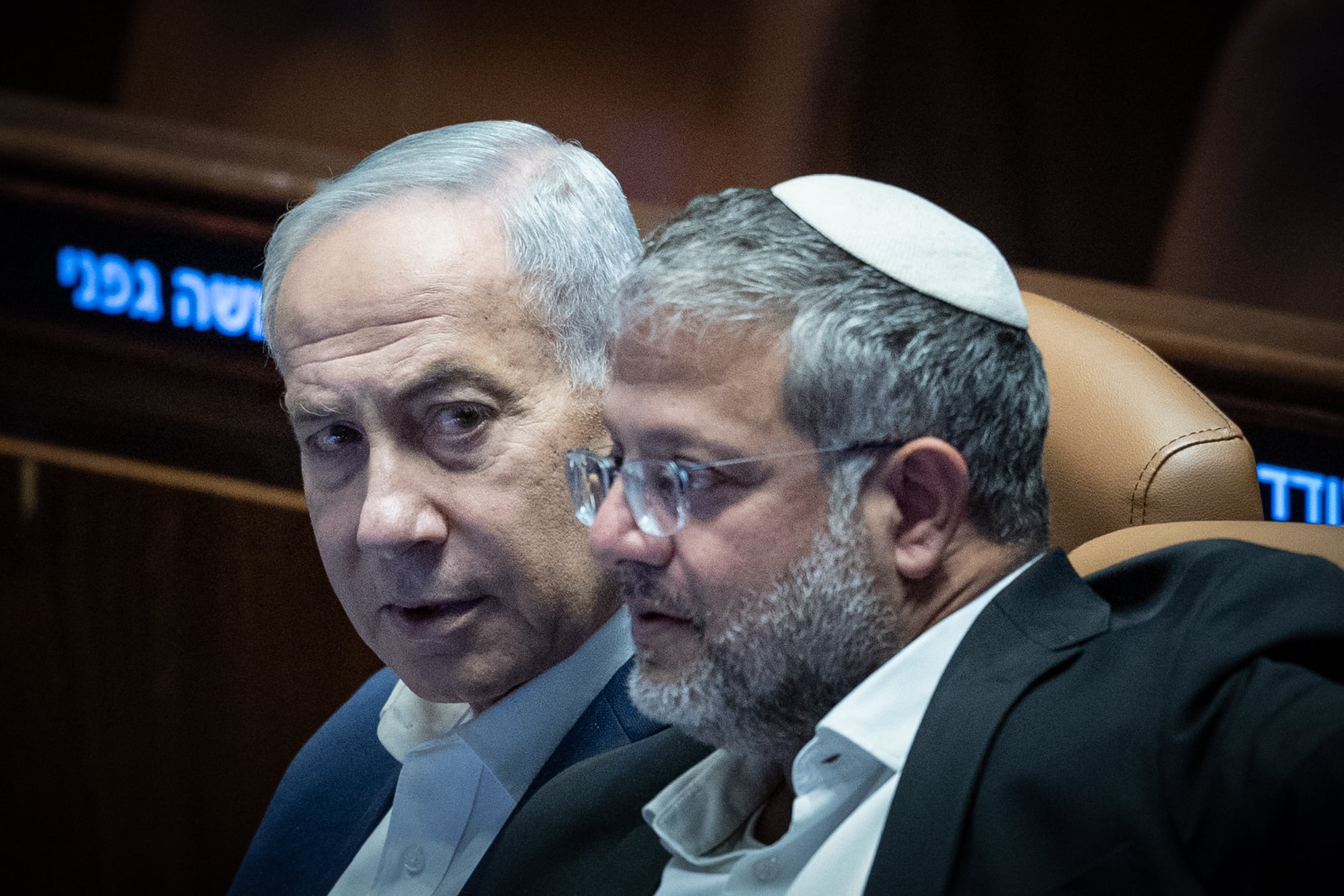
Israeli caretaker Prime Minister Benjamin Netanyahu proposed a rotating premiership on Saturday. He offered to let opposition leader Gadi Eisenkot serve first as prime minister in a national unity government.
- Netanyahu announced on X that he would serve as alternate prime minister at the start of a power-sharing arrangement.
- Eisenkot invited Netanyahu to immediate negotiations at the Dan Accadia Hotel in Herzliya.
- Eisenkot set a December 6 deadline to announce a new government without requesting a 14-day extension.
Netanyahu Proposes Power-Sharing Rotation
Benjamin Netanyahu faces extreme threats. He spoke of “given the gravity of the existential danger and the possibility that a government will be formed that lacks the ability to confront it”.
The sitting premier said, “my responsibility as a leader requires me to set everything aside”. This includes bypassing the standard convention where the premier comes from the largest party.
Netanyahu’s Likud party secured 53 seats in the 120-seat Knesset after the October 27, 2026, elections. Eisenkot and his presumed partners won 48 seats. The caretaker prime minister said he should lead the unity government because his faction won more seats than Yashar. But he said he was willing to abandon that principle.
Eisenkot responded by inviting Netanyahu and his team to conduct genuine and accelerated negotiations. The meeting would take place at the Dan Accadia Hotel in Herzliya.

Eisenkot said, “to this very moment, we have received no response” regarding a detailed proposal from the previous Sunday. The two men were scheduled to meet at 10 a.m. local time on Sunday. The position of alternate prime minister stems from a 2020 revision of Israel’s executive-governing Basic Law. This change was part of a coalition agreement shared by Netanyahu and Benny Gantz.
Political Leaders React to the Offer
The offer divided potential coalition partners and opposition figures. Former Prime Minister Naftali Bennett praised the move. He said Netanyahu made the right call by letting Eisenkot take the premiership first in a government “based on an alliance of those who serve”.
Finance Minister Bezalel Smotrich also welcomed the proposal. He said he was involved in discussions and was willing to act as a guarantor.
Other opposition leaders dismissed the proposition as a political maneuver. Yair Lapid issued a statement describing the offer as “another transparent con by a serial fraudster who has deceived every partner and violated every agreement.”
Reports in Israel: ‘Prime Minister Benjamin Netanyahu's statement: "On Thursday, I had an important conversation with Gadi Eisenkot. Gadi and I have known each other for many years, since his time as Chief of Staff and even before that. This meeting only reinforced my…
Lapid said the only way to test the proposal is to swear in a government led by Eisenkot before any talks on expansion begin. Left-wing Democrats party leader Yair Golan also called the announcement a stunt.
Eisenkot Pursues Coalition Tracks
Eisenkot had already signed preliminary coalition agreements before the statement from Netanyahu. These agreements involve Yair Golan’s Democrats party and Avigdor Liberman’s Yisrael Beiteinu. He also held parallel discussions with United Torah Judaism.
Ra’am Chairman Mansour Abbas declared that Hamas is a terrorist organization. This meets one of Eisenkot’s core prerequisites for cooperation. President Isaac Herzog previously tasked Eisenkot with forming a government within 28 days after consulting all parliamentary factions.
The two leaders are scheduled to meet at 10 a.m. local time at the Dan Accadia Hotel in Herzliya. Eisenkot faces a December 6 deadline to finalize a governing administration.

Likud Demands and Eisenkot’s Concerns
Gadi Eisenkot said Benjamin Netanyahu is pushing Israel into a dangerous situation through anti-Arab rhetoric. Eisenkot said working alongside Likud is the least desirable alternative among his options. He accused the caretaker prime minister of trying to drag out talks to force another election.
Likud insisted on specific terms for any unity arrangement. They require full partner backing for a renewed offensive against Iran. They also want judicial overhaul legislation to remain active until a consensus emerges.
Avigdor Liberman asserted that a government with a clear Jewish majority could be presented before the end of the week. Naftali Bennett expressed support for exploring the unity option. He previously characterized Netanyahu as the person destroying the country.
Israel's caretaker prime minister Benjamin Netanyahu on Saturday reiterated his calls for a national unity government with his opponent Gadi Eisenkot, who in turn dismissed the appeal as a ruse.https://t.co/Yktxfa21jm pic.twitter.com/YtJsuEdxX8
Security and Military Service Debates
Mansour Abbas recognized Hamas as a terrorist organization during an interview with Israel’s Channel 12. He stated that what is written is written regarding the group. This declaration by the Ra’am leader removed a major hurdle for cooperation. It satisfied a core prerequisite set by Eisenkot for any faction joining his proposed administration.
Allies of Eisenkot anticipated that his government could be announced as early as the following week. Negotiations also addressed military service frameworks. Eisenkot said discussions did not mean backing down on conscription. He said they involved arrangements built upon his party’s service-for-all framework.
Netanyahu warned that hostile elements would seize control of the state from within if a capable government fails to materialize. This warning came as the December 6 deadline approached.
Parliamentary Support and Policy Tracks
President Isaac Herzog granted Eisenkot the mandate to form a new government after receiving backing from 67 members of the parliament. This support included the change bloc and Arab-led parties. Netanyahu received 46 approvals with seven abstentions.

The United Arab List and the Joint List are two Arab-led alliances. They secured a combined 19 seats in the 120-seat Knesset. Avigdor Liberman warned against forming a government that relies on support from Ra’am and the Joint List. He said such a move would cause an electoral boomerang that would bring Netanyahu back to power with greater strength.
Eisenkot outlined three separate tracks for building a coalition. One track is a minority government requiring external Arab party support. He accused Likud of stalling negotiations. He said Likud failed to put forward concrete proposals over a two-week period.
Likud’s list of demands for a potential unity agreement included several points. They require full partner support for another military offensive against Iran. They also want to keep judicial overhaul legislation in place until a consensus is reached. Finally, they want to establish a political commission of inquiry into the October 7, 2023, attacks instead of a state commission.
Allies of Eisenkot said his government’s initial priorities would include dismantling judicial overhaul measures. They also want to establish an independent inquiry into the October 7 onslaught. The government would also engage with the White House regarding military aid.