
Just days before the Israeli parliamentary elections, Prime Minister Benjamin Netanyahu released a three-page national security doctrine prioritizing pre-emptive military strikes and vowing to dismantle the Iranian government. The plan drew swift mockery from political opponents, who dismissed the document as empty slogans designed to distract voters.
Ten Principles and the Shift from Defense to Initiative
Released on October 18, 2026, the updated security vision outlines ten core principles meant to reshape Israel’s strategic approach following the outbreak of war in October 2023. The document, prepared with the assistance of the National Security Council, pivots the nation away from containment and defense toward pre-emptive initiative and decisive offense.
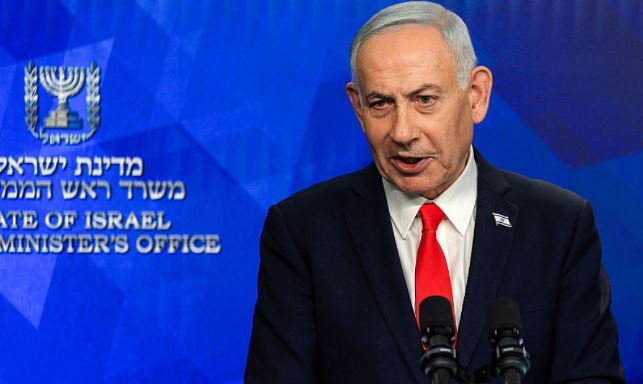
During a briefing with reporters in West Jerusalem that stretched for two hours, Netanyahu argued that military actions across Gaza, Lebanon, Yemen, and Iran had successfully averted what he termed an imminent nuclear extermination threat and dismantled the tightening circle forged by the Iranian axis. He maintained that the nation must rely on its own military and technological supremacy, stating that after October 7, we changed the face of the Middle East because we changed ourselves.

After October 7, we changed the face of the Middle East because we changed ourselves.
Netanyahu Prioritizes Neutralizing Iranian Nuclear Ambitions
The doctrine places neutralizing Tehran’s nuclear ambitions at the very top of national priorities, with Netanyahu asserting that bringing down the Iranian regime remains a primary strategic objective. He contended that worsening economic pressure inside Iran could trigger renewed public protests, which his comprehensive plan aims to accelerate. While Israel seeks approval from Washington, he insisted that it is fully prepared to launch pre-emptive strikes against Iran independently, even without American backing or prior coordination.
At the same time, the prime minister warned that only two years remain in the current U.S. presidential term, cautioning that a future administration could adopt a heavily hostile stance. To bolster domestic readiness, the proposal earmarks funds over the next decade to expand the military, establish underground technological munitions factories, and diminish reliance on foreign arms suppliers.
Political Backlash and Opposition Scorn in the Knesset Race
With voters heading to the polls on October 27, 2026, rival politicians met the security document with fierce derision. Gadi Eisenkot, a former military chief of staff, labeled the publication as empty pages filled with slogans that highlighted a deep strategic void.
Eisenkot accused the prime minister of exploiting public security anxieties to manipulate voters and divert attention from ongoing failures, pointing out that Hamas retains armed forces in Gaza and Hezbollah continues to rebuild capabilities in Lebanon.
Nevertheless, the State of Israel is a democratic state… I am convinced that after 9 days, the Zionist and official majority which performs military service will win in these elections, and the United States government will know how to deal with any government elected in Israel.