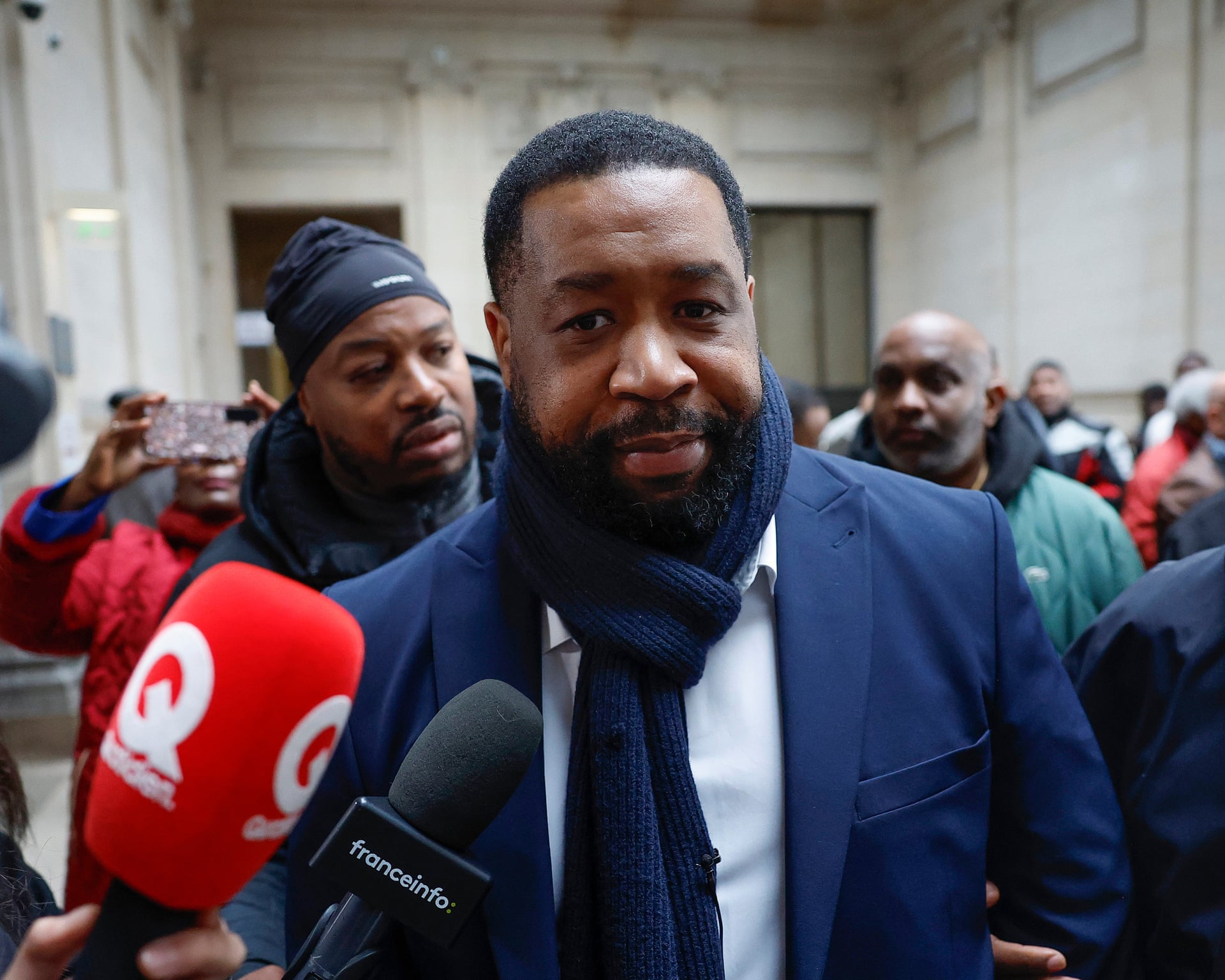
A Paris court sentenced three officers to prison on Friday for the 2020 beating of Black music producer Michel Zecler, recognising racism as an aggravating factor in a case that has become a benchmark for French police accountability.
The ruling delivered five-year terms for Aurélien Lapersonne, 29, Philippe Tondeux, 50, and Pierre Plantier, 37, with most of each sentence suspended. Lapersonne and Tondeux will serve one and one-and-a-half years respectively; Plantier will serve his single year under electronic monitoring.
All three are barred for life from police work. The court found they falsified their arrest report to claim Zecler attacked them, a version contradicted by studio security cameras that captured roughly 30 blows over five minutes.
Prosecutors had sought four to six years of actual custody, arguing the assault caused “immense harm to Michel Zecler but also to society as a whole” and that the officers had “betrayed” their uniform. The sentences handed down fall short of that demand, but the court’s acceptance of the racist dimension — rejected by the defence and initially absent from the investigation — marks the sharper legal precedent.
Zecler, now 47, testified that officers called him a racial slur repeatedly during the beating. The three policemen admitted the violence and the forged report but denied any racial motive. The panel of five judges credited Zecler’s account because, as the BBC noted, “everything else he said was verifiably true”.

The stop, the assault, the cover-up
On 21 November 2020, during France’s Covid lockdown, officers stopped Zecler outside his Paris studio for not wearing a mandatory mask and suspected him of cannabis use. They forced him into the building’s entrance and beat him with fists and batons, leaving craniofacial trauma, a ruptured biceps tendon and 45 days off work.
Their official report accused him of violence and trying to seize a truncheon. Days later, footage from Zecler’s own cameras and the outlet Loopsider exposed the lie. A fourth officer, not charged with the beating but accused of firing a tear-gas grenade into the studio, was suspended and placed under judicial control in 2020. The court’s judgment on Friday did not address his case.
Sentencing table: what the court ordered
| Officer | Age | Sentence | Time to serve |
|---|---|---|---|
| Aurélien Lapersonne | 29 | 5 years (3 suspended) | 2 years custody |
| Philippe Tondeux | 50 | 5 years (3½ suspended) | 1½ years custody |
| Pierre Plantier | 37 | 5 years (4 suspended) | 1 year electronic tag |
All three received lifetime bans from police service. Lapersonne and Tondeux are expected to enter custody at a later date; Plantier will wear an ankle monitor.
A rare conviction in a system that rarely reaches court
Guilty verdicts in French police brutality cases are exceptional. Most complaints are handled internally. In 2024, three officers received suspended sentences for causing permanent rectal injuries to Théo Luhaka during a 2017 stop-and-search. A 2023 report by the national rights body found young men “perceived as Arab, black or from North Africa” are four times more likely to be stopped and twelve times more likely to face intrusive measures such as frisking.

The Zecler case arrived amid renewed scrutiny of police force. Weeks before the verdict, a 14-year-old lost most of his teeth when an officer appeared to fire a grenade at close range during student protests. Another officer is set to stand trial for the June 2023 point-blank shooting of 17-year-old Nahel Merzouk, where video also contradicted the police narrative.
What the verdict changes — and what it doesn’t
Zecler’s lawyer, Serge Money, called the ruling a moment that “can force a society to really look at an injustice that up until now had been tolerated, minimised, and I dare to use the word: institutionalised”. He added: “The Zecler trial is the trial of impunity, for all those who before him and after him will experience the same thing”.
Seydi Ba, representing nine young performers arrested when they came from the studio basement to help Zecler, told the court France needed to know how “police violence, lies and racism” would be judged. Outside the courthouse, a crowd applauded Zecler as he left.
Tondeux, in his final words, said he regretted “the image of the police that I have given”. Plantier wept while apologising. Lapersonne also apologised. None accepted the racist characterisation.

The court’s recognition of racism as an aggravating circumstance, even though the investigation had not retained it for lack of evidence, creates a legal foothold for future cases. Whether it shifts institutional practice remains the open question the sources cannot answer.
Earlier coverage: Paris Court Sentences Three Officers for Michel Zecler Assault


