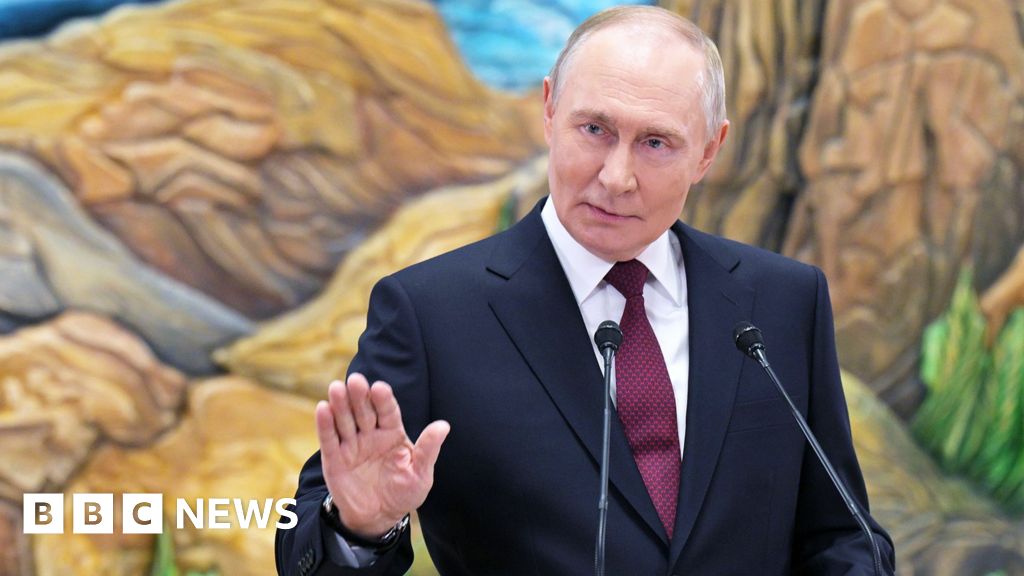
Following a tightly controlled legislative vote giving United Russia more members of parliament than ever, Russian leadership shows no signs of halting its invasion of Ukraine. Instead, Moscow is doubling down on its military strategy while accusing European nations of waging an escalating hybrid war.
State Duma Tightens Control Following September Election
The election produced a State Duma even more pro-Putin than its predecessors, as the ruling party, United Russia, secured more members of parliament than ever before in an electoral process tightly controlled by the Kremlin.
This outcome allows the Kremlin to claim a mandate from the Russian public. However, foreign policy analysts and observers continue to question how that mandate will be used and whether the leadership has any intention of halting what Moscow officially terms its special military operation in Ukraine.
Battlefield Calculus and Russian Media Reporting on Ukraine’s Defenses
Russian media reports suggest that Moscow is drawing encouragement from shortages of air defense missiles in Ukraine. Meanwhile, Kyiv has spoken of its difficulty in shooting down incoming ballistic missiles and new jet-powered drones that target the country daily, raising expectations in Moscow that winter strikes will increase pressure on the Ukrainian population.
Beyond the immediate front lines, the Kremlin has made no secret of the fact it wants European states to slash their military and financial backing for Kyiv, arguing that such Western support merely prolongs the conflict. Western officials believe Moscow is attempting to achieve this by executing an escalating hybrid war characterized by cyber-attacks, sabotage acts, and drones violating European airspace—such as an explosive-laden drone recently discovered near Ukrainian cargo planes at Germany’s Leipzig airport.
Sergei Lavrov and Sergei Karaganov Outline Official Moscow Stance
Defending Moscow’s actions, Russian Foreign Minister Sergei Lavrov told the BBC that his country views the situation entirely differently when asked about hybrid warfare tactics against Europe. Do you mean when we destroy drones and missiles that Britain and continental Europe are supplying Ukraine with, and which are used to attack us?
Lavrov asked during an interview with the BBC. If you admit your weapons are being used to strike us and we destroy them, call it whatever you want. But I have no doubt this is a war Europe is waging against us. We’ve been saying so for a long time.
This narrative bypasses the fundamental reality that the Kremlin launched its full-scale invasion of Ukraine in 2022. To further deter European backing, prominent foreign policy strategist Sergei Karaganov, honorary chairman of Russia’s Council for Foreign and Defence Policy, warned that Moscow could escalate further if Western support continues.
While Western officials and analysts observe these rising tensions, physical conflict with NATO members appears unlikely in the near term. After more than four and a half years of fighting, the Russian army has not yet managed to occupy the entirety of Ukraine’s eastern Donbas region, situated directly adjacent to Russia. Observers note that the immediate intention behind these hybrid tactics is likely to intimidate Europe and reduce assistance to Kyiv rather than initiate a direct conventional war with NATO.


