
Two oil and gas tankers were struck by unidentified projectiles near Oman on Saturday, escalating a tense standoff in the vital shipping corridor as regional pressure builds on Washington to renew military action.
Projectiles Strike Two Tankers Near Oman
The United Kingdom Maritime Trade Operations reported that one tanker was hit in the stern about 11 nautical miles north of Khasab, while a second vessel sustained damage to its engine room about 17 nautical miles east of the Omani port town.
No casualties were reported in either incident, according to British maritime authorities.
The Saturday strikes follow a surge of violence in the strategic waterway. Iran’s navy said that an oil tanker caught fire after striking a naval mine in a restricted area east of the strait, alleging that the vessel ignored warnings and traveled with its identification equipment turned off. Independent maritime authorities have not verified the mine claims.
More shipping is moving through the Strait of Hormuz than earlier in the war, with significant help from U. S. forces, but transiting is still a dangerous proposition. Windward CEO @AmiDaniel1 joins @WarOnTheRocks to discuss the situation in the strait, what it means for shipping…
The UKMTO centre, a British agency monitoring threats to commercial shipping, detailed that one tanker was struck at its rear approximately 20 kilometers north of Khasab, while another was struck in its engine room about 31 kilometers east of the same Omani port town.
British maritime security agencies also reported an attack on Friday near Khasab that caused a fire on board a vessel. The environment surrounding these incidents has grown more perilous since the United States and Israel initiated attacks on Iran in late February. Before the conflict began, the Strait of Hormuz carried nearly a fifth of the world’s crude oil supplies.
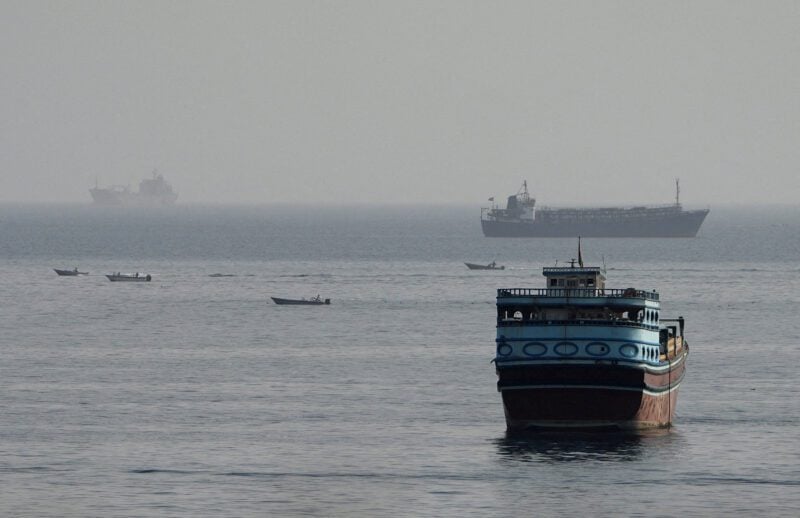
The United Arab Emirates state oil company, the Abu Dhabi National Oil Company (Adnoc), has maintained a shuttle service through the strait with American military protection. This operation aims to break Iran’s chokehold on the route.
Adnoc-operated vessels have faced severe dangers, including an incident where a vessel was struck and forced its crew to abandon ship, leaving one seafarer missing and eleven injured. Jordan’s Foreign Ministry identified the missing seafarer as Mohammad Hussam Al Din Al Otaibi, noting that Jordanian embassies in Abu Dhabi and Muscat are collaborating with local authorities in the UAE and Oman to locate him.
A tanker was struck twice near Oman’s Khasab, with its crew unaccounted for after the second strike, the UK Maritime Trade Operations agency said Tuesday. UKMTO said the tanker was first hit at about 7 nautical miles north of Khasab while transiting the Strait of Hormuz. The… pic.twitter.com/ca1kiqEtT0
India’s Foreign Ministry confirmed that 21 Indian seafarers aboard the Panama-flagged liquefied petroleum gas carrier Tara Gas were evacuated safely after coming under attack twice near Oman, with two hospitalized and one remaining unaccounted for.
Strait Traffic Drops as Iran Tightens Control
Commercial shipping traffic through the Strait of Hormuz remains about 65% below pre-conflict levels, according to UKMTO data. The Joint Maritime Information Center maintains its regional threat level at severe, warning that further deliberate attacks are likely.
“The rate of attacks so far this month and last month has more than doubled compared with the previous seven months”https://t.co/RWQliZq7A8
“Iranians are saying the Strait of Hormuz is under their control; that any ship that is passing through the Strait of Hormuz has to be in full coordination with the Iranian authorities and must follow the roads and the lanes that are determined by Iran,” said Resul Serdar, reporting for Al Jazeera from Tehran.
The Islamic Revolutionary Guard Corps (IRGC) Navy warned through the Tasnim news agency that any ship passing through the waterway without coordination would be treated as violating traffic rules and cooperating with the United States army, adding that such vessels would be dealt with decisively.
🇮🇷🇺🇸 Iran’s army says any new attack will trigger an IMMEDIATE response with no geographic limits. Army spokesman Brigadier General Akraminia delivered the warning during an inspection of coastal forces in southern Iran, visiting Bandar Abbas, Kuhastak, Sirik and Jask.…
The Iranian navy claimed that explosions resulted from vessels hitting naval mines in restricted southern zones, while the IRGC Aerospace Force said that its advanced air defense system shot down a U.S. MQ-9 reconnaissance and combat drone over the western part of the strait.
The U.S. Central Command rejected the drone downing claim as false, affirming that all U.S. fighter jets in the Middle East are intact and secure.
Israeli Ambassador Calls for Regime Change in Iran
The latest maritime strikes coincide with mounting political pressure on the United States. Israeli Ambassador to the U.S. Michael Leiter told The New York Post this week that his country “believes ousting the Tehran regime is now the only long- or even medium-term answer,” adding that Israel “will not hesitate to go it alone” because the situation is “existential.”
Iranian Foreign Minister Abbas Araghchi responded publicly to the remarks on X, while also saying that a “no war, no peace” standoff with Washington must end. Iranian media reported Araghchi’s remarks saying that Tehran sees only two ways forward: war or peace.
The U.S. military has responded to the campaign against commercial vessels. A U.S. fighter aircraft struck a missile launch site on Iran’s Qeshm Island this week in response to ongoing targeting of American personnel and assets in the region.
The Abu Dhabi National Oil Company, the state-owned energy giant of the United Arab Emirates, ranks as the world’s 12th largest oil producer and pumped 4.85 million barrels per day in 2024.
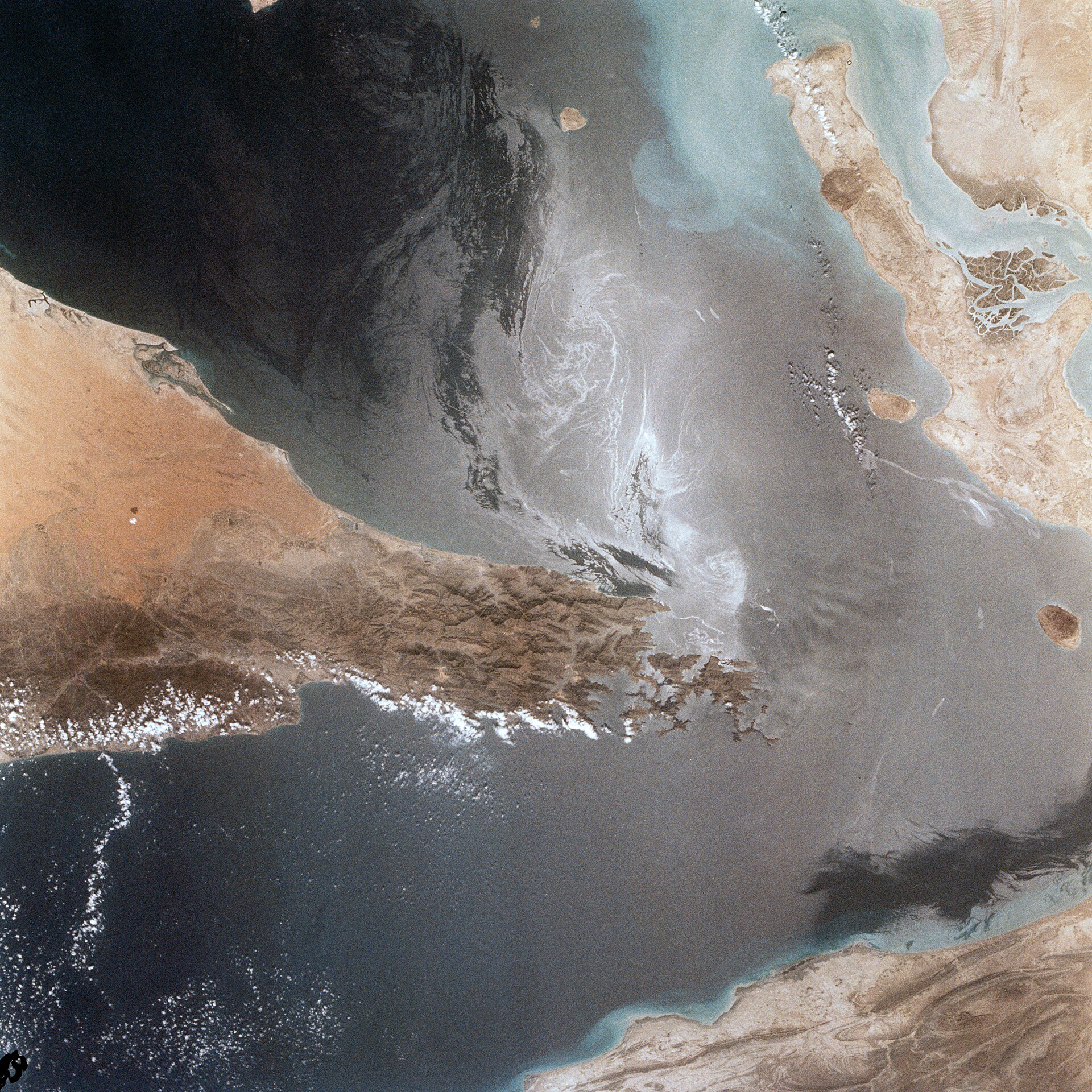
Its output has grown steadily from roughly 2.5 million barrels per day in the 1990s to 2.9 million in 2008, and the company plans to reach 5 million barrels per day by 2027. ADNOC is among the few major oil firms substantially investing to increase production despite global pressure to cut output for climate reasons.
In May 2026, the company announced it would accelerate the West–East Pipeline project to expand crude export capacity through the port of Fujairah, a route that bypasses the Strait of Hormuz entirely. The expanded pipeline is expected to become operational in 2027, offering a strategic alternative to the vulnerable chokepoint where ADNOC has maintained a shuttle service under American military protection.
President Donald Trump addressed reporters at the White House regarding long-standing tensions, saying that Tehran had misled people for decades. Diplomatic positions remain divided, with Araghchi saying that Washington must meet its commitments first before Iran would consider reopening the strait and entering formal talks, a condition that Washington has not accepted.
Earlier coverage: Two Oil Tankers Hit Mines in Hormuz, IRGC Navy Says


