Ukrainian drone attacks have slashed Russian oil refineries’ combined daily crude processing volumes by 45% since late October, cutting output to around 400,000 metric tons per day as Kyiv ramps up systematic long-range strikes on energy infrastructure, according to estimates from two industry sources.
Refinery Strikes and Capacity Losses
The campaign has disrupted or halted operations at 15 of Russia’s 35 major refineries, up from nine in mid-November. Average crude processing volumes have dropped sharply from over 700,000 metric tons per day at the end of October, while affected plants represent a combined nominal capacity of around 500,000 tons daily—equivalent to approximately 54% of the country’s total primary refining capacity as estimated by industry sources.
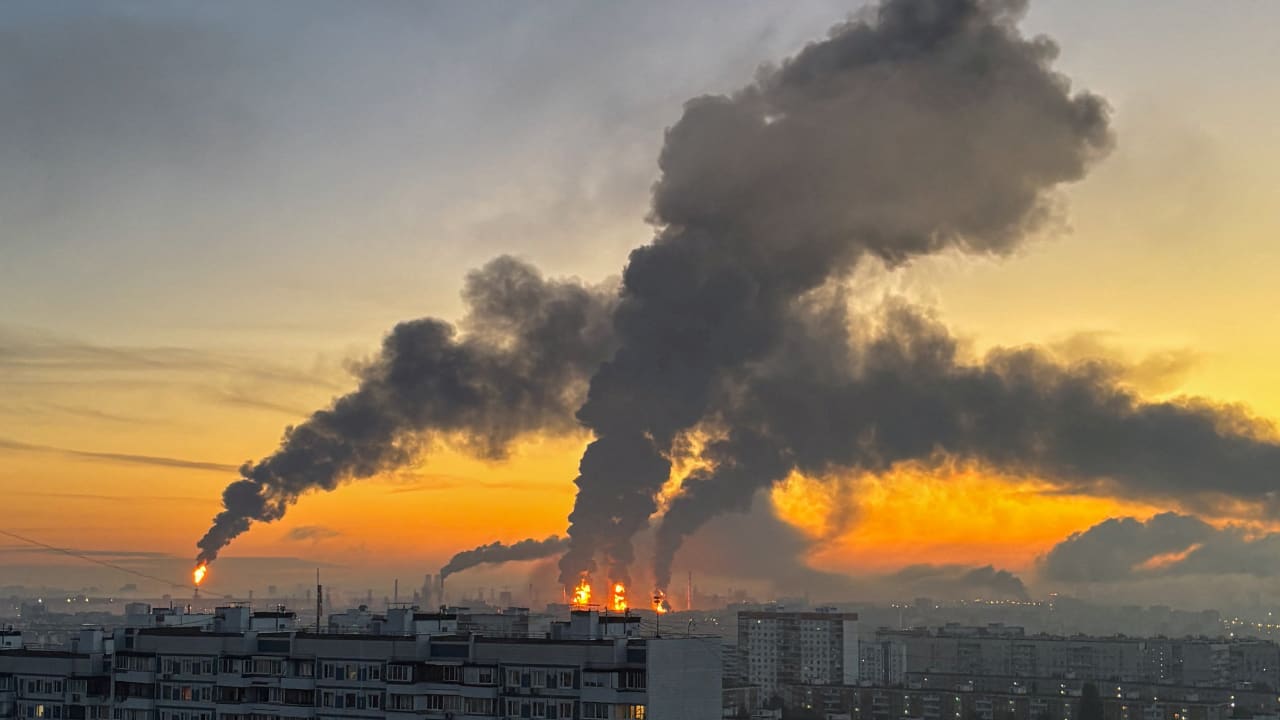
Overnight aerial operations targeted the Ilsky and Afipsky facilities in the Krasnodar Territory, sparking industrial fires and sending smoke billowing near storage tanks and processing units. Ukraine’s General Staff confirmed the strikes, noting that the two plants serve as key fuel suppliers with a combined annual processing capacity of approximately 13 million tons.
Oil double strike in Kuban: Ilsky and Afipsky oil refineries hit On 17 November and overnight into 18 November, explosions rocked Krasnodar Krai near two oil refineries. Ukraine’s Defence Forces carried out air strikes against the Ilsky and Afipsky oil refineries, two key fuel… pic.twitter.com/75EjDp7evk
The Ilsky Oil Refinery is one of the largest oil refineries in southern Russia, with an annual processing capacity of approximately 6.6 million tons of crude oil. Its products are used, among other purposes, to meet the fuel requirements of the aggressor state’s armed forces.
Armed Forces of Ukraine, via Fox News
Military authorities reported that the southern facilities provide some of the shortest supply routes for delivering fuel to Russian frontline forces. Additional long-range operations reached the Gazprom Neftekhim Salavat petrochemical complex in Bashkortostan, located roughly 1,300 kilometers from the front line, marking its fourth strike since July according to regional monitoring and OSINT analysis.
Record Aerial Assault and Air Defense Claims
The large-scale operations coincided with massive overnight aerial activity across Russian territory. Russia’s Defense Ministry said that its air defense forces intercepted and destroyed 1,441 Ukrainian fixed-wing drones overnight into Tuesday across 21 Russian regions, occupied Crimea, and the waters of the Azov and Black seas, a count that Russian Telegram channel Astra characterized as the largest such attack of the conflict.
In a separate engagement involving southern installations, the Russian defense ministry reported intercepting 184 Ukrainian aircraft-type drones between 8 p.m. Moscow time on Tuesday and 8 a.m. on Wednesday over the Belgorod and Rostov regions, Krasnodar Krai, Crimea, and the Sea of Azov. Units of Magyar’s Birds executed precision deployments.
The overnight strikes also severely impacted the Kerch Strait Bridge linking Russia to occupied Crimea. Ukraine’s military and monitoring groups reported that the bridge lost its road arch following targeted air strikes employing cutting-edge long-range drones and missiles prepared over weeks, leaving visible damage captured in transit videos from passing trains. While Russian authorities asserted that rail traffic across the structure continued to operate on schedule, Russian warbloggers debated the impact and called for immediate reprisals against Ukrainian infrastructure, including the destruction of Dnipro River bridges in Kyiv.
Russia, one of the world’s largest oil producers, is now importing gasoline by sea from Türkiye, Morocco and Egypt, the Financial Times reports. This follows weeks of Ukrainian strikes on refineries, storage and export terminals. Reuters counted nine of Russia’s 35 largest…
In addition to the bridge damage, explosions triggered a fire at a key electrical substation in northern Kursk, and a CCTV-documented fuel tank explosion struck the Flash Energy oil depot in Azov, Rostov Oblast, which Ukraine’s General Staff stated was hit on the night of November 15 to 16. Further monitoring confirmed three hits at the Novorossiysk export terminal, a facility responsible for moving between 3.5 and 4.5 million tons of Russian crude monthly.
Fuel Shortages and Market Impacts
Domestic fuel supplies have tightened significantly across multiple regions. St. Petersburg commodity exchange data showed gasoline trading fell 31% in the week through mid-November, while the widely used AI-92 grade dropped 33% as reported by Reuters. Regional filling stations face severe inventory strains, with the proportion of stations stocking AI-92 declining from about 60% to 50% based on platform data analyzed by economist Janis Kluge.
Russia’s rear-area comfort has been canceled. 🎯 Ukrainian strikes have once again hit two key oil refineries in Russia’s Krasnodar Krai: the Ilsky and Afipsky refineries. Both supply fuel to Russian forces in the south and in temporarily occupied Crimea. 🔥 Ilsky refinery:… pic.twitter.com/g3Td8N4rwg
At least eight regions reported shortages, prompting six to impose daily purchase limits typically capped at 30 liters. Rosneft gas stations in Moscow reinstated sales restrictions limiting motorists to 50 liters per vehicle and 20 liters in canisters while similar caps took effect across Leningrad, Nizhny Novgorod, Arkhangelsk, Novosibirsk, Penza, Karelia, and Buryatia.
To plug domestic gaps, Moscow has turned to external suppliers. Seaborne gasoline imports surged from historical peaks of about 5,000 tons monthly between 2023 and 2025 to 416,000 tons in August and 234,000 tons in September according to Helsinki-based think tank CREA, with shipments arriving primarily from Morocco, India, and Turkey alongside rail deliveries from Belarus and Kazakhstan. Economists Dzmitry Kruk and Yahen Makarchuk noted in an analysis that Belarusian refineries maintain no spare capacity to offset Russian deficits, compounding logistical difficulties highlighted by analyst Janis Kluge regarding fuel distribution through Primorsk. Major plants including Ryazan, Yaroslavl, Kirishi, Nizhny Novgorod, Omsk, and the Volga region facilities suffered severe disruptions or operated at reduced fractions of their design output, forcing domestic consumers to navigate strict regional rationing.
Strategic Assessment and Diplomatic Context
Ukrainian leadership defended the campaign as a direct countermeasure against ongoing military pressure. President Volodymyr Zelenskyy praised domestically produced weapons deployed during recent large-scale operations that targeted the Kerch Bridge.
Without increasing global pressure on Russia, without real support for Ukraine, Russia will have no genuine reason to de-escalate and move toward peace. Those who want to negotiate peace do not escalate the killing.
Volodymyr Zelenskyy, President of Ukraine, via Fox News
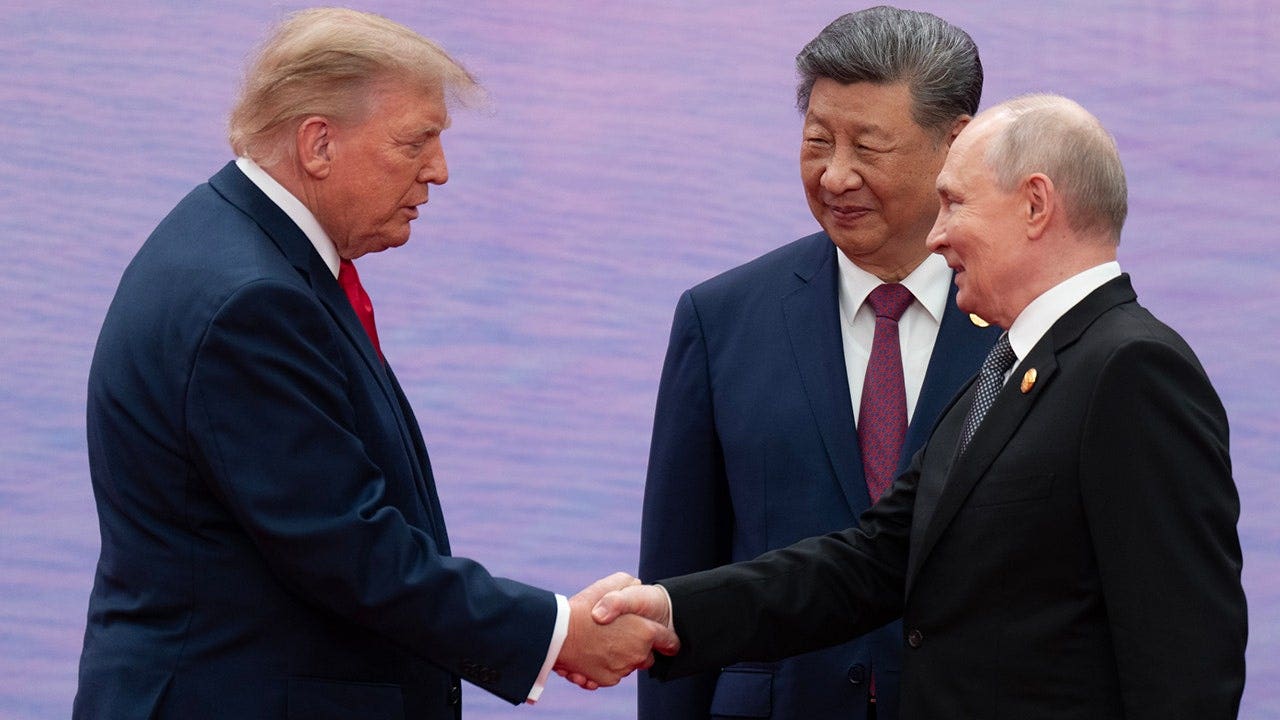
The strikes coincide with diplomatic developments as delegations await further U.S.-mediated discussions, with U.S. President Donald Trump planning talks with Russian President Vladimir Putin and Chinese President Xi Jinping on the sidelines of the APEC Summit in Shenzhen, China. While the Pentagon has argued that long-range strikes deep inside Russian territory remain counterproductive, Ukraine’s European supporters have rejected that assessment. Ukrainian officials emphasize that systematic actions against logistics hubs exercise their legitimate right to self-defense under Article 51 of the United Nations Charter, aiming to degrade the combat potential of occupation forces and reduce the export revenues Moscow uses to finance its military campaign.

Meanwhile, civilian impacts continued to mount; according to data released by the U.N. Human Rights Monitoring Mission in Ukraine headed by Danielle Bell, attacks during the preceding month killed at least 372 Ukrainian civilians and wounded 1,981 others—marking a 95% increase compared to October 2025 levels and driving overall annual casualties above totals recorded in previous years as Russian forces systematically targeted energy networks and population centers.
Earlier coverage: Business AM: Ukrainian Drone Strikes Disabled 55% of Russia's Fuel Production