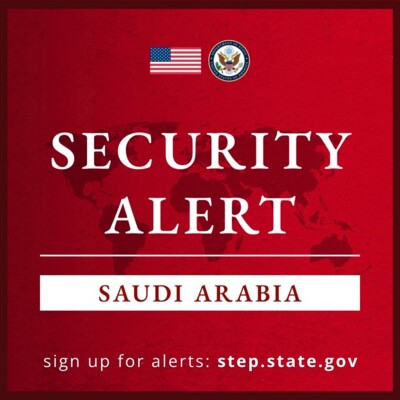
U.S. embassies across the Middle East issued urgent security alerts warning citizens of potential retaliatory attacks by Iran and its regional allies, citing complex security conditions, potential airspace closures, and severe travel disruptions across multiple nations.
Washington’s diplomatic missions in countries including Saudi Arabia, the United Arab Emirates, Oman, and Israel updated their security guidance to urge heightened caution. Similar alerts extended across a broader swath of the region, encompassing Kuwait, Qatar, Bahrain, Jordan, Iraq, Lebanon, Yemen, and Iran, according to regional diplomatic tracking.
Travelers were advised to prepare for abrupt flight cancellations and restricted regional airspace. Officials directed Americans to verify flight departure statuses directly with carriers, consult airport resources in Riyadh, Jeddah, and Dhahran or Baghdad, Erbil, Basra, and Sulaymaniyah, and monitor flight-tracking tools like Flightradar24.
Regional Hostilities and the Houthi Threat to Aviation
Security assessments emphasized that these hostile operations carry the potential to escalate rapidly beyond that immediate area, threatening broader stability across neighboring Gulf states and transit corridors. The security alert issued on October 18, 2026, followed a series of heightened regional tensions that included attacks against civilian infrastructure, civil airfields, and vital economic installations.
Hostilities intensified following the breakdown of prior cease-fires, while government forces and regional coalitions engaged in sustained friction around critical maritime chokepoints like the Bab el-Mandeb strait and the Strait of Hormuz. U.S. diplomatic outposts, including the embassy in Kuwait, provided citizens with specific safety protocols, such as checking passport validity, staying away from glass doors and windows during airborne alerts, and keeping emergency contact numbers—including the local 112 emergency service—readily accessible.
Global Exposure for U.S. Corporate and Personal Interests
Beyond immediate flight disruptions, Washington cautioned that diplomatic installations, private corporate facilities, and American citizens could face threats at locations associated with the United States throughout the world.
Regional diplomatic missions stressed that groups aligned with Tehran retain the capability to project operations internationally. U.S. commercial entities, institutional properties, and private citizens globally were urged to maintain heightened vigilance against potential secondary targeting outside the immediate Middle Eastern theater.
Washington and Tehran Stall Bilateral Diplomatic Talks
The new security posture coincides with a backdrop of unresolved diplomatic friction and prior military clashes. Bilateral talks between Washington and Tehran stalled following disagreements over freedom of navigation and security protocols in the strategic Strait of Hormuz. Meanwhile, Iranian officials responded publicly to regional developments, asserting that there are unresolved issues
remaining in ongoing geopolitical standoffs.
Public rhetoric between Iranian leadership and Israeli officials further compounded regional anxiety. High-ranking diplomatic figures in Tehran issued direct public cautions referencing prior military engagements that followed an initial outbreak of hostilities on February 28, 2026. Official statements from Iranian representatives emphasized that Tehran maintains active strategic counters to ongoing pressure, while diplomatic channels continue to grapple with the fallout of broken cease-fires and constrained commercial transit across vital energy corridors.