Compass Group plans to ditch its London primary listing for New York by 2028, dealing a heavy blow to the London Stock Exchange as the catering giant reported annual revenues exceeding $50 billion.
Shareholder Consultation Begins for Wall Street Move
The FTSE 100 catering firm announced its intention to consult with shareholders over moving its primary stock market listing to the United States alongside its full-year financial results on Tuesday, November 24, 2026. The board has initiated the consultation.
The formal transition will require shareholder approval and is not expected to be completed before 2028.
Compass intends to maintain a secondary listing in London while retaining its UK presence. Company leadership said the proposed shift would pose no threat to its workforce of more than 50,000 employees across the UK and Ireland.
North America Drives Financial Performance
Company executives pointed to the group’s geographical footprint as the primary driver behind the decision. North America currently accounts for the vast majority of the company’s financial performance.

Over the past decade, North America has become a powerful engine of growth for Compass and today accounts for the majority of revenue and profit. It is home to our largest client base and more than half of our people.
Ian Meakins, chair of Compass
The region generates two-thirds of the company’s total revenue and 75% of its underlying operating profit. For the financial year ended September 30, 2026, Compass reported adjusted revenues of $50.8 billion, up from $46.5 billion in the previous financial year.
Underlying operating profit increased 12% to $3.75 billion, driven by an accelerating fourth quarter where sales growth reached 8.5%. The catering group also announced a new $1.5 billion share buyback program to be executed over the next two years.
Analysts Assess Valuation and Listing Rationale
Jefferies maintained a $40 price target on Compass Group, implying 19% upside from a recent close of $33.55, as speculation over a New York listing grew. The broker said the stock trades on roughly 20.7 times forecast 2027 earnings, against 19.7 times for rival Aramark.
That is below its own ten-year average multiple of about 23 times, leaving room for recovery if growth momentum holds, Proactive financial news reported. Analysts had expected organic revenue gains of 6.9% and 11.5% respectively for the latest periods, yet the company delivered stronger momentum, Interactive Investor noted.

Jefferies highlighted North America’s centrality, where organic revenue has compounded at nearly 8.9% annually over the past 15 years. The broker forecast fourth-quarter organic growth of 7.4% with a 15-basis-point improvement in second-half operating margins.
Market Reaction and Broader Exodus Context
Compass shares edged up 0.8% on Monday 23 November 2026 after a newspaper reported the listing plan. That lagged the FTSE 100’s 1.30% gain in a session where the index rose 134.48 points to 10,480.82, kalkine.co.uk reported. Investors had focused on the stock ahead of Tuesday’s results, and the report added to that interest, the outlet added.
Brent Crude moved to $88.84 from $91.88 and sterling slipped to $1.3020. The departure fits a pattern of blue-chip exits that includes Arm Holdings, Just Eat, Deliveroo and Flutter, cwibc.co.id reported.
Impact on the London Stock Exchange
Valued at £43 billion, Compass ranks among the largest 20 companies on the FTSE 100 index. Its planned departure follows a series of high-profile exits from London as the industry worries about lower valuations and shallower liquidity compared to Wall Street.
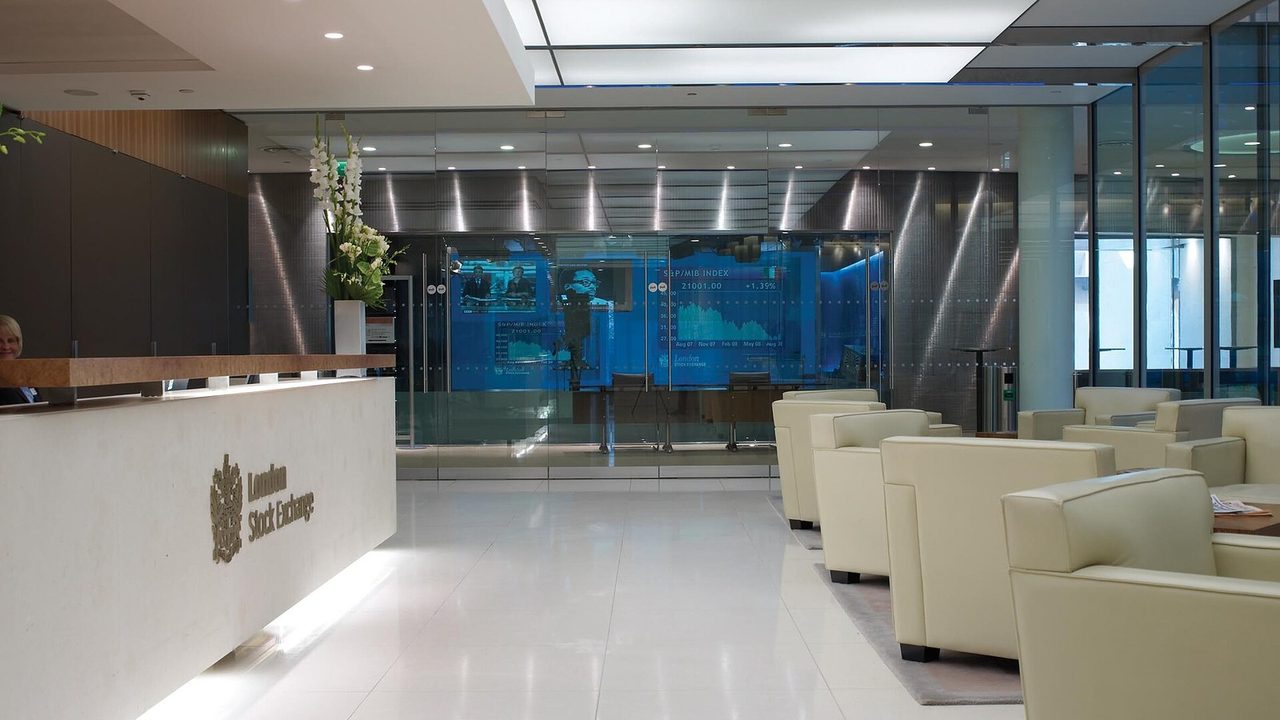
Other major firms have previously abandoned or reduced their London listings, including building materials giant CRH, sports betting owner Flutter, equipment renter Ashtead, and fintech specialist Wise. Commenting on the broader competitive pressures facing the domestic market, London Stock Exchange chief executive Dame Julia Hoggett told the BBC that regulatory and structural incentives needed adjustment.
The London Stock Exchange (LSE), which reported a total market capitalisation of approximately US$5.9 trillion for all listed instruments as of mid-2025, has seen a string of prominent companies shift their primary listings to New York.
Building materials firm CRH, sports betting group Flutter, equipment rental company Ashtead, and fintech specialist Wise have all moved or reduced their London presence in recent years, joining earlier departures such as Arm Holdings and Just Eat.
Operated since 2007 by the London Stock Exchange Group (LSEG), the exchange regained its position as Europe’s largest stock market by total market value in 2024 and 2025, bolstered by the FTSE 100 index surpassing the 10,000-point milestone for the first time in early 2026.
If we want Britain to back Britain, which is what I hear the chancellor and the prime minister saying, then let’s make sure that we’re creating structural incentives to do so. We need to take the handbrake off.
Dame Julia Hoggett, chief executive of the London Stock Exchange
She warned that without reform, more UK companies would follow the recent trend of seeking primary listings abroad.