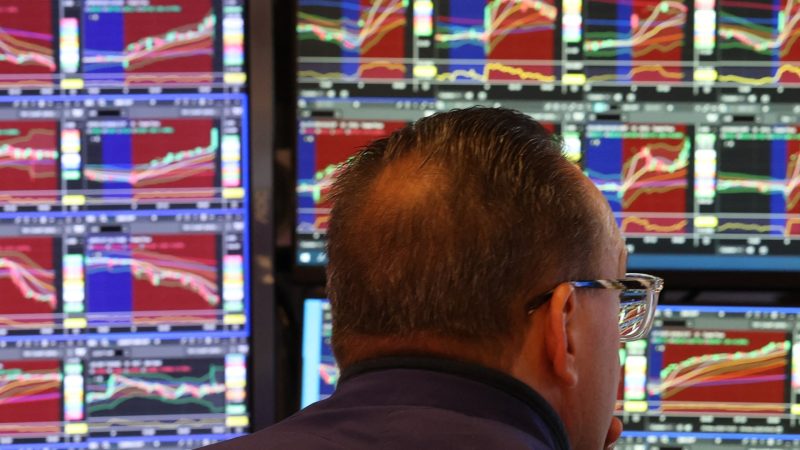
Global financial markets reeled as a severe technology stock sell-off erased trillions of dollars in value, with a rout in Asia's tech-heavy markets deepened by increased regulatory scrutiny and a slowdown in the artificial intelligence build-out. The sudden downward spiral marked the steepest decline in US stocks since the tariff-triggered Liberation Day selloff in April 2025.
The Bottom Line:
- S&P 500 firms shed $3 trillion in market value as the Nasdaq sank 5.5% and the Philadelphia Semiconductor Index plunged 12.2%.
- Japan’s Nikkei slumped 7% at the opening bell, while benchmark share price indices in South Korea and Taiwan dropped more than 8%.
- Democratic control of the US Congress following midterm elections intensified investor anxiety regarding potential regulatory intervention in the AI sector.
OUCH! Blue-Nami hits the AI trade: Nasdaq 100 sinks ~5% amid fears of tighter AI regulation after Democrats sweep Congress. Chip stocks plunge 10%, putting the Sox 37% below its peak. Nvidia drops 7%. AI spending and funding fears fuel the selloff. pic.twitter.com/Xq9woCzU5g
Global Chipmakers and Tech Giants Suffer Historic Drops
The contagion spread rapidly across international exchanges. Japan’s Nikkei slumped 7% immediately after the opening bell, while benchmark indices in South Korea and Taiwan plummeted over 8%. European shares also opened lower, capping a painful week of global market turbulence.
Japan’s Nikkei fell by around 6%, dropping below the 60,000-point level for the first time since May. Major regional players bore the brunt of the liquidation. South Korean AI chipmakers Samsung Electronics and SK Hynix fell nearly 10% and 12% respectively, while Kioxia plunged 14% in Japan. In Taiwan, TSMC dropped as much as 8.5%, hitting its daily limit down circuit breaker at one point. SoftBank Group slid 11%, pushing the cost of insuring against the Japanese firm defaulting on its debt to a four-year high.
When the Nasdaq sneezes… The South Korean and Japanese stock markets tumble 6% in the wake of the US selloff.#markets #stocks #japan #korea #investing #investors
In the United States, the market damage was severe. Nvidia slid by more than 9%, while Tesla and SpaceX dropped around 10% and 9% respectively. Neocloud firm CoreWeave, a prominent barometer of investor anxiety over heavy AI spending and borrowing, slumped 10%.
Political Shifts and Investor Panic Fuel the Meltdown
Market analysts pointed to a convergence of political uncertainty and shifting investor sentiment. Trading turmoil was significantly linked to worries that Democratic success in the US midterm elections could herald a slowdown in the rapid boom across the artificial intelligence sector. Wall Street’s volatility fear gauge soared as the Nasdaq extended its decline to 12% from its record close a month earlier.
In a very ugly session for tech, the NASDAQ is now down a full 5%, pulling down the S&P 500 by 4% and the Dow by 3%. (CNBC chart below.)#economy #stocks #markets pic.twitter.com/LqSqU2KUqM
Charu Chanana, chief investment strategist at Saxo, observed that "there is also clearly an element of panic in the selling, and positioning is making the adjustment much more violent." Chanana warned that simultaneous position unwinding accelerates the selloff through forced liquidations and borrowed funds.
Weighing in from SwissQuote, senior analyst Ipek Ozkardeskaya said: “the memory-chip bubble there had already burst around June, with investors heading towards the exit all at the same time, as everyone wondered when the AI frenzy would come to an end.” Ozkardeskaya added, “It is possible that we have reached boiling point in Nasdaq too, and now value has started evaporating.”
Meanwhile, US President Donald Trump took to Truth Social, stating that “the stock market suffered one of the worst days in history” while directly blaming Democrats for the market chaos.
Analysts Debate Whether Steep Correction Signals Capitulation
Market observers diverged on whether the steep correction signaled a temporary capitulation or a fundamental change in asset valuations. Dong Baozhen, chairman of asset manager Lingtong Shengtai, argued that the selloff demonstrates how AI stock prices had been built on rosy illusions that have now evaporated, questioning whether global AI bull markets can maintain momentum without the US backbone.
Conversely, some traders viewed the extreme velocity of the selloff as a sign that capitulation was nearing completion. Allen Huang, a vice president of Mega Financial Holding’s equities trading department, said that margin account liquidations suggested the market was in its final stage of capitulation, noting that heavy selling in bellwether stocks like TSMC typically marks the tail end of a downturn.
Disclaimer: The information provided in this article is for educational and market analysis purposes only and does not constitute financial, investment, or legal advice. Always consult with a certified financial professional before making investment decisions.