
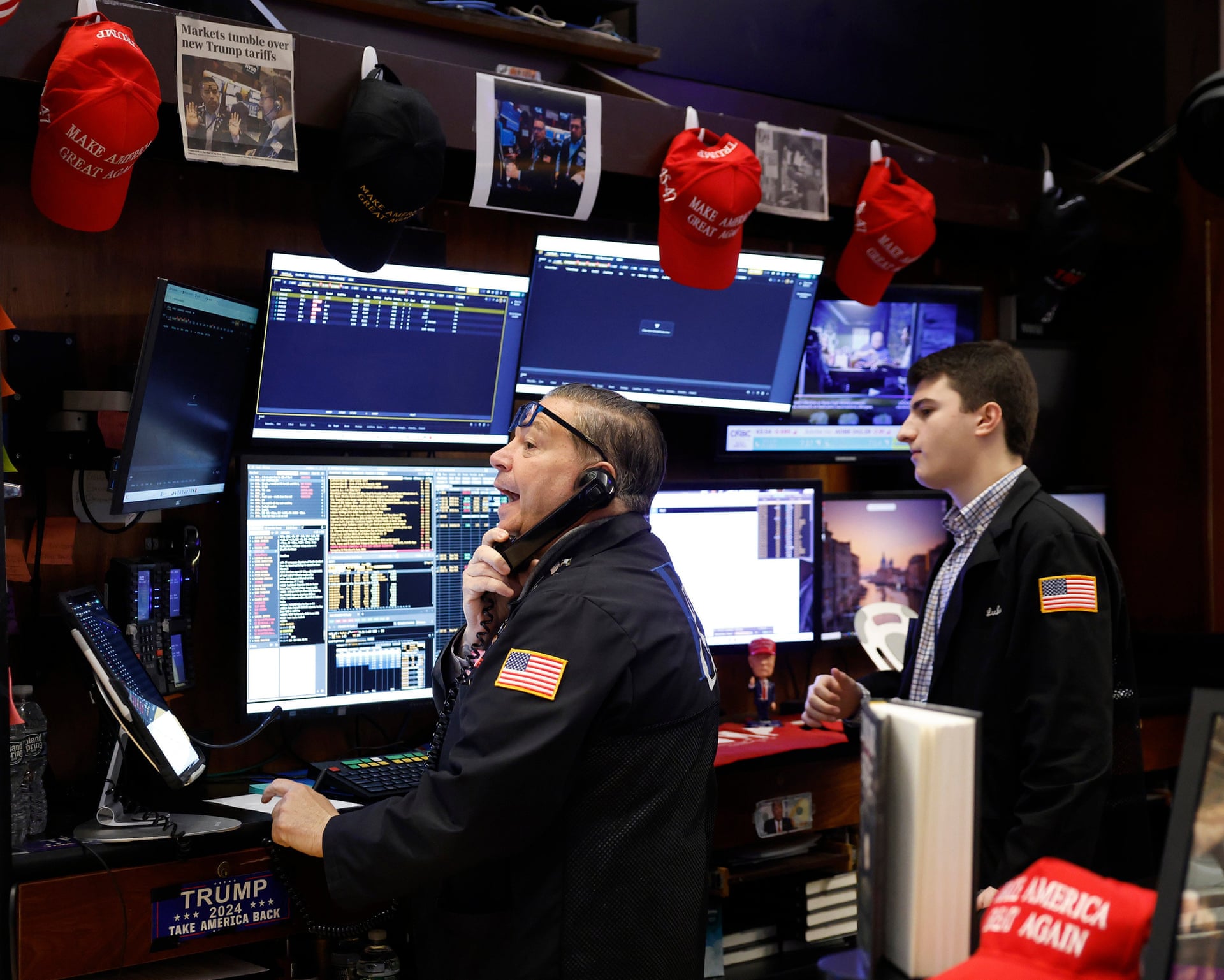
The Nasdaq Composite tumbled into "correction" territory on Thursday, falling 5.3% as investors sharply retreated from artificial intelligence, semiconductor, and data-center-related stocks. The decline, which follows a period where the index had surged nearly 40% since Election Day 2024, marks a significant reversal for the technology sector.
The widespread market sell-off was fueled by the results of the U.S. midterm elections. Commanding Democratic victories across the country have introduced new uncertainty regarding the future of AI infrastructure. According to market analysts, investors are now recalibrating their expectations as they anticipate that newly elected officials—including governors, attorneys general, and members of Congress—will push for stricter regulation and potential limitations on the expansion of AI data centers.
In a very ugly session for tech, the NASDAQ is now down a full 5%, pulling down the S&P 500 by 4% and the Dow by 3%. (CNBC chart below.)#economy #stocks #markets pic.twitter.com/LqSqU2KUqM
— https://x.com/elerianm/status/2118403923191238965
Voters Back Local Restrictions on Data Centers
The political shift has raised concerns that the rapid pace of data-center construction will face significant legislative and local roadblocks. Data from the organization Data Centers on the Ballot indicates that voters recently backed restrictions in 39 out of 45 local ballot initiatives aimed at curbing AI infrastructure. Analysts at UBS estimated that such political resistance and potential construction pauses could jeopardize roughly 30% of planned U.S. data-center capacity additions for 2028.
There is no way to sugarcoat that Democrats taking control, especially over the Senate, will create some major hurdles for AI and tech legislation in the Beltway over the next two years,
said Dan Ives, managing partner of Yorkville Ives.
Market volatility spiked in response to the news. The VIX, often referred to as Wall Street’s "fear index," jumped 40% to its highest level since the early weeks of the Iran war. The broader market also felt the impact: the S&P 500 dropped 4%, while the Dow Jones Industrial Average slid roughly 3%, or 1,600 points.
Impact Across the Tech Sector
Semiconductor and hardware manufacturers bore the brunt of the selling pressure. The Philadelphia semiconductor index suffered an 11% sell-off, marking its worst performance since March 2020. Major companies saw significant losses:
- SanDisk plummeted 20%.
- Micron fell nearly 14%.
- Nvidia, a central player in the AI boom, dropped 9%, representing its largest one-day decline since April 2025.
- Dell and Intel also saw double-digit or near-double-digit losses.
The downturn extended to hyperscalers and data-center operators as well. CoreWeave shares were down over 12%, and the Nebius Group saw a decline of nearly 17%. While major cloud providers like Alphabet, Meta, Amazon, and Microsoft also finished in negative territory, their losses were less severe than the broader tech indexes.
As the market digests these developments, some observers suggest the industry is undergoing a necessary transition. The market’s moving from the promise of AI to the price of AI,
said Ted Parkhill, founder and CEO of Incline Investment Management. While the technology is viewed as transformative in the long run, investors are increasingly questioning whether the current scale of investment will generate the productivity and returns required to justify the massive capital expenditure.
Earlier coverage: Nasdaq and Tech Stocks Fall on Chip Valuation Warnings