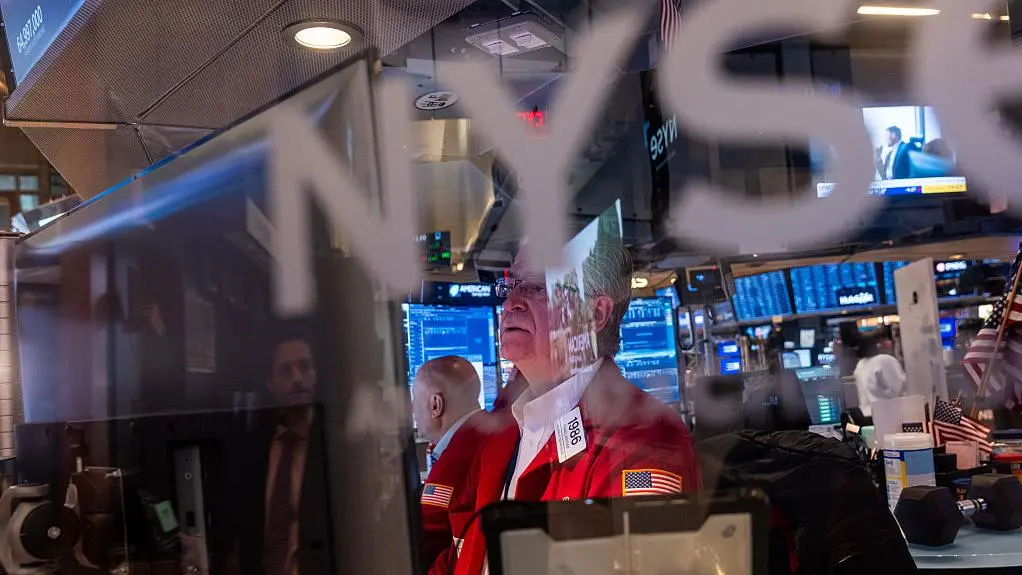
Global markets suffered a severe contraction as technology stocks faced heavy losses from New York to Seoul, pulling major indexes down sharply amid mounting questions over the sustainability of artificial intelligence spending.
Trillions Wiped From Global Markets in Broad Sell-Off
The downturn intensified on Wall Street, where the Nasdaq Composite tumbled 5.3% and the S&P 500 dropped 3.7%. Both indexes pushed into market correction territory, defined as trading at least 10% below a recent peak. The S&P 500 closed lower for six consecutive sessions, marking its longest negative streak since the market turmoil of March 2020.
The volatility pushed the Cboe Volatility Index, widely known as Wall Street’s fear gauge, up to 40 points—its highest level since April 2025.
Anthropic Market Debut Meets Widespread Profit-Taking
The sharp pullback followed the historic initial public offering of Anthropic PBC, which had initially drawn massive investor interest. The AI laboratory priced its shares at $83, raising $81 billion and securing a market valuation of approximately $1.3 trillion in what ranked as one of the largest public market debuts in history.
Rather than injecting sustained momentum into the sector, however, the IPO served as an exit ramp for investors eager to lock in profits from years of AI-driven gains. Anthropic shares climbed 17% on their first day of trading on the Nasdaq before sliding back toward their original offering price, according to Profit.

The cooling enthusiasm quickly spread to established semiconductor and hardware giants. Nvidia experienced its steepest single-day drop in over a year and a half, with shares declining 13.8%. The company has lost nearly half its market value—amounting to roughly 2.7 trillion dollars—since its peak on October 6, weighed down further by reports of a regulatory inquiry by the U.S. Securities and Exchange Commission into past accounting practices.
Semiconductor Giants and Regional Exchanges Feel the Impact
The broader semiconductor supply chain absorbed heavy losses alongside Nvidia. Advanced Micro Devices shares fell 8.8%, while Micron Technology dropped over 9%. In Asia, regional exchanges recorded their weakest weekly performance since 2020, as the MSCI Asia Pacific index dropped 2.9%.
Japan’s Nikkei 225 fell 801.59 points, or 1.34%, and South Korea’s Kospi dropped 3.6%. Major chipmakers across the region suffered substantial market valuation losses:
| Company | Market Valuation Lost |
|---|---|
| TSMC | $63 billion |
| Samsung Electronics | $44 billion |
| SK Hynix | $38 billion |
Suppliers and investors, including SoftBank Group, also retreated as regional markets adjusted to tighter sentiment around hardware spending.

Market Strategists Reassess AI Valuations and Policy Pressures
Financial analysts point to a fundamental change in how Wall Street evaluates capital deployment in the technology sector. After a small group of major companies poured over 1 trillion dollars into data centers, specialized chips, and related infrastructure over the past year, market participants are demanding clearer proof of financial returns.
The entire premise that artificial intelligence can continue to spend unlimited amounts of money and support the stock market has ended. That is what is being reflected in prices right now.
Adding to market anxiety, investors are tracking expectations that the Federal Reserve may consider additional interest rate increases at its upcoming meeting, a move that would further raise borrowing costs for capital-intensive industries. Market strategists also said that political shifts in Washington, including Democratic gains in midterm elections, have introduced uncertainty regarding potential policy reviews or limitations on new data center construction projects.
As trading concluded for the week, indexes across global exchanges remained substantially below their autumn highs, with participants waiting to see whether corporate earnings reports will stabilize valuations or validate deeper market corrections ahead.