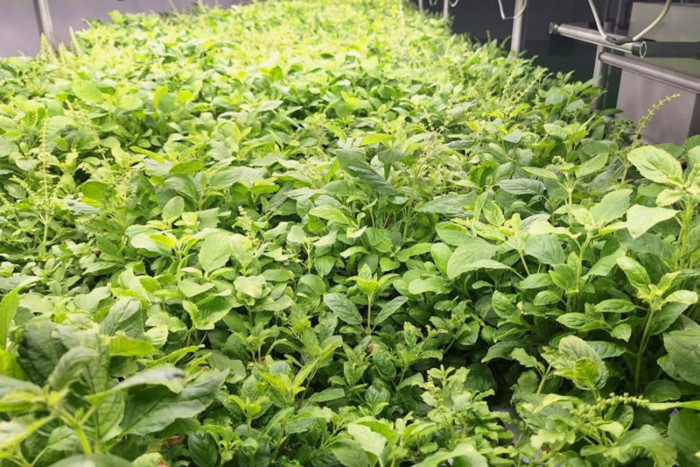
CPRAM Holy Basil Registration Confirmed by Agriculture Officials
The Department of Agriculture has officially validated the registration of four holy basil varieties by CPRAM Co Ltd, a subsidiary of the CP Group, following public apprehension regarding the potential impact on local farming communities. The confirmation marks the conclusion of a regulatory review process designed to assess the distinctiveness, uniformity, and stability of the Kaewjuree strains.
Spokeswoman Sasiya Parntan stated that the department conducted thorough investigations over two cropping seasons. These trials confirmed that the four Kaewjuree sub-varieties are visibly distinct from existing local varieties of holy basil, or kaprao. The department verified the Certificates of New Plant Variety Protection against legal criteria established under the Plant Varieties Protection Act BE 2542 (1999).

Independent Breeders Share Registration Rights Under the 1999 Act
The registration process under the 1999 Act is not exclusive to large corporations. According to Ms. Sasiya, the legal framework is open to universities, independent plant breeders, and private organizations that successfully develop new, distinct plant varieties. The department noted that no stakeholders filed a formal petition to dispute the Kaewjuree registrations during the mandatory 90-day legal window following the initial application.
Crucially, the protection granted to CPRAM applies only to the specific, registered Kaewjuree strains. Indigenous and common holy basil varieties remain entirely unaffected by this legal status. Farmers and the general public retain the right to cultivate, harvest, and sell these traditional, non-protected varieties without restriction. In addition, the ruling permits individuals to grow the protected Kaewjuree varieties for personal consumption or for use as ingredients in commercial food products.
The Department of Agriculture has confirmed that CPRAM Co Ltd registered four holy basil varieties in full compliance with the law. pic.twitter.com/l1N1m8HCCr
Commercial Propagation Requirements
While the market remains open for the consumption and sale of the basil leaves themselves, the law creates a distinction regarding the propagation of the protected varieties. Anyone seeking to produce seeds, grow seedlings, or harvest stem cuttings of the Kaewjuree strains for the purpose of selling planting materials must first secure authorization from the rights holder.
This regulatory clarity serves to address concerns about the monopolization of a staple ingredient. By confirming that the protections are narrowly scoped to the specific breeding achievements of the applicant, the Department of Agriculture has shown that the wider market for Thai holy basil remains accessible to domestic farmers. The decision highlights the balance between incentivizing private agricultural innovation and maintaining public access to common crops under the established legal framework of the Plant Varieties Protection Act.