The United States faces the loss of its measles elimination status, ending a 26-year designation that marked the country as free of the virus.
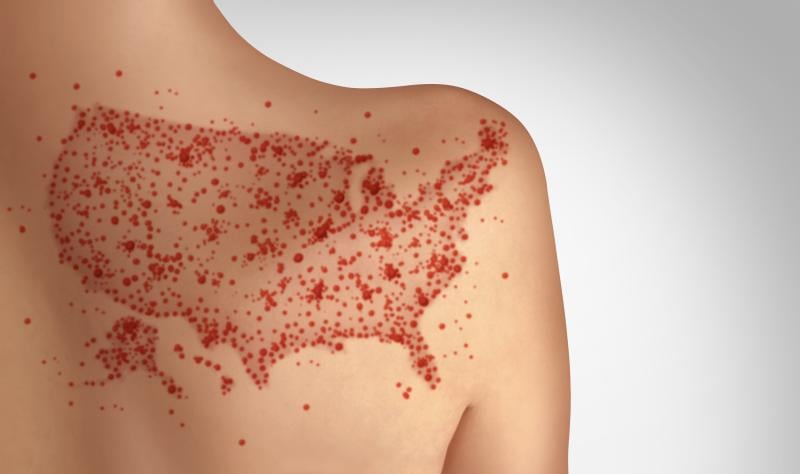
The decision follows a surge in cases that saw 5,412 infections reported across 45 states so far in 2026, according to the Centers for Disease Control and Prevention (CDC).
Outbreaks in 2026 cost $56 million in public health response expenses. They also caused nearly $25 million in lost productivity and more than $1.8 million in direct medical expenses.
Dr. David Margolius said it is difficult to connect people with vaccines when insurance coverage is unstable. He said, “Until we can rejoin the WHO and cooperate with other health agencies all over the world… This will continue.”
Robert F. Kennedy Jr. in a 2021 book wrote that Americans had been "misled … into believing that measles is a deadly disease." He said measles outbreaks had been "fabricated" to push people towards vaccines. https://t.co/lBXK42mpjj pic.twitter.com/lo7ZA0nv8F
Measles Cases Reach Highest Levels Since 1991
The 2026 outbreak reached the highest number of measles cases in the U.S. since 1991. The virus was considered eliminated in 2000 and has caused 10 deaths in 2026. Seven people died in Pennsylvania, two in Wisconsin, and one in New York.
The CDC said it is working with the U.S. Council of State and Territorial Epidemiologists to establish a standardized definition for measles deaths.
Young people suffer the most. Children and teenagers account for 59 percent of confirmed cases, while children under the age of five make up 18 percent.
Data from the CDC shows that 591 people in the U.S. required hospital care for measles in 2026. This represents 11 percent of all confirmed infections.
Infectious disease specialist Adam Ratner told AFP that such fatalities were “tragic, and that is completely preventable.”
Vaccination Coverage Declines
Public health experts link the loss of status to a decline in vaccination rates. Kindergarten measles vaccination coverage dropped from 95.2 percent in the 2019–2020 school year to 92.4 percent for 2025–2026.
Maintaining herd immunity requires a vaccination rate of 95 percent. The disease has been detected in almost every state.
The loss of status poses risks to those who cannot be vaccinated. Natalie Dailey Garnes of the MD Anderson Cancer Center said that children on immunosuppressive treatment “cannot be re-vaccinated” and “are really dependent upon the broader community to be vaccinated.”
The virus is highly contagious. It can live on surfaces and in the air for two hours after an infected person has left a room.
Outbreaks Cost Nearly $83 Million
Outbreaks carry an economic burden of almost $83 million, according to a project by Johns Hopkins University scholars. This figure uses case numbers from this year.

Tom Frieden, who runs Resolve to Save Lives, said that while losing the status is not equivalent to a criminal penalty, it indicates the country is less healthy than it was 26 years ago.
Efforts to Reclaim Status
The vaccine is safe. Two doses are 97 percent effective at preventing infection.
But experts warn the situation is precarious. Yvonne Maldonado, a pediatric infectious diseases expert with Stanford University, said, “With infectious diseases, you really can never know or feel comfortable that you completed the task.”
Earlier coverage: US Measles Cases Surge, Elimination Status at Risk